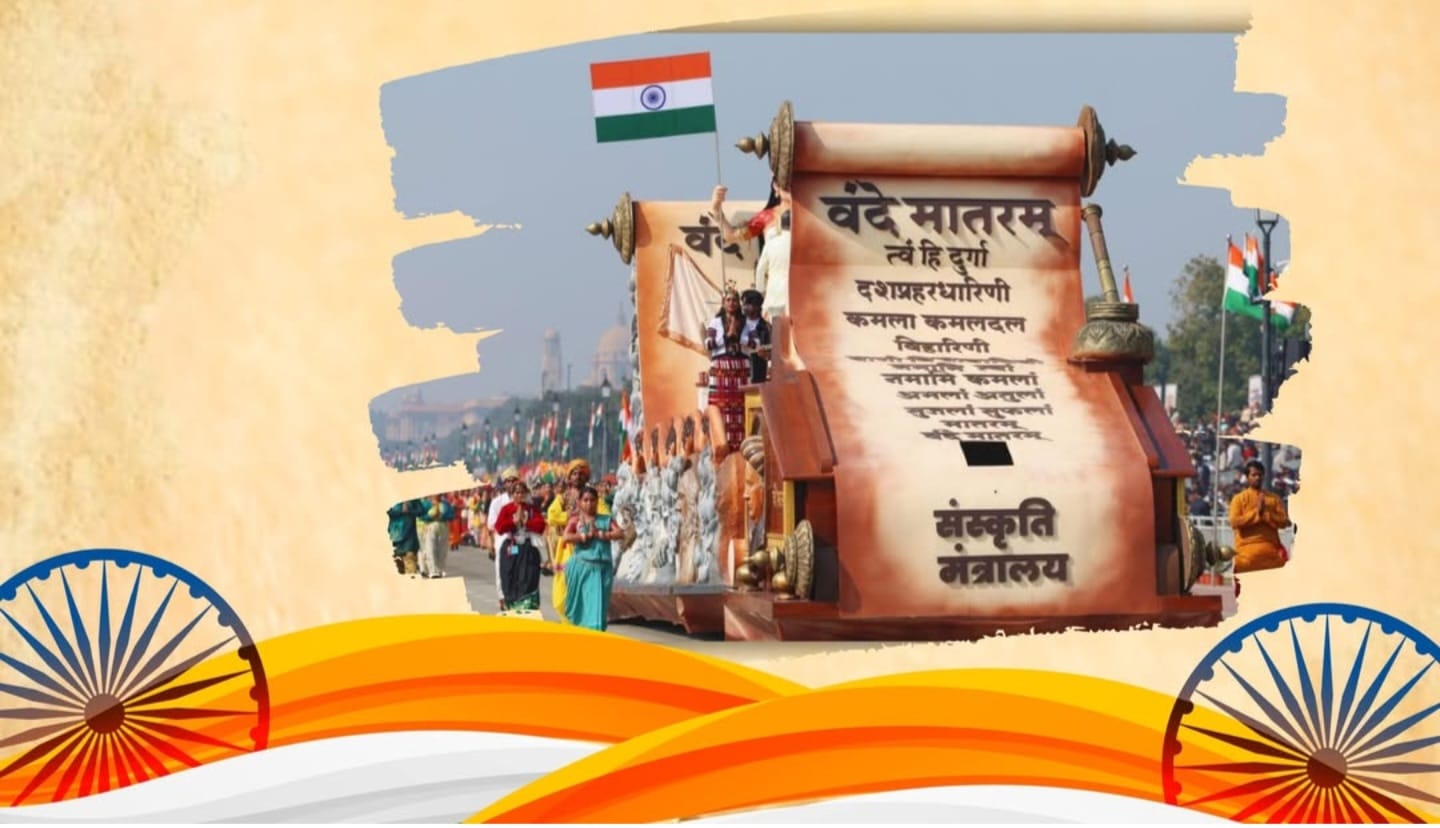
New administrative protocols requiring all six stanzas of Vande Mataram to be sung at official functions have reignited a long-standing national debate. Backed by statutory protections enacted under the 2026 Amendment Act, the 3-minute-10-second full performance updates decades of traditional two-stanza public usage.
NEW DELHI — A fresh political and constitutional debate has emerged following new executive protocols and legislative changes mandating the rendition of all six stanzas of India's National Song, Vande Mataram, at official state functions.
The directives, issued by the Ministry of Home Affairs, require the full 3-minute-and-10-second version of the historic composition to be played, preceding the National Anthem, Jana Gana Mana, with the audience standing at attention. The enforcement marks a significant shift from decades of established practice where only the first two stanzas were typically performed at public events. Following the passage of the Prevention of Insults to National Honour (Amendment) Act, 2026, intentional disruption or prevention of the National Song's performance now carries statutory penal consequences similar to those protecting the National Flag and National Anthem.
Historical Origin and the Two-Stanza Compromise
Composed by Bankim Chandra Chattopadhyay in 1875 and later integrated into his 1882 novel Anandamath, Vande Mataram played a transformative role as a rallying anthem during the Indian independence movement. Set to music by Rabindranath Tagore in 1896, the song gained widespread nationalist prominence during the 1905 Swadeshi movement.
However, the complete six-stanza text eventually sparked internal debates within the freedom movement. While the first two stanzas focus on praising the natural beauty and fertility of the motherland, the third through sixth stanzas incorporate explicit religious allegories, equating the nation with Hindu deities such as Durga, Lakshmi, and Saraswati. To maintain communal unity and accommodate religious minorities whose monotheistic tenets prohibit deity veneration, the Congress Working Committee resolved in October 1937 to adopt only the non-religious first two stanzas for official gatherings. This distinction was preserved in January 1950 when the Constituent Assembly adopted the first two stanzas as the official National Song.
Statutory Codification and Political Divergence
The recent enactment of the Prevention of Insults to National Honour (Amendment) Act, 2026, extends legal protection across all six stanzas of Vande Mataram. Under the amended law, preventing the singing or intentionally causing disturbance to an assembly performing the National Song is a punishable offense.
The policy shift has drawn contrasting reactions across political spectrums and state administrations:
Union Government Position: Officials maintain that honoring the complete 150-year-old composition restores the original artistic and patriotic integrity envisioned by freedom fighters.
Opposition and CWC Stand: The Opposition has reiterated adherence to the 1937 compromise, holding that party functions will continue to perform only the first two stanzas to uphold secular inclusivity.
Constitutional Experts: Legal analysts highlight potential friction between mandatory complete renditions and constitutional protections under Article 25 (Freedom of Conscience and Religion) and historical Supreme Court precedents regarding compulsory participation.
Official Sources Section
According to official parliamentary records and notifications from the Ministry of Home Affairs, the administrative protocol specifies the order and duration of the full rendition. Statutory protections are enshrined under the Ministry of Law and Justice through the Prevention of Insults to National Honour (Amendment) Act, 2026.
Quote Section
"According to officials, extending statutory protection to the National Song ensures equal reverence for historically significant national symbols while formalizing protocol for state functions."
Why It Matters
For Citizens: Requires awareness of official event protocols, including standing at attention during the full 3-minute-10-second performance.
For Event Organizers: Mandates the inclusion of all six stanzas and specific sequencing whenever official state protocols are invoked.
For Legal Precedent: Sets up a test case balancing statutory protections of national symbols against individual rights to freedom of conscience.
Key Facts at a Glance
Total Duration: 3 minutes and 10 seconds for the complete six-stanza rendition.
Protocol Order: Vande Mataram must precede Jana Gana Mana when both are played at state events.
Legal Status: Protected under the amended Prevention of Insults to National Honour Act, 2026.
Historical Origins: Composed by Bankim Chandra Chattopadhyay in 1875; first two stanzas adopted in 1950.
Frequently Asked Questions (FAQ)
What is the difference between the National Anthem and the National Song?
Jana Gana Mana is India's National Anthem, adopted by the Constituent Assembly in 1950. Vande Mataram is the National Song, accorded equal status and honor.
Why were only two stanzas originally sung at public events?
In 1937, national leaders opted to adopt the first two stanzas for official functions because they celebrate the geography and nature of the land without the Hindu deity allegories present in later stanzas.
What changes under the 2026 Amendment Act?
The Prevention of Insults to National Honour (Amendment) Act, 2026, penalizes intentional disruption or prevention of the National Song's performance.
Source: Ministry of Home Affairs | Ministry of Law and Justice | Parliament of India