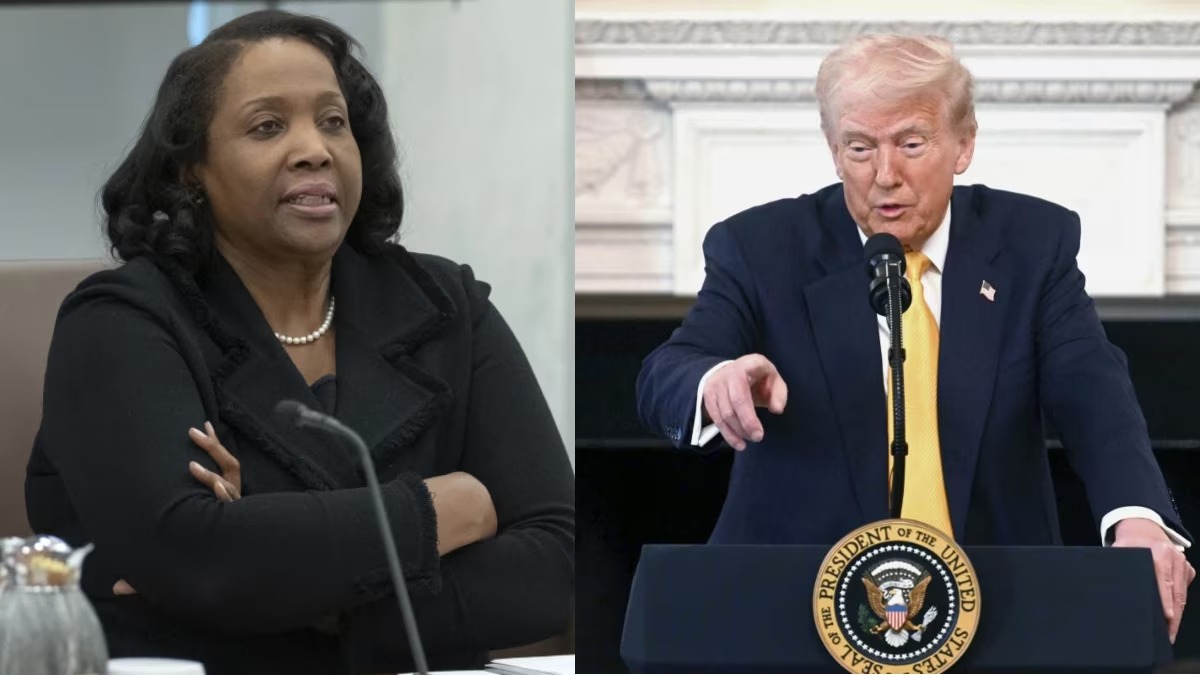
In a significant legal setback for former President Donald Trump, a federal appeals court has rejected his bid to remove Lisa Cook from the Federal Reserve Board of Governors. This ruling preserves Cook’s position just ahead of a crucial Federal Reserve policy meeting scheduled for this wee...
In a significant legal setback for former President Donald Trump, a federal appeals court has rejected his bid to remove Lisa Cook from the Federal Reserve Board of Governors. This ruling preserves Cook’s position just ahead of a crucial Federal Reserve policy meeting scheduled for this week. The decision highlights the ongoing legal battle surrounding the independence of the Fed and raises questions about the future course of Trump’s attempts to exert influence over the central bank.
Key Highlights Of The Court Ruling
The U.S. Court of Appeals for the District of Columbia Circuit ruled 2-1 against Trump’s effort to remove Lisa Cook from the Fed, citing lack of legal cause and procedural due process.
Judges Bradley Garcia and Michelle Childs, appointed by President Biden, emphasized that Trump failed to provide Cook with adequate notice or opportunity to respond before her removal attempt.
The court upheld a preliminary injunction that blocks Cook’s dismissal while the legal dispute proceeds.
The dissenting judge, Gregory Katsas, appointed by Trump, argued that the president acted “for cause,” but the majority rejected this reasoning.
Cook’s dismissal stemmed from unproven allegations of mortgage fraud, which she vehemently denies and for which she has faced no formal charges.
Legal Basis And The Federal Reserve Act
Under the Federal Reserve Act of 1913, presidents can only remove Fed governors “for cause,” a legal standard embedded to preserve the central bank’s independence from political interference. The court found that Trump's allegations did not satisfy this criterion and that procedural safeguards—such as notification and a hearing—were not observed, violating the Fifth Amendment’s Due Process Clause.
This ruling marks a historic moment as it would have been the first time in the Federal Reserve’s more than 100-year history that a sitting president successfully removed a governor.
Context Of The Dismissal Attempt
Trump announced Cook’s removal in late August, citing accusations of mortgage fraud allegedly committed before her appointment by President Biden. Cook filed a lawsuit challenging her dismissal as unlawful and lacking due process. She argued that the move was politically motivated, given her role in the Fed’s board and the broader political tensions surrounding monetary policy decisions.
Concurrent with these legal battles, the Federal Reserve is preparing for a two-day meeting to discuss interest rates amid a cooling labor market and potential rate cuts. Cook’s presence and vote bear significant weight at this meeting.
What The Court Decision Means Going Forward
While this court ruling maintains Lisa Cook’s position for now, the legal saga is likely far from over. The Trump administration may seek to appeal to the U.S. Supreme Court to overturn the injunction, creating potential months of uncertainty.
The ruling underscores the judiciary’s role in protecting the Federal Reserve’s independence, a key pillar in maintaining confidence in U.S. monetary policy. Any political interference in the Fed’s autonomous operations risks undermining market stability and economic governance.
Broader Political And Economic Implications
Trump’s broader campaign to pressure the Fed to lower interest rates, including public criticisms of Fed Chair Jerome Powell, has heightened tensions surrounding central bank autonomy. The court’s decision reaffirms that presidents cannot unilaterally override legal protections to influence monetary policy decisions.
Lisa Cook, the first Black woman appointed to the Fed’s Board of Governors, has been a critical voice in the Fed’s policy deliberations. Her continued presence maintains a degree of stability and signals judicial support for the principle of apolitical central banking.
Parallel Developments At The Federal Reserve
While the Cook case proceeds, the Senate has confirmed Stephen Miran, a Trump nominee to another seat on the Fed board, consolidating some influence from the former president’s circle. The Fed now prepares for interest rate decisions amid these political and legal undercurrents.
The situation is being closely monitored by financial markets, policymakers, and legal experts, as it could define the balance of power between the executive branch and the Federal Reserve for years to come.
Conclusion: What’s Next In This Landmark Battle
This appeals court ruling is an important milestone protecting the Federal Reserve’s longstanding independence. However, the dispute’s final resolution may rest with the Supreme Court, delaying a definitive outcome. The case highlights ongoing challenges in U.S. governance regarding the separation of powers and the safeguarding of economic institutions from political maneuvering.
Investors, policymakers, and observers will be watching closely as this legal and political drama unfolds alongside critical monetary policy decisions.
Sources: CNN, Reuters, Associated Press, The New York Times