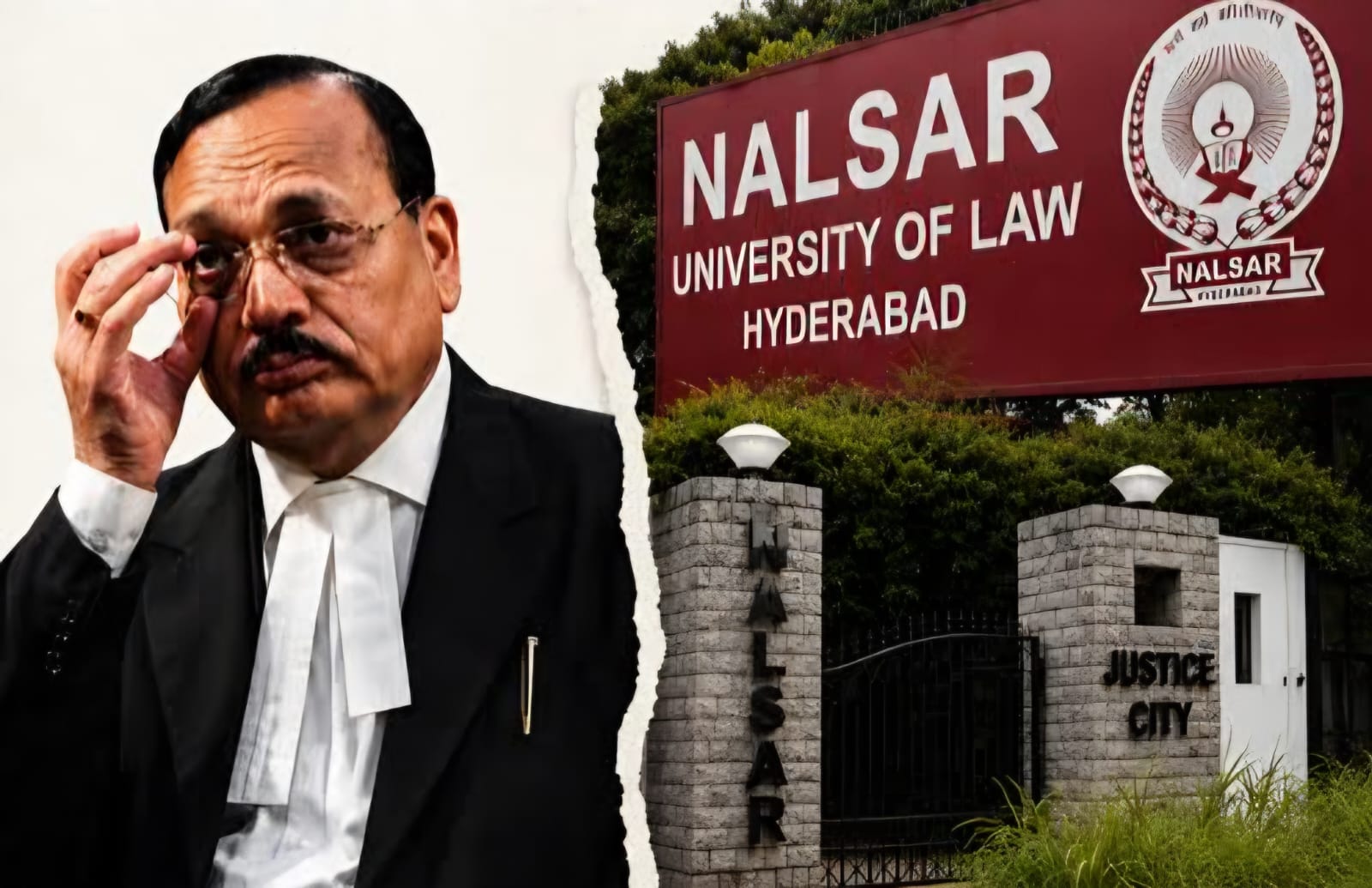
Graduating students from NALSAR and NLSIU voiced strong opposition to Chief Justice Surya Kant attending their 2026 convocation, citing concerns over judicial remarks on student protests. The CJI clarified he never accepted the invite and affirmed students' right to protest after the Bar Council withdrew an arbitrary enrollment ban.
NEW DELHI — A growing wave of student-led resistance has emerged across India’s premier national law universities, as over 400 law graduates from NALSAR University of Law in Hyderabad and hundreds of students and alumni at the National Law School of India University (NLSIU) in Bengaluru voiced formal opposition to Chief Justice of India (CJI) Surya Kant attending their upcoming 2026 convocation ceremonies.
The controversy gained momentum after graduating batches raised constitutional objections to judicial remarks made by CJI Kant, specifically regarding his bench's handling of petitions related to police conduct during student demonstrations in New Delhi. The friction further escalated into a major legal debate following an arbitrary attempt by the Bar Council of India (BCI) to block the enrollment of NALSAR’s graduating batch, a directive that was subsequently withdrawn.
Causes Behind Student Protest and Objections
The protest originated at NALSAR Hyderabad, where more than 450 graduating students signed a petition requesting university administration to reconsider inviting Chief Justice Surya Kant as the chief guest for the 2026 convocation.
The primary factors driving the opposition include:
Judicial Remarks on Protests: Students expressed dissatisfaction over remarks made by a CJI-led bench during hearings on July 22 concerning police actions against student demonstrators. The bench declined to take suo motu cognisance and requested advocates to follow standard procedural filing.
Concerns Over Judicial Accountability: Graduating students argued that convocation ceremonies should reflect a commitment to fundamental rights, access to justice, and open dialogue rather than perceived condescension toward student grievances.
Solidarity Across Institutions: On August 15, 2026, 165 graduating students, 409 current students, and 128 alumni from NLSIU Bengaluru issued a joint open letter supporting NALSAR and opposing both CJI Kant and BCI Chairman Manan Kumar Mishra attending their own convocation.
Bar Council Contention and Judicial Response
The situation escalated sharply when BCI Chairman Manan Kumar Mishra issued a directive ordering all State Bar Councils to halt the advocate enrollment of NALSAR’s 2026 graduating class, alleging disrespect toward the highest judicial office.
However, the directive was swiftly revoked following widespread backlash from the legal community and direct intervention from the apex court:
CJI's Intervention: CJI Surya Kant publicly rebuked the BCI’s actions, clarifying that "it is a dialogue between students and me" and affirming that students possess a constitutionally protected right to peaceful disagreement and protest.
Withdrawal of Enrollment Freeze: The BCI officially rescinded the enrollment prohibition, acknowledging that the vast majority of students acted independently.
Public Statement from CJI: Speaking to reporters on August 17, CJI Kant clarified that he "never consented to NALSAR's invitation" to attend as chief guest, adding that the question of his attendance did not arise.
Impact on Legal Academia and Future Graduates
The dispute highlights growing assertive independence among law graduates entering the legal profession. While the BCI Chairman issued an apology appealing for dialogue and objective reflection, student bodies at both NALSAR and NLSIU maintain that regulatory authorities must formally acknowledge the unconstitutional nature of attempting to restrict law graduates' career entry over free expression.
For universities, the episode has prompted calls to re-evaluate institutional protocols for selecting convocation chief guests and protecting academic freedom.
Official Sources Section
Official statements and regulatory updates regarding the convocation participation dispute originate from public filings issued by the Bar Council of India, administrative announcements from NALSAR University of Law, press statements from the National Law School of India University, and judicial proceedings before the Supreme Court of India.
Quote Section
According to official court proceedings and public statements by Chief Justice Surya Kant:
"It's a dialogue between students and me. Students have a right to protest and express their views peacefully without administrative or regulatory threats."
Why It Matters
The convocation opposition underscores the vital role of constitutional principles, student voice, and institutional independence in legal education. The resolution of the BCI's short-lived enrollment ban reinforces the constitutional protection of free speech for young legal professionals preparing to join the Indian Bar.
Key Facts at a Glance
Primary Issue: Student opposition at NALSAR and NLSIU against CJI Surya Kant and BCI Chairman attending convocations.
Core Grievance: Disagreement with judicial remarks on student protests and perceived condescension toward student rights.
Regulatory Action: BCI briefly attempted to block 2026 NALSAR graduates from advocate enrollment before rescinding the order under judicial disapproval.
CJI Clarification: CJI Kant stated he never consented to the NALSAR invitation and reaffirmed students' right to peaceful protest.
Frequently Asked Questions
Why did law students oppose the CJI attending their graduation ceremony?
Students cited concerns over recent judicial remarks regarding student protests and police action, arguing that convocation speakers should align with principles of institutional accountability and free expression.
Did the Bar Council of India ban law graduates from practicing?
The BCI briefly issued a directive to freeze advocate enrollment for NALSAR’s 2026 batch, but reversed the order within hours following public backlash and criticism from the CJI.
Did CJI Surya Kant decline the convocation invitation?
Yes, CJI Surya Kant clarified on August 17, 2026, that he had never formally consented to attend NALSAR's convocation, stating the question of his attendance did not arise.
Source: Supreme Court of India | Bar Council of India | NALSAR University of Law | NLSIU Bengaluru