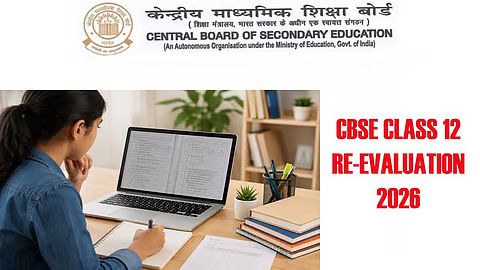
The Central Board of Secondary Education has released the first phase of Class 12 re-evaluation results, clearing over 87 percent of student applications. Managed alongside technical experts from top IITs, the updated marks are now accessible on DigiLocker, ensuring students can meet critical university admission deadlines.
NEW DELHI — The Central Board of Secondary Education (CBSE) has officially commenced the phased release of its highly anticipated post-result verification and re-evaluation outcomes for the Class 12 board examinations. According to administrative bulletins issued by the board's headquarters on Sunday, June 21, 2026, evaluation teams successfully processed and declared the updated statuses for more than 87 percent of the total review applications during the initial phase of the rollout.
This rapid processing development is critical today for thousands of high school graduates across India and international schools, as finalized, authenticated senior secondary transcripts are legally mandatory to secure competitive undergraduate seats during active university counseling windows.
Deploying the Digital India Matrix: The Phased Evaluation Funnel
The release of the re-evaluation metrics marks the culmination of a rigorous multi-stage post-examination review window. Following the initial declaration of the main Class 12 board results on May 13, 2026—which mapped the performance of approximately 17.69 lakh registered candidates—the board opened an explicit window from May 19 to May 25, 2026, allowing students to obtain digital copies of their evaluated answer scripts. Subsequently, candidates identified discrepancies and submitted formal requests for the verification of marks and individual question re-evaluations between June 2 and June 7, 2026.
To protect the absolute system integrity of these modifications, the board structured its post-result services platform under the direct operational monitoring of external technology experts. Software engineers and security architects from the Digital India Corporation, the Indian Institute of Technology (IIT) Kanpur, and IIT Madras directly supported the internal administrative team to shield the marking databases against unauthorized access or malicious external script interventions.
Regional Tracking and Direct Benefit Status Access
Students who applied for verification can track their revised grades and individual subject scores by logging into the centralized DigiLocker Results Portal using their official board exam roll numbers, school codes, and admit card identification strings.
In cases where a student's claim regarding an omission or calculation error is legally established, the central evaluation system corrects the marking logic, updates the master sheet, and pushes a revised, digitally signed marksheet directly to the candidate's account. Conversely, for individuals whose applications resulted in a strict "No-change" verdict, the board has announced that a secondary provision allowing the physical inspection of marked papers at localized regional offices will be scheduled shortly.
Official Sources Section
The processing percentages, procedural deadlines, technical system oversight data, and security architectures cited in this news report are directly based on public statements issued by the Central Board of Secondary Education (CBSE) and verified server logs updated via the DigiLocker Results Portal.
Quote Section
"The outcomes are being released in a phased manner, with over 87 per cent of the total applications received being declared today," stated senior administrative heads in an official communique on X. "According to officials, the remaining applications are under active validation and will be published systematically. The board emphasizes that every request was navigated through a robust, transparent, and closely monitored system to ensure absolute fairness. Students are strongly advised not to believe unverified social media claims and rely exclusively on official board updates."
Why It Matters
The timely completion of the first phase of re-evaluation carries immense practical significance for higher education enrollments. With major public universities utilizing centralized portals for admissions, any prolonged delay in final score verification can lock deserving students out of their preferred courses. By clearing more than 87 percent of the backlog in a single launch, the board minimizes academic anxiety, allowing candidates to confidently present their final, verified academic credentials to university admission desks without risking disqualification.
Key Facts at a Glance
Massive Phase 1 Clearance: More than 87 percent of all Class 12 re-evaluation and verification requests were successfully declared in the first phase.
Digital Access Enabled: Students can immediately verify their revised statuses and download fresh marksheets through the DigiLocker Results Portal.
Technical Supervision: The evaluation platform was anchored by cybersecurity and data experts from the Digital India Corporation, IIT Kanpur, and IIT Madras.
Provisions for No-Change Status: Candidates who received a "No-change" result will soon be granted an option to physically inspect their answer scripts at regional offices.
Campaign Focus: The board explicitly warned parents and students against trusting unverified viral posts, advising adherence to formal channels.
FAQ Section
How can I check my CBSE Class 12 re-evaluation results online?
Candidates must visit the official DigiLocker Results Portal and input their unique exam credentials, including their Roll Number, School Number, and Admit Card ID, to view their updated marks.
What should a student do if their application status shows 'No-change'?
If the outcome shows no change in marks, the student can wait for the upcoming schedule from the board, which will allow candidates to apply to physically inspect their evaluated answer sheets at their respective regional offices.
Will the remaining 13 percent of re-evaluation results be delayed?
No. The board has confirmed that the remaining applications are being processed sequentially and will be uploaded online in rapid subsequent phases to prevent any disruptions to university admission timelines.
Source: Official communication channels maintained by the Central Board of Secondary Education (CBSE) and national student advisory logs.