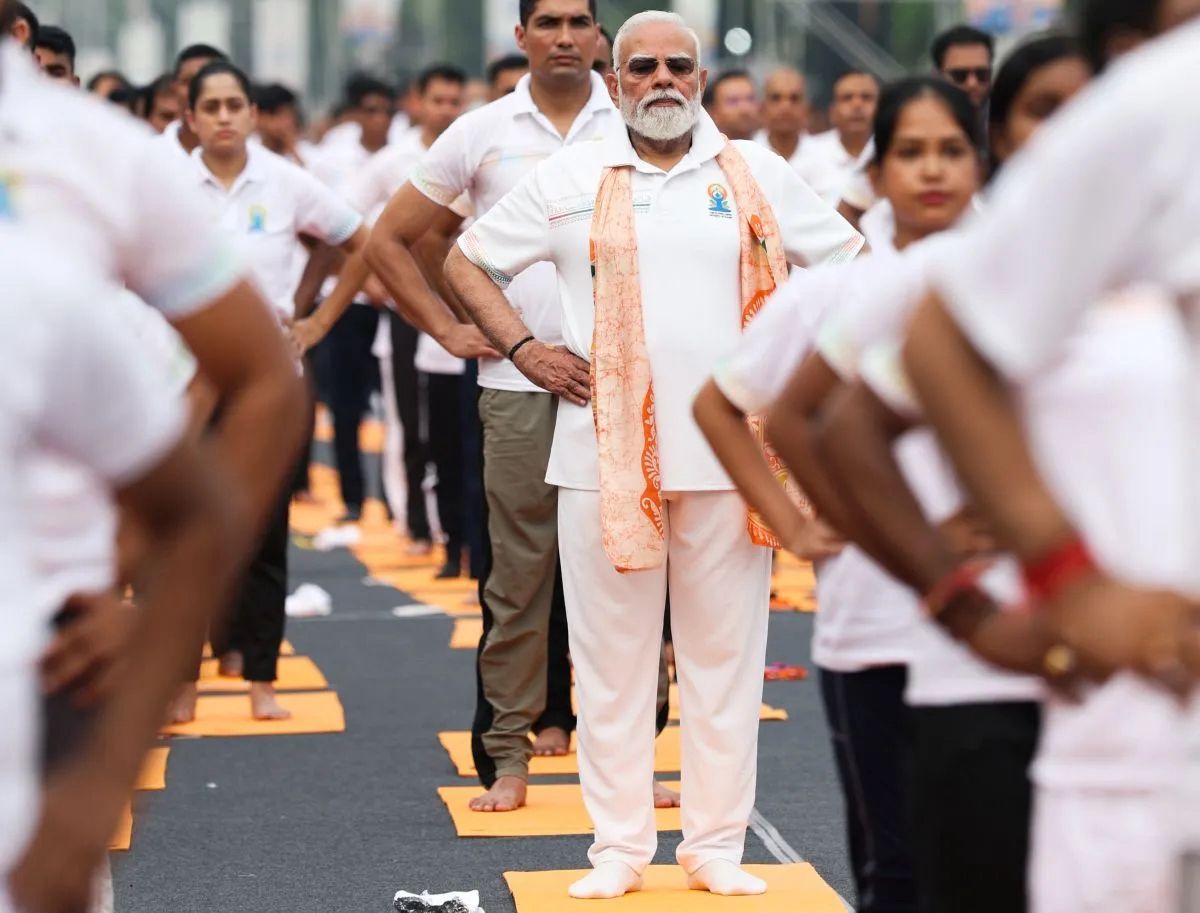
Prime Minister Narendra Modi has thanked citizens and the global community for turning the 12th International Day of Yoga into a massive global celebration. Spanning over 180 countries, the event successfully highlighted India's cultural soft power while promoting accessible, preventive healthcare models to combat modern lifestyle-related illnesses.
NEW DELHI — Indian Prime Minister Narendra Modi has formally extended his gratitude to citizens and the international community for transforming the 12th annual International Day of Yoga into a coordinated global celebration. In an official communique issued from New Delhi on Sunday, June 21, 2026, the Prime Minister highlighted the unprecedented mass participation observed across diverse geographic territories, ranging from high-altitude military outposts to iconic capital landmarks worldwide.
The successful completion of the global events underscores the growing institutional strength of the International Day of Yoga as a major vehicle for India’s geopolitical soft power and wellness diplomacy. As contemporary public health infrastructure faces rising challenges from non-communicable diseases and chronic stress, New Delhi is actively leveraging this traditional discipline to promote holistic public health models on the global stage.
The 2026 Focus: Scaling Wellness Communities Globally
The 2026 iteration of the International Day of Yoga operated under a specialized framework designed to integrate traditional physical postures, known as asanas, with modern preventive healthcare routines. According to official registries maintained by the Ministry of Ayush, coordinated assemblies took place across all 28 Indian states and eight Union Territories, with dedicated digital feeds linking remote locations to central monitoring stations in the national capital.
The scale of the 2026 event was significantly expanded by utilizing unique domestic backdrops to showcase the versatility of the practice:
High-Altitude Operations: Personnel from the Indian Armed Forces executed synchronized routines along the line of control, including specialized high-altitude teams stationed in the Siachen Glacier region.
Maritime Deployments: The Indian Navy organized mass sessions across its active fleet, with sailors participating on the flight decks of deployed warships in the Indian Ocean.
Vibrant Villages Initiative: The federal government extended the operational footprint into remote border borderlands, mobilizing local communities to demonstrate the accessibility of wellness practices outside major cities.
Institutional Diplomacy and Foreign Mission Coordination
On the international front, the Ministry of External Affairs coordinated with foreign governments and municipal bodies to host large-scale public demonstrations in over 180 countries. Landmark public spaces—including the United Nations Headquarters in New York, Trafalgar Square in London, and the Eiffel Tower plaza in Paris—hosted thousands of practitioners following the standardized Common Yoga Protocol.
Diplomatic briefs indicate that these coordinated events have successfully moved the practice beyond a simple fitness trend, establishing it as a recognized framework for international cultural cooperation. By anchoring the global celebration in shared human well-being, India has created a neutral platform for public diplomacy that effectively cuts through geopolitical tensions.
Official Sources Section
The participation data, state administrative directives, diplomatic metrics, and operational guidelines cited in this global report are compiled directly from press communiqués distributed by the Press Information Bureau (PIB) India, regulatory data feeds from the Ministry of Ayush, and foreign deployment logs verified by the Ministry of External Affairs.
Quote Section
"The enthusiastic participation of millions across the globe demonstrates that the message of unity and holistic health resonates deeper with each passing year," stated Prime Minister Narendra Modi in his official address broadcast to the nation. "According to officials, the transformation of the International Day of Yoga into a truly global celebration belongs to the people who have integrated this discipline into their daily lives. Organizers stated that the focus must now shift toward sustaining this momentum, ensuring that the benefits of preventive healthcare reach every community, regardless of geographic or socio-economic boundaries."
Why It Matters
The global mobilization for the International Day of Yoga has direct practical implications for international public health policies and economic systems. By standardizing training protocols and expanding digital access through specialized mobile apps, the initiative provides governments with a cost-effective tool to combat rising lifestyle-related health conditions, such as cardiovascular diseases and mental exhaustion. Financially, the sustained global visibility directly accelerates India's domestic wellness tourism economy, driving predictable consumer traffic into specialized treatment facilities, traditional holistic resorts, and certified organic export businesses.
Key Facts at a Glance
Prime Minister's Thanks: PM Narendra Modi officially thanked the public and global communities for elevating the 12th International Day of Yoga into a massive global celebration.
Widespread Domestic Footprint: Synchronized sessions spanned from high-altitude deployment zones in Siachen to naval vessels deployed across the Indian Ocean.
Broad International Scope: More than 180 countries participated in the global celebration, with large public gatherings organized at major international landmarks.
Preventive Health Objective: The Ministry of Ayush framed the 2026 event around reducing non-communicable diseases through accessible daily wellness routines.
Economic Catalyst: The global visibility continues to drive growth in India's wellness tourism market and expands export pipelines for organic products.
FAQ Section
When was the International Day of Yoga officially established by the United Nations?
The United Nations General Assembly officially adopted the resolution establishing the day on December 11, 2014, following an initial proposal introduced by India, leading to the inaugural global celebration on June 21, 2015.
Where can I access the official Common Yoga Protocol guidelines?
The complete text, instructional videos, and digital toolkits for the standardized Common Yoga Protocol can be accessed and downloaded through the web portal managed by the Ministry of Ayush.
How do Indian embassies facilitate International Day of Yoga events overseas?
Indian diplomatic missions collaborate with local cultural organizations, municipal bodies, and expatriate associations to secure public venues, distribute educational materials, and host free public sessions open to all citizens.
Source: Official state bulletins published by the Press Information Bureau (PIB) India and international relations archives managed by the Ministry of External Affairs.