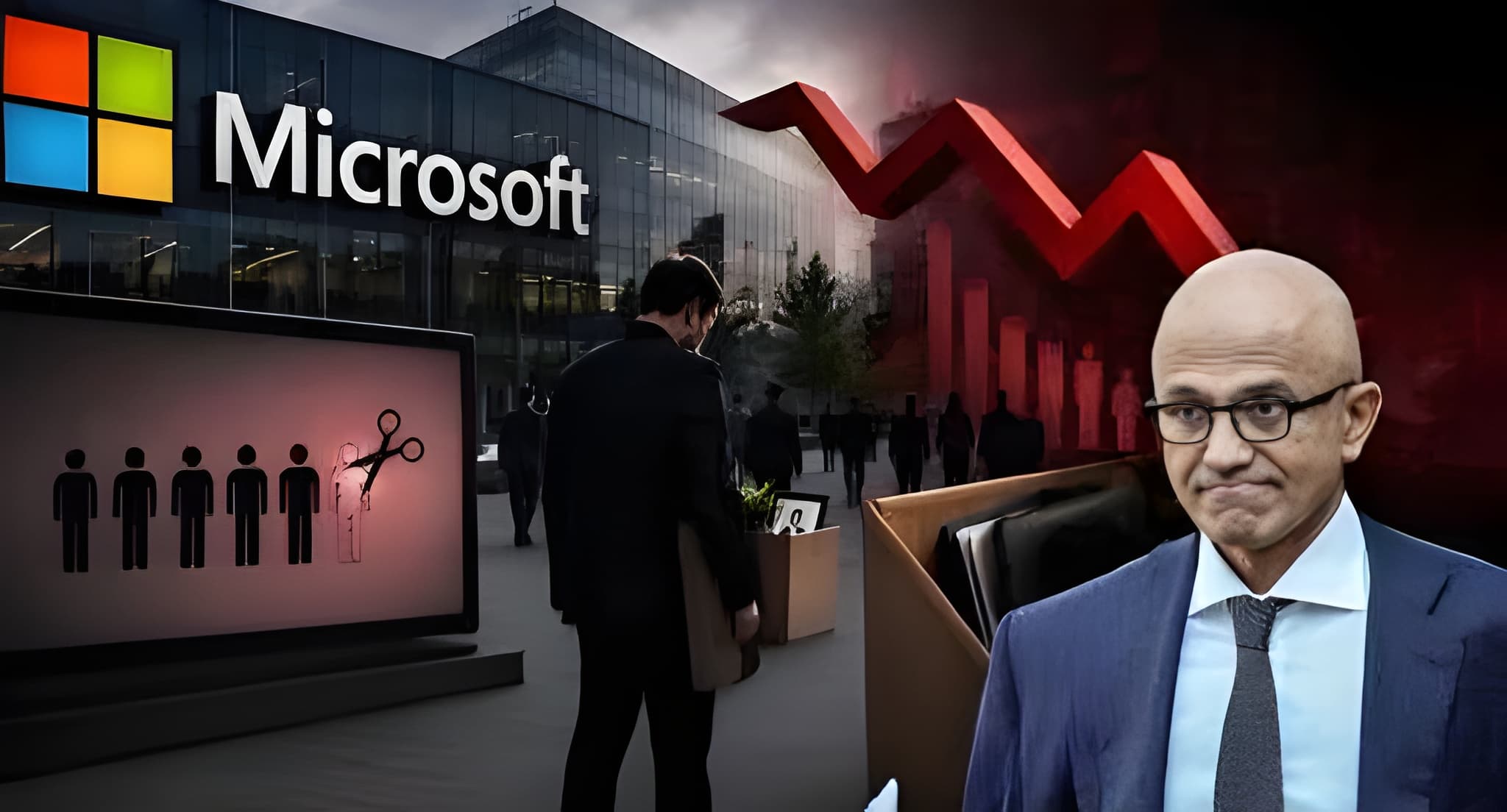
Microsoft has announced it is cutting roughly 4,800 jobs, or 2.1% of its global workforce, focusing on sales, consulting, and gaming divisions. The reorganization hits Xbox hardest, eliminating 3,200 positions and spinning off four game studios, as Microsoft attempts to offset rising capital expenditures driven by its artificial intelligence infrastructure.
REDMOND, Wash. — Microsoft Corporation announced on Monday, July 6, 2026, that it is eliminating approximately 4,800 roles, representing about 2.1% of its global workforce. The workforce reduction primarily impacts the company’s sales, consulting, and Xbox gaming operations. The decision marks the latest corporate restructuring within the technology sector as major enterprises redirect billions of dollars toward high-capacity artificial intelligence (AI) infrastructure.
The layoffs come at a challenging time for the Redmond-headquartered software giant. Microsoft shares fell nearly 23% in the first six months of 2026, marking its weakest first-half performance on Wall Street since 2022. The job cuts follow a voluntary buyout program introduced earlier this year, which saw roughly 9,000 U.S. employees choose to exit the company.
Historic Overhaul and Studio Spinoffs at Xbox
The company's interactive entertainment business is bearing the heaviest share of the restructuring. Internal corporate communications confirm that of the 4,800 total roles being eliminated across Microsoft, approximately 1,600 positions are being cut immediately from the Xbox gaming division. Furthermore, a phased reduction plan detailed by leadership will bring total job losses within Xbox to 3,200 by the end of the newly commenced fiscal year, equating to a 20% headcount reduction for the division.
Alongside the personnel cuts, Microsoft is divesting itself of several major game development subsidiaries. Four prominent internal studios will be spun out or transferred to new ownership:
Compulsion Games & Double Fine Productions: Acquired during Microsoft’s expansion push in the late 2010s, both studios are set to operate as independent entities once again.
Ninja Theory & Undead Labs: Both studios have entered formalized terms to move under unspecified new external ownership.
In an internal memo sent to employees on Monday, newly appointed Xbox CEO Asha Sharma conceded that the division's historic business model had become unsustainable. Sharma revealed that, excluding the massive Activision Blizzard King unit, Microsoft had invested over $20 billion into hardware subsidies, content platforms, and studio assets over the last five years, while experiencing an annual revenue decline of nearly $500 million during that exact timeframe.
Balancing AI Infrastructure Spending and Margins
The broader workforce reduction reflects a major inflection point for global enterprise software providers. While intense demand for artificial intelligence capabilities has continued to accelerate revenue growth at Microsoft's Azure cloud computing platform, the capital outlays required to construct, power, and cool next-generation data centers are putting visible strain on corporate cash flows.
Industry data projects that total capital expenditures on artificial intelligence infrastructure across Big Tech will surpass $700 billion this year alone. In its April financial guidance, Microsoft surprised Wall Street by revealing a $190 billion spending projection for 2026, generating institutional concern regarding short-term profit margins.
By trimming traditional sales, Software-as-a-Service (SaaS) consulting, and consumer-facing gaming segments, Microsoft is attempting to re-engineer its cost base to preserve capital for core machine learning research and AI product deployment.
Official Sources Section
The operational reorganizations, workforce statistics, and internal corporate timelines detailed in this report are sourced from official employee memos issued by Chief People Officer Amy Coleman and Xbox CEO Asha Sharma, public media statements by Microsoft President and Vice Chair Brad Smith, and previous regulatory financial filings submitted to the U.S. Securities and Exchange Commission (SEC).
Quote Section
"Microsoft can only be a strong employer if it has a successful business," stated Brad Smith, Microsoft President and Vice Chair, in an interview addressing the restructuring. "We have to adapt to change."
Commenting on the financial position of the gaming ecosystem, Xbox CEO Asha Sharma wrote in her division memo: "Our business today is not healthy. We must reset Xbox."
Why It Matters
This workforce reduction carries practical implications for investors, enterprise clients, and consumers alike. For the financial markets, it proves that tech companies are facing immense pressure to balance their long-term AI aspirations with immediate cost controls. For corporate clients utilizing Microsoft's SaaS and cloud consulting services, thinner account coverage could alter implementation timelines. For the gaming industry, the restructuring signals a pullback from aggressive studio acquisitions and hardware subsidies, shifting focus toward immediate software profitability.
Key Facts at a Glance
Workforce Reduction: Approximately 4,800 roles eliminated globally, making up 2.1% of Microsoft's estimated 220,000-person headcount.
Gaming Impact: Xbox will lose a total of 3,200 roles—20% of its divisional staff—with 1,600 departures taking effect immediately.
Studio Divestitures: Compulsion Games, Double Fine, Ninja Theory, and Undead Labs are being spun off or sold to external ownership.
Capital Realignment: Trimming personnel in consulting, SaaS sales, and gaming aims to balance a projected $190 billion corporate spending plan focused heavily on AI data centers.
Frequently Asked Questions
Are these layoffs related to the performance of Microsoft Azure?
No. Azure's cloud-computing business continues to experience robust demand due to corporate adoption of AI models. However, the high costs involved in building the data centers to run these tools have compressed corporate cash flows, forcing efficiency measures elsewhere.
What will happen to upcoming games from the spun-off Xbox studios?
Because Compulsion Games and Double Fine are transitioning back to independent operations, and Ninja Theory and Undead Labs are moving to new owners, future game publishing arrangements and platform exclusivity will depend entirely on their new corporate agreements.
How do these cuts compare to Microsoft's historical layoffs?
The 4,800 job eliminations are smaller in scope than the company's major restructuring actions in 2025, during which Microsoft removed more than 15,000 positions globally across two distinct rounds of layoffs.
Sources: U.S. Securities and Exchange Commission (SEC), internal corporate announcements via Microsoft Corporation, and verified statements from corporate executives.