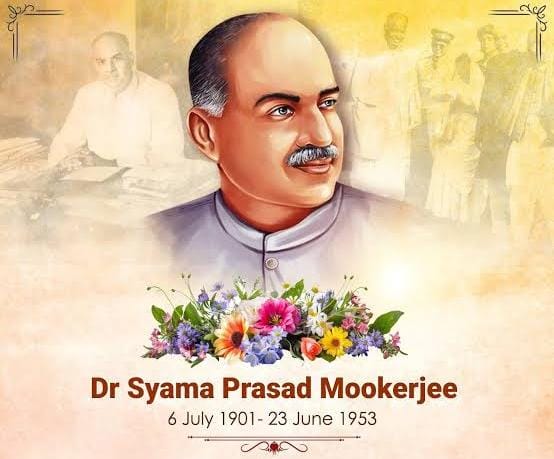
Sarmeela Marquis, granddaughter of Dr. Syama Prasad Mookerjee, thanked the BJP for reviving her grandfather's legacy. She noted that bringing the Jana Sangh founder's vision of industrial self-reliance and national unity back into the spotlight restores historical justice and serves as a proud moment for the family.
KOLKATA, India — Sarmeela Marquis, the granddaughter of the iconic nationalist leader Dr. Syama Prasad Mookerjee, has formally expressed her gratitude to the Bharatiya Janata Party (BJP) for actively reviving and honoring his historical legacy. Speaking following high-level political developments and widespread national tributes marking his birth anniversary, Marquis stated that the institutional recognition of her grandfather’s sacrifices serves as a moment of immense pride for the family.
This development is highly significant today as India marks a renewed focus on its foundational political figures. For decades, the contributions of Dr. Mookerjee—the founder of the Bharatiya Jana Sangh, which later evolved into the modern BJP—were largely sidelined in mainstream political discourse. The vocal acknowledgment by the central leadership represents a major shift in the preservation of the country’s modern political history, impacting how future generations evaluate the architectural framework of independent India.
Generational Pride Restored Through National Recognition
For the kin of Dr. Syama Prasad Mookerjee, the systematic effort by top political leadership to bring his ideological vision back into the spotlight has restored a deep sense of historical justice. According to family statements, seeing his photographs and foundational policies featured prominently across national campaigns and public squares marks a profound transition from years of relative obscurity.
Sarmeela Marquis noted that hearing the name of her grandfather, whom she affectionately refers to as "Dadu," echoing through the voices of top national policymakers marks a historic turning point for the family's heritage. Alongside Marquis, Justice Chittatosh Mookerjee, the former Chief Justice of the Bombay High Court and nephew of the late leader, also acknowledged the visual and cultural resurgence of Dr. Mookerjee's memory in public spaces and national media.
Historic Context and the Vision of a Prosperous Bengal
The revival of Dr. Mookerjee's legacy is closely intertwined with recent electoral and structural shifts across the subcontinent. Prime Minister Narendra Modi and senior cabinet officials have repeatedly emphasized that their long-term governance model draws directly from Mookerjee's early blueprints for industrial self-reliance and national integration.
Dr. Mookerjee’s historical footprint spans several critical areas of independent India's governance:
Industrial Governance: Serving as independent India's first Minister for Industry and Supply, he laid the baseline infrastructure for the country’s early public manufacturing institutions.
Educational Reforms: As one of the youngest Vice-Chancellors of Calcutta University, he pioneered the integration of regional Indian languages alongside modern scientific research frameworks.
National Unity: His firm opposition to separate administrative frameworks within the sovereign boundaries of India laid the ideological groundwork for the eventually executed abrogation of Article 370.
The central government's ongoing initiatives, such as the commemoration of his 125th birth anniversary across state capitals from New Delhi to Kohima, highlight the party's institutional commitment to cementing his ideals in modern administrative policy.
Impact on Citizens, Cultural Historians, and Political Observers
The systematic revival of traditional political philosophies directly affects Indian citizens and cultural historians by offering a broader perspective on the nation's freedom struggle and early governance. By highlighting Mookerjee's focus on domestic manufacturing and indigenous education, current policies aim to build a strong sense of national identity among the youth.
For public policy analysts and institutional investors, this ideological continuity signals a predictable, long-term commitment to self-reliant economic strategies. The government's emphasis on domestic production, infrastructure development, and centralized governance directly mirrors the economic principles championed by Mookerjee during the post-independence reconstruction era.
Official Sources Section
The biographical timelines, family quotes, and state-level commemorative records referenced in this report are compiled from official state archive dispatches, media releases from the Press Information Bureau, and regional organizational briefs from the BJP Nagaland State Headquarters. Family perspectives were verified through recorded statements published by the media bureau of The Times of India.
Quote Section
The emotional impact of this historical revival was highlighted directly by the late leader's family members during recent public interactions.
"To keep his memory alive, the newly elected government must work to turn his dreams into reality," stated Sarmeela Marquis, granddaughter of Dr. Syama Prasad Mookerjee, while addressing the media.
Reflecting on the long-term changes in public perception, family members noted the clear shift in national media coverage.
"According to officials and family representatives, it is a moment of great satisfaction to see his photograph and seminal contributions placed back on the front pages of national newspapers decades after his tragic demise in a Srinagar jail in 1953."
Why It Matters
For mainstream society and political observers, the validation of Dr. Mookerjee's legacy by his direct descendants helps bridge past political history with modern governance. It shows that the current administration's focus on complete national integration and self-reliant industrialization is rooted in the foundational philosophies of the early post-independence era.
Key Facts at a Glance
Family Gratitude: Dr. Mookerjee's granddaughter, Sarmeela Marquis, publicly thanked leadership for restoring the leader's place in national history.
Ideological Origin: Dr. Mookerjee founded the Bharatiya Jana Sangh in 1951, which served as the structural predecessor to the modern BJP.
National Commemorations: Major events, including his 125th birth anniversary, were organized across multiple states to highlight his role in education and industry.
Policy Influence: His foundational work as India's first Industry Minister continues to guide current national self-reliance initiatives.
Frequently Asked Questions (FAQ)
Who was Dr. Syama Prasad Mookerjee?
Dr. Mookerjee was an eminent Indian academic, politician, and minister who served as independent India's first Minister for Industry and Supply, and later founded the Bharatiya Jana Sangh.
Why did his granddaughter thank the political leadership?
Sarmeela Marquis expressed gratitude because the current administration has actively revived her grandfather's legacy, ensuring his contributions to national unity and education are recognized globally.
How do Dr. Mookerjee's early philosophies affect policy today?
His vision for unified national governance and independent industrial manufacturing serves as the core inspiration behind current economic policies and structural reforms.
Source: Times of India, Nagaland Tribune State Reports