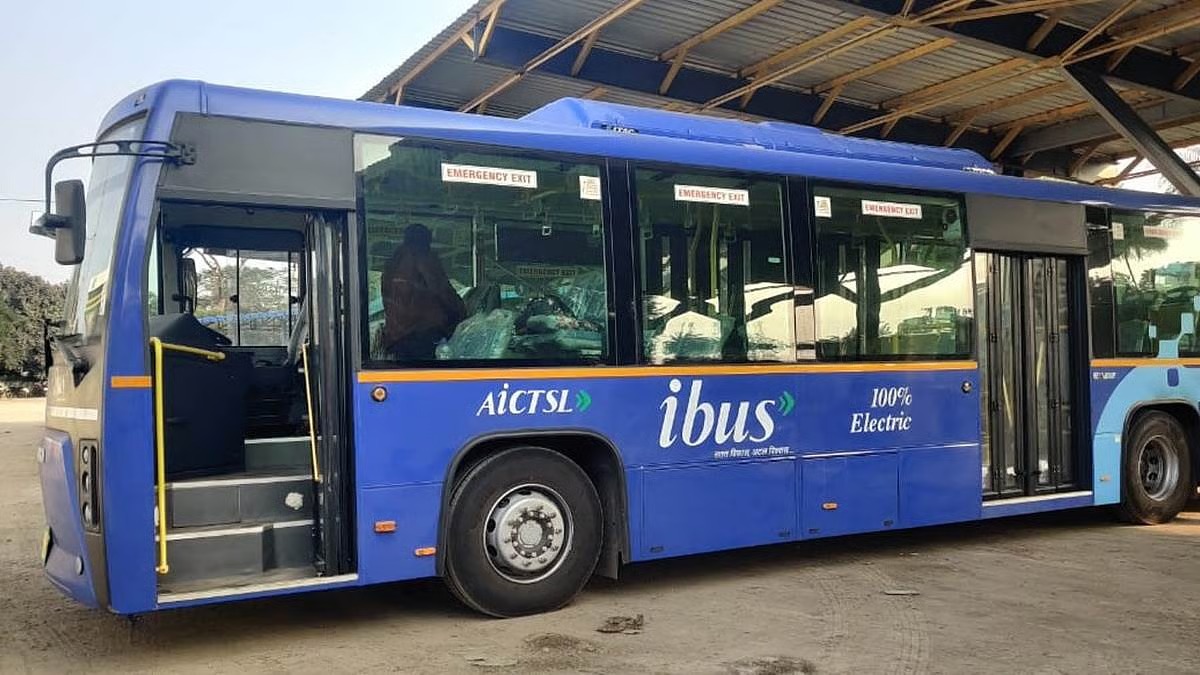
Atal Indore City Transport Services Limited (AICTSL) has launched trial runs for its new fleet of PM e-buses, deploying the first 10 air-conditioned electric units on Route I-14. Part of a broader 150-bus central allocation, the tech-enabled vehicles feature live CCTV security, ITMS tracking, and digital fare systems
INDORE, India — India’s cleanest city has officially initiated the technical and commercial trial runs of its new fleet of PM e-buses to modernize its urban public transportation matrix. Executed by the Atal Indore City Transport Services Limited (AICTSL), the initial commercial run deployed 10 high-tech, air-conditioned electric buses onto Route I-14, which connects the Rau Rangwasa area to the Kanadia Bypass.
This green transit overhaul is a core component of the Central Government’s flagship PM-eBus Sewa initiative, under which Indore has secured an aggregate allocation of 150 zero-emission electric buses. The dynamic pilot infrastructure serves as a major baseline milestone for Madhya Pradesh’s broader Mukhyamantri Sugam Parivahan Seva program, positioning the city as the primary testing ground for an environmentally sustainable, technology-driven public transport network before it scales across the state.
Technical Specifications and Smart Security Architecture
The newly introduced 9-meter-long electric buses feature advanced safety systems and smart transit tools designed by domestic manufacturing partners. Managed under a Public-Private Partnership (PPP) framework, each vehicle is designed to minimize localized carbon footprints while maximizing passenger transit convenience.
Key engineering and safety integrations onboard include:
Live Surveillance Architecture: Every bus houses high-definition CCTV cameras paired with immediate panic buttons. The streaming systems route telemetry feeds straight to the AICTSL central control room for live tracking.
Intelligent Transit Management System (ITMS): The entire fleet is linked via real-time GPS tracking and automated scheduling infrastructure to manage operational arrival times and eliminate passenger wait intervals.
Universal Digital Fare Integration: To phase out physical cash dependency, the units utilize digital fare collection terminals compatible with the National Common Mobility Card (NCMC) standards.
Inclusivity Engineering: A dedicated mechanical wheelchair assistance ramp system is built directly into the entry chassis to aid commuters with restricted mobility.
Phased Fleet Scaling and Regional Connectivity Plans
According to project implementation logs reviewed by the state’s regional transport board, the current 10-bus deployment along the busy Route I-14 will scale up sequentially. AICTSL aims to integrate all 150 allocated air-conditioned electric units into its daily operations over the coming months.
Beyond standard municipal boundaries, future phases of the transit layout will connect Indore’s urban center with surrounding rural towns, agricultural villages, and semi-urban communities. This regional integration will work alongside Indore's upcoming Metro rail network, establishing a multi-layered public transport framework designed to reduce reliance on private vehicles and ease traffic congestion. To support this growing electric vehicle (EV) network, municipal authorities are expanding the city's charging framework, which already features 27 public charging stations, including 18 solar-powered facilities.
Official Sources Section
The operational execution, route maps, and vehicle safety parameters detailed within this report correspond directly to official declarations issued by the Atal Indore City Transport Services Limited (AICTSL), municipal updates from the Indore Municipal Corporation, and project briefs published by the Union Ministry of Housing and Urban Affairs (MoHUA) under the PM-eBus Sewa guidelines.
Quote Section
"According to officials and urban transit development registries reviewed on Tuesday, the introduction of the new electric units marks a critical leap toward clean urban mobility. Operational practices have also been updated, replacing traditional personnel with uniform-clad 'Coach Captains' and 'Digital Assistants' to manage smart fleet systems on the ground."
Why It Matters
For daily commuters and students in Indore, the trial run of these advanced PM e-buses provides immediate access to affordable, air-conditioned, and highly secure public transit. For the broader urban ecosystem, moving from diesel and compressed natural gas (CNG) to solar-supported electric grids reduces air pollution and positions the city to generate carbon credits. Economically, the localized expansion creates jobs in clean-energy vehicle maintenance, smart fare collection, and centralized depot logistics.
Key Facts at a Glance
Active Trial Launch: 10 air-conditioned electric buses have commenced trial runs on Route I-14.
Total Scope: Indore is set to receive 150 PM e-buses in a phased rollout.
Smart Infrastructure: The vehicles feature CCTV monitoring, panic buttons, and automated ITMS tracking systems.
Personnel Redefinition: The city has introduced uniform-clad 'Coach Captains' and 'Digital Assistants' to manage the fleet.
Eco-Friendly Support: The fleet is backed by 27 public charging stations, including 18 solar-powered facilities.
Frequently Asked Questions
What is the primary objective of the national PM-eBus Sewa scheme?
The national scheme is a Public-Private Partnership (PPP) model aimed at deploying 10,000 electric buses across 100-plus Indian cities. It prioritizes locations lacking organized public transit networks while building out green depot infrastructure.
How can passengers pay for fares on these new electric buses?
The fleet features advanced digital validation terminals that accept contactless cashless transactions, mobile ticketing applications, and National Common Mobility Cards (NCMC).
Will the introduction of these e-buses replace Indore's current BRTS network?
No, the e-buses will complement the existing Bus Rapid Transit System (BRTS). The city administration plans to gradually phase out older diesel buses on the BRTS lines and replace them with these electric alternatives.
Source: Official operational briefing logs published by Atal Indore City Transport Services Limited, national project trackers from the Ministry of Housing and Urban Affairs, and regional transport restructuring briefs approved by the Government of Madhya Pradesh.