Congress MP Deepender Hooda faced intense political criticism after offering a condolence message following the death of 1984 riots convict Sajjan Kumar. Denying he called Kumar a role model, Hooda stated his words were twisted, while regional leaders distanced themselves from the remarks amid widespread public backlash.
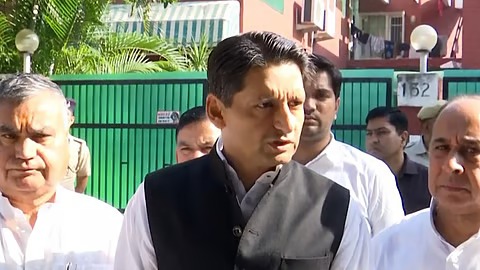
Deepender Hooda addresses intense political backlash, clarifying his condolence remarks following the death of 1984 riots convict Sajjan Kumar.
NEW DELHI — Rohtak Congress MP Deepender Singh Hooda issued a public clarification on Sunday, denying that he ever referred to the late Sajjan Kumar as a "role model" or harbored any such sentiment. The controversy erupted after Kumar, a former Congress parliamentarian serving a life sentence for his role in the 1984 anti-Sikh riots, passed away at the age of 80 on Thursday. According to reports from national news outlets, Hooda's initial condolence remarks—which noted Kumar's extensive public connect and contributions to Delhi's political landscape—drew sharp condemnation from opposition parties, Sikh organizations, and various political leaders across Punjab.
Background and Political Fallout
The initial statements attributed to Hooda triggered immediate political fallout, particularly in Punjab, where organizations like the Shiromani Akali Dal (SAD), the Aam Aadmi Party (AAP), and the Bharatiya Janata Party (BJP) slammed the comments as deeply insensitive to the victims of the 1984 violence. Critics argued that praising a convicted felon associated with the anti-Sikh riots minimized the ongoing trauma of victim families.
In response to the mounting pressure, several state-level Congress leaders in Punjab moved to distance the regional unit from the remarks, characterizing them as individual opinions. Former Punjab Chief Minister Charanjit Singh Channi also strongly condemned Kumar's historical actions, publicly rejecting any association with such leadership.
Clarification by the Rohtak MP
Addressing reporters, Deepender Hooda rejected the phrasing attributed to him, stating that certain political actors were deliberately misrepresenting his words to stoke division.
"I did not use the words, nor did I harbour any such sentiment," Hooda stated, as reported by ThePrint. He emphasized that his family and political lineage have maintained long-standing ties of brotherhood with the Sikh community, pointing to historical support during various social and agricultural struggles.
Official Sources Section
Information regarding these developments is based on reports, statements, and interviews compiled by major media outlets and news agencies, including The New Indian Express, ThePrint, and coverage from The Times of India.
"Organizers stated that political discourse surrounding historical events requires utmost sensitivity, accountability, and respect for the sentiments of affected communities."
Why It Matters
The controversy highlights the enduring sensitivity surrounding the 1984 anti-Sikh riots in contemporary Indian politics. For citizens, community leaders, and political stakeholders, statements made by public figures regarding individuals convicted of communal violence carry significant weight, directly affecting inter-community trust, accountability, and the broader discourse on justice.
Key Facts at a Glance
Event: Political backlash and subsequent clarification by Rohtak MP Deepender Hooda regarding condolence remarks for Sajjan Kumar.
Key Figures: Deepender Hooda, late former MP Sajjan Kumar, and various regional opposition leaders.
Context: Sajjan Kumar passed away at age 80 while serving life imprisonment for connections to the 1984 anti-Sikh riots.
Reactions: Immediate pushback from opposition groups such as SAD and AAP, alongside damage control by regional party members.
FAQ Section
What did Deepender Hooda clarify regarding his remarks?
Hooda clarified that he never used the phrase "role model" or endorsed Sajjan Kumar, asserting that his words were distorted for political objectives.
Who was Sajjan Kumar?
Sajjan Kumar was a former Congress MP who was serving a life sentence following his conviction in connection with the 1984 anti-Sikh riots.
How did other political parties react to the initial comments?
Parties including the Shiromani Akali Dal and the Aam Aadmi Party strongly criticized the remarks, demanding strict internal accountability and expressing solidarity with riot victims.
Where can I read further updates on this political row?
Comprehensive coverage of the statements and subsequent political reactions can be followed via The New Indian Express and ThePrint.
Source: ThePrint, The New Indian Express, The Times of India.