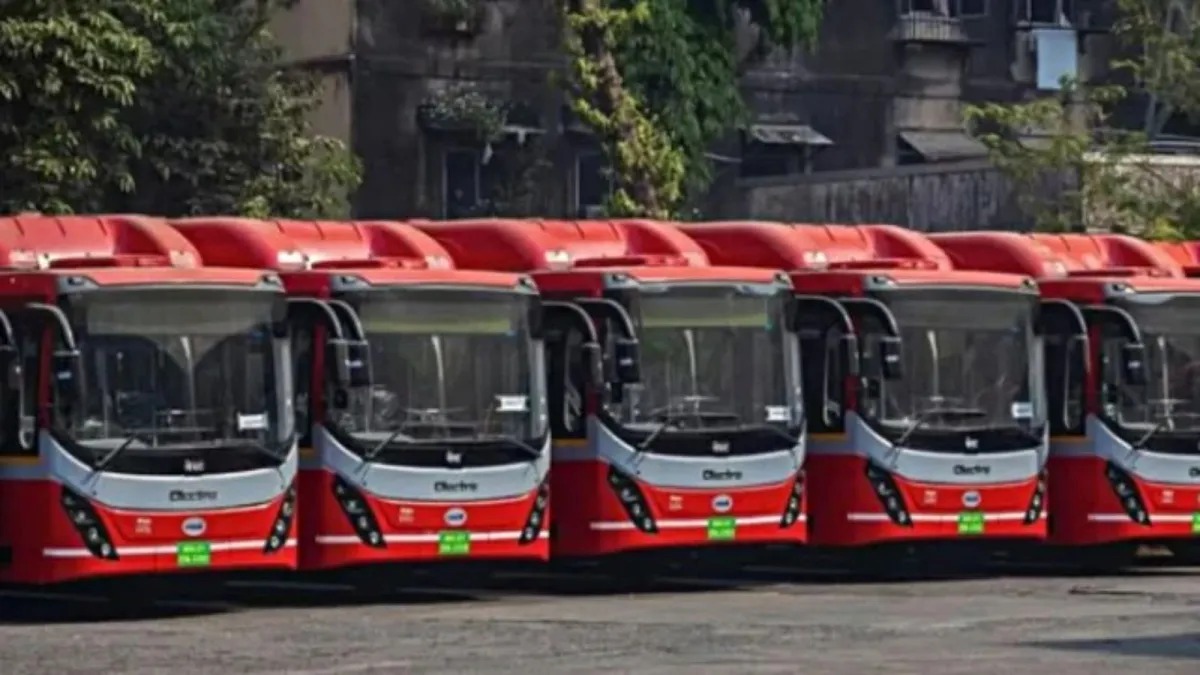
BEST employees in Mumbai ended a three-day strike on Sunday after the Maharashtra government agreed to an interim monthly pay hike and the release of pending gratuity payments. Bus services began a gradual recovery on Monday morning, providing relief to millions of daily commuters in India’s financial capital.
MUMBAI — Thousands of commuters in Mumbai experienced relief on Monday, June 22, 2026, as bus services operated by the Brihanmumbai Electric Supply and Transport (BEST) undertaking began returning to the city’s roads. The move followed a high-level meeting late Sunday night, where employee unions officially withdrew an indefinite strike that had paralyzed the city's public bus network for three days.
The strike, which commenced on June 19, 2026, caused significant disruption across the metropolis, forcing millions of daily passengers to rely on local trains, Metro lines, and private transport. The industrial action was spearheaded by the BEST Sanyukt Kamgar Kruti Samiti, a joint action committee representing 12 different employee unions, over a series of long-standing grievances including wage structures, recruitment, and the status of "wet-lease" (contractual) workers.
Government Reaches Accord with Unions
The resolution was reached following marathon discussions at the Sahyadri Guest House in Malabar Hill between union representatives and a state government delegation led by Maharashtra Deputy Chief Minister Eknath Shinde and Transport Minister Pratap Sarnaik.
According to government officials, the settlement includes an immediate interim monthly pay hike of ₹3,000 for permanent employees and ₹2,000 for contract workers employed by wet-lease operators. These increases will remain in effect until a new, comprehensive wage settlement is finalized. Furthermore, the administration has committed to clearing all outstanding gratuity payments for retired employees within the current financial year.
Impact on Urban Mobility
While the strike was officially called off on Sunday night, the restoration of full service proved challenging. Official data from the BEST undertaking indicated that by 8:00 AM on Monday, only 57% of the scheduled bus fleet was operational. Commuters reported long wait times at major transit hubs, as the transport body worked to transition its buses from depots back onto their designated routes.
The shutdown had previously forced authorities to request emergency assistance from the Maharashtra State Road Transport Corporation (MSRTC), which diverted over 150 buses to support city commuters—particularly students traveling to NEET examinations held over the weekend.
Context of the Dispute
The agitation was marked by heightened tensions, with BEST management initially securing an ad-interim order from the Industrial Court prohibiting the strike. The Maharashtra government had also invoked the Maharashtra Essential Services Maintenance Act (MESMA), declaring the strike illegal. Despite these legal maneuvers, the vast majority of the 23,000-strong workforce participated in the stoppage, citing a lack of administrative response to their demands over the preceding three months.
Union leader and MLA Sachin Ahir, who coordinated the joint action committee, announced the withdrawal of the strike late Sunday, stating that the state government’s commitments provided a sufficient basis to resume operations. Negotiations regarding the unions' remaining demands—including the absorption of wet-lease workers and the procurement of 5,000 new BEST-owned electric buses—are set to continue over the next 15 days.
Quote Section
According to officials, "The government has agreed to a roadmap to make BEST financially viable, including the procurement of 5,000 new electric buses over the next three years and a commitment to address remaining employee welfare concerns within the next fortnight."
Why It Matters
As Mumbai’s second-largest transport provider, BEST carries approximately 2.5 million passengers daily. The strike highlighted the precarious nature of the city's public transport dependency, as the lack of bus services exerted intense pressure on an already strained suburban railway and Metro network. The agreement serves as a temporary reprieve, though long-term questions regarding the financial stability of the undertaking and its reliance on private wet-lease operators remain central to ongoing labor discussions.
Key Facts at a Glance
Strike Duration: Three days (June 19–21, 2026).
Interim Wage Hike: ₹3,000 for permanent staff; ₹2,000 for contract (wet-lease) workers.
Fleet Status: Only 57% of the scheduled 2,766-bus fleet was operational on Monday morning.
Key Commitments: Government to clear pending gratuity dues within the 2026–27 fiscal year and initiate a 5,000-bus EV procurement plan.
FAQ
1. Why did BEST employees go on strike?
Employees were protesting over wage stagnation, the status of contract workers, pending gratuity payments, and the lack of response from the administration regarding their long-pending demands.
2. Are BEST bus services fully back to normal?
Not yet. While the strike is over, BEST officials reported that service was at 57% capacity on Monday morning, with full operations expected to resume as buses return from depots.
3. What happens to the other demands that were not fully resolved?
The state government and the union action committee have agreed to hold further discussions over the next 15 days to address remaining issues, such as permanent recruitment and operational policy.
Summary: BEST employees in Mumbai ended a three-day strike on Sunday after the Maharashtra government agreed to an interim monthly pay hike and the release of pending gratuity payments. Bus services began a gradual recovery on Monday morning, providing relief to millions of daily commuters in the city.
Official Sources