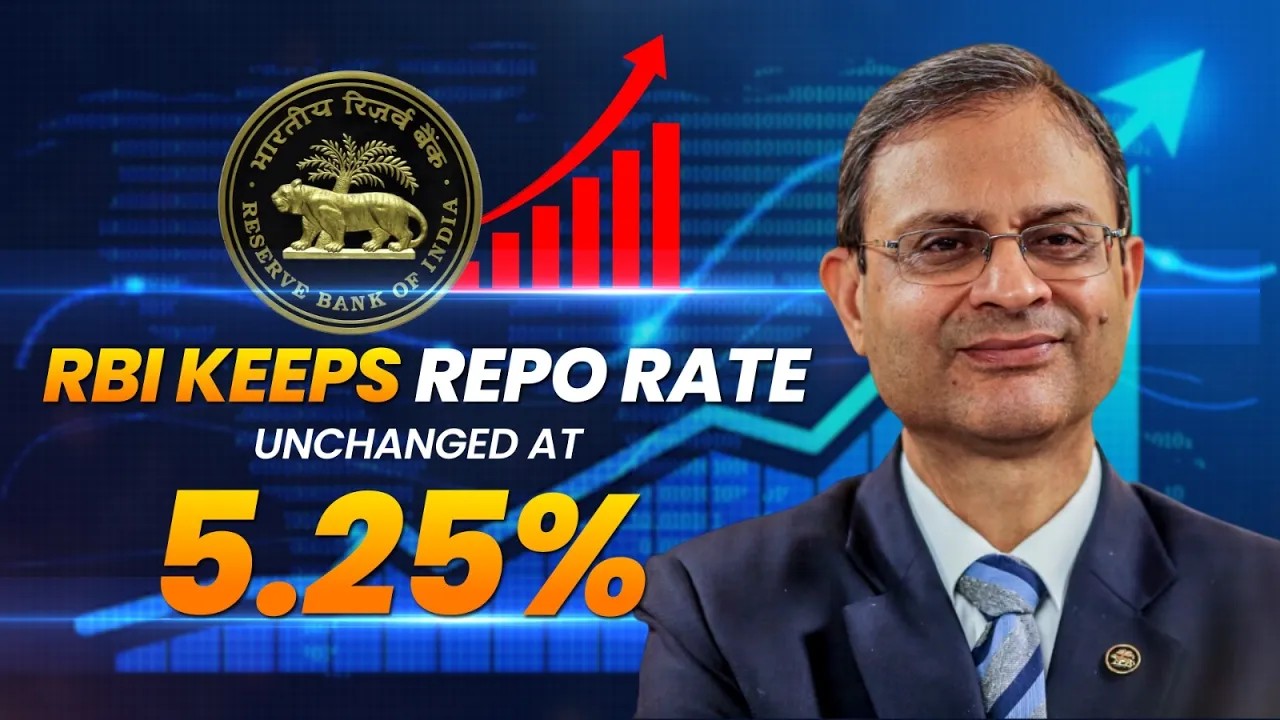
India's NBFC and retail lending sectors welcomed the Reserve Bank of India’s decision to keep the benchmark repo rate unchanged at 5.25%. While the regulator raised its inflation forecast to 5.1% due to geopolitical risks, the status quo provides immediate funding predictability and protects retail loan affordability.
MUMBAI — India’s Non-Banking Financial Companies (NBFCs) and fintech lenders have broadly welcomed the Reserve Bank of India’s (RBI) decision to maintain a status quo on its benchmark policy rates. Following a three-day review ending June 5, 2026, the RBI Monetary Policy Committee (MPC) unanimously voted to keep the repo rate unchanged at 5.25%. The central bank’s decision to hold interest steady provides a predictable borrowing environment, allowing shadow banks to safeguard net interest margins and sustain stable credit flow to small businesses, self-employed individuals, and retail consumers.
This monetary policy development comes at an important juncture for the non-banking financial sector. As shadow banks navigate shifting global supply chains and emerging domestic price pressures, a rate hike would have squeezed borrowing costs and cooled consumption. By keeping interest structures intact, the banking regulator has given retail lenders the headroom needed to sustain credit disbursements.
Sustaining Credit Demand and Preserving Affordability
For NBFCs, the primary benefit of the central bank's rate pause is the continuity it offers to affordability-sensitive consumers. Non-banking financial institutions cater extensively to rural and semi-urban retail credit segments, where sudden changes in monthly loan installments can directly dampen automobile and home lending demand.
According to industrial assessments by Reserve Bank of India (RBI), maintaining the policy rate at 5.25% allows lenders to keep their lending rates stable. Industry executives noted that a pause helps preserve customer purchasing power during a time when volatile international energy markets and input expenses threaten domestic industrial investments.
Cautious Macroeconomic Horizon Amid Inflationary Pressures
While non-banking corporations expressed relief over the rate hold, the central bank accompanying statements introduced several hawkish indicators. The six-member committee raised its consumer price index (CPI) inflation projection for the financial year to 5.1%, up from a previous baseline estimate of 4.6%. The upward revision reflects higher incoming pricing across base metals, industrial polymers, and commercial LPG cylinders.
Concurrently, the central bank tempered its domestic gross domestic product (GDP) growth target for the current financial year to 6.6%, down from the earlier expectation of 6.9%. RBI Governor Sanjay Malhotra explained that escalating tensions in West Asia and consecutive trade logistical bottlenecks necessitate a data-dependent, neutral monetary stance.
Capital Liberalization to Offset Systemic Liquidity Constraints
To alleviate credit constraints across the domestic commercial banking landscape, the central bank rolled out targeted capital rules. The RBI introduced a concessional foreign exchange swap facility running until September 30, 2026, aimed at incentivizing state-backed enterprises raising external commercial borrowings. Additionally, the central bank provided full hedging backing to authorized dealer banks to help attract long-term Foreign Currency Non-Resident deposits.
Financial analysts point out that these parallel capital incentives will indirectly support the NBFC universe. As global dollar inflows enter the primary banking channels, domestic market liquidity will improve, keeping wholesale commercial paper and corporate bond yields stable. This prevents a capital crunch for non-banking entities that depend on banks for co-lending partnerships.
Official Sources Section
The corporate positions, interest thresholds, and economic growth data outlined in this report are compiled directly from the official June 2026 Reserve Bank of India Monetary Policy Statement, combined with regulatory market filings compiled through the Ministry of Finance.
Quote Section
"The RBI's decision to hold the repo rate steady at 5.25% for a third consecutive meeting reinforces a simple point: stability matters. For middle-class households, that continuity carries real weight. For fintech lenders, rate stability is particularly important because it preserves affordability for everyday borrowers—salaried professionals, self-employed individuals, and small businesses."
— According to compiled industry statements from retail lending executives.
Why It Matters
For everyday consumers, this rate decision means that interest rates on home loans, personal lines of credit, and vehicle loans will remain steady for the time being. For non-banking commercial enterprises and corporate borrowers, it ensures predictable financing expenses for seasonal inventory purchases. However, because the central bank raised its long-term inflation outlook, businesses must prepare for borrowing costs to remain elevated well into next year.
Key Facts at a Glance
Rate Status Quo: The Reserve Bank of India has maintained the benchmark repo rate at 5.25% for the third consecutive meeting.
Lender Relief: The NBFC sector welcomed the continuity, noting it preserves loan affordability for small businesses and self-employed borrowers.
Inflation Upgrade: Reflecting volatile West Asia crude oil prices and raw material spikes, the central bank raised its annual inflation projection to 5.1%.
Growth Calibration: Due to persisting global headwinds and geopolitical stress, the official GDP growth forecast was lowered to 6.6%.
Forex Inflow Measures: The central bank authorized specialized currency swap facilities and lowered barriers for non-resident capital to support liquidity.
FAQ Section
Q1: Why did the RBI choose to maintain a status quo on interest rates?
The MPC kept the repo rate unchanged to balance steady domestic economic momentum against heightened global risks, including supply chain bottlenecks and rising energy costs from the West Asia conflict.
Q2: How does the RBI rate decision directly benefit the NBFC sector?
A status quo avoids a spike in wholesale funding costs for shadow banks. This enables NBFCs to maintain steady lending margins without being forced to raise interest rates on retail borrowers.
Q3: When can consumers expect home and auto loan interest rates to drop?
With the RBI raising its inflation forecast to 5.1% and warning of potential price spikes later this year, financial experts indicate that a near-term interest rate cut is unlikely before early next year.
Q4: What are the current emergency borrowing rates for commercial banks?
The Standing Deposit Facility (SDF) rate stays at 5.00%, while the emergency Marginal Standing Facility (MSF) rate and the standard Bank Rate remain fixed at 5.50%.
Source: Reserve Bank of India (RBI), Ministry of Finance, Press Information Bureau (PIB) India.