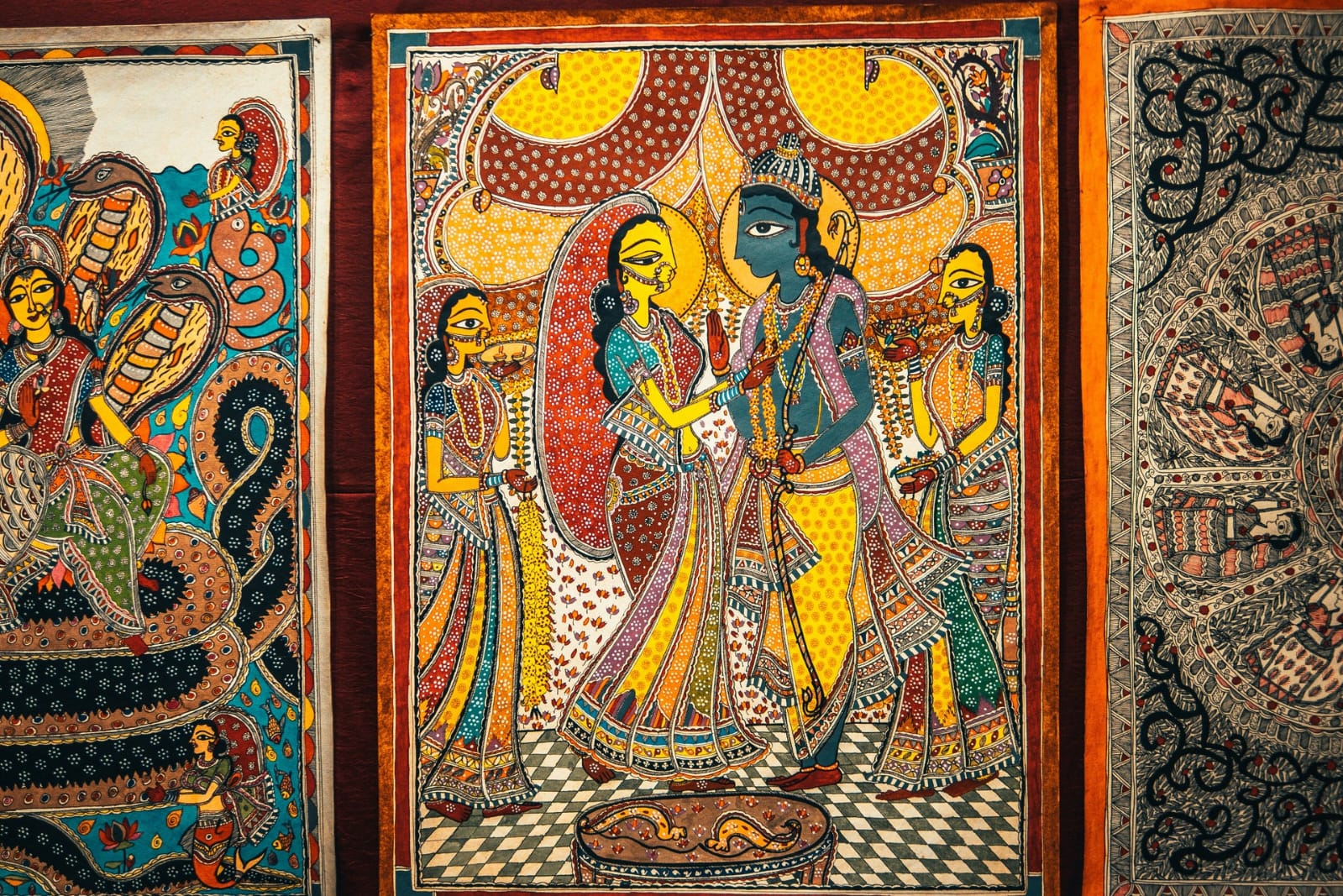
The newly opened Panorama 24 contemporary art exhibition at New Delhi's India Habitat Centre explores the concept of painting India's evolving cultural legacy. Curated by Priyanka Banerjee, the collection highlights bold works by Amit Kumar, Anindita Kishore, and Purnendu Mandal, effectively bridging ancient artistic traditions with modern abstract socio-cultural commentary.
NEW DELHI — A major new contemporary art exhibition has officially opened at the India Habitat Centre’s Visual Art Gallery, offering a rare public exploration into the state of the nation's modern identity. Titled 'Panorama 24', the exhibition confronts the delicate balance between preserving ancient heritage and encouraging modern creative reinterpretation. Curated by Priyanka Banerjee, the collection intentionally moves away from rigid thematic structures to showcase how traditional artistic methods are adapting to an urbanized, rapidly accelerating landscape.
The exhibition comes at a critical time for South Asian modern art, as global galleries and domestic collectors focus heavily on cultural preservation through new mediums. Panorama 24 brings together prominent, self-taught, and established Indian artists to reframe domestic labor, urban environments, and traditional crafts for a new generation of art enthusiasts and institutional investors.
Redefining Classical Motifs and the Dignity of Daily Labor
A central pillar of the newly opened collection focuses on capturing the magic hidden within common domestic objects and routines. Self-taught artist Amit Kumar presents a series of highly precise watercolors that elevate everyday items into fine art. His current focus centers on the fragile textures of bone china and historic blue pottery. By detailing sharp blue patterns sitting over clean white porcelain surfaces, Kumar's flat paper compositions simulate physical weight, challenging onlookers to find artistic value in standard household utensils.
Directly contrasting Kumar's hyper-realistic execution is artist Anindita Kishore’s latest work, Memories of Spring. Kishore’s canvas focuses on the human element behind India's institutional architecture, offering a dedicated tribute to the low-wage, unseen laborers who maintain the extensive gardens at the Rashtrapati Bhavan (the President's Estate). Using vibrant, unexpected color combinations, she paints her subjects with fresh blossoms extending from their fingertips—a symbolic choice meant to elevate hard manual labor into an act of literal, everyday magic.
Re-envisioning Historic Varanasi Through Abstract Textures
The collection also seeks to challenge traditional representations of India's most heavily depicted spiritual sites. Artist Purnendu Mandal introduces raw structural energy to the gallery with his abstract study of Varanasi. Rather than relying on strict architectural realism or familiar religious iconography, Mandal utilizes thick layers of oil paint applied aggressively with a palette knife.
Mandal’s broad, loose strokes are designed to capture the heavy, chaotic, and humid atmosphere of the city's historic ghats rather than mapping their physical geography. Art market analysts note that this shift from precise replication to sensory abstraction mirrors broader trends in the modern Indian art market, where collectors increasingly favor individualistic, emotionally driven expressions over classic landscapes.
Official Sources Section
According to official exhibition documentation from the Visual Art Gallery at the India Habitat Centre, Panorama 24 is structured as an open dialogue rather than a historic archive. The administrative board confirmed that the space will host daily public walkthroughs and interactive panel discussions designed to make contemporary art accessible to students, local residents, and traveling cultural tourists throughout its mid-summer run.
Quote Section
"A nation carrying centuries of cultural history often struggles to figure out exactly how to handle it. Do we lock it behind glass, or do we let contemporary hands pull it apart and put it back together? The collection draws its energy from letting wildly different styles clash and complement each other."
— Priyanka Banerjee, Head Curator of Panorama 24
Why It Matters
The opening of Panorama 24 highlights a strategic shift within India’s cultural economy. For consumers and local citizens, exhibitions of this nature democratize fine art by centering narratives on common laborers and familiar cities like Varanasi. For international investors and corporate art buyers, the showcase serves as a benchmark for contemporary South Asian valuations.
By proving that India's artistic legacy is not a static relic but a fluid, commercially viable market, exhibitions like this sustain the financial livelihoods of local creators while building structural soft power on the global stage.
Key Facts at a Glance
Exhibition Venue: Visual Art Gallery, India Habitat Centre, New Delhi.
Featured Curatorship: Spearheaded by prominent curator Priyanka Banerjee.
Core Philosophy: Merges historical Indian crafts and domestic histories with modern abstract methods.
Key Artists Present: Includes hyper-realist watercolorist Amit Kumar, figurative painter Anindita Kishore, and landscape abstractor Purnendu Mandal.
Market Significance: Highlights a growing demand among modern art buyers for sensory abstraction over rigid realism.
Frequently Asked Questions (FAQ)
What is the primary theme of the Panorama 24 art exhibition?
The exhibition does not follow a singular topic. Instead, it explores the dynamic concept of painting India's evolving cultural legacy by setting centuries-old historic traditions, folk crafts, and classical motifs right alongside aggressive contemporary styles and abstract techniques.
Where can the public view this modern art collection?
The public can view the entire installation inside the Visual Art Gallery located at the India Habitat Centre (IHC) in New Delhi.
Which specific artists are highlighted in the current showcase?
The gallery showcases major new creations from watercolorist Amit Kumar, who specializes in recreating blue pottery textures; Anindita Kishore, who highlights corporate and presidential estate gardeners; and Purnendu Mandal, who captures Varanasi via palette-knife abstraction.
Why is this development important for everyday consumers and travelers?
It offers a fresh perspective on public spaces, modern labor, and spiritual geographies. It allows visitors to engage directly with living art creators, moving the historic preservation conversation out of textbook archives and into open civic spaces.
Source: Official Press Statements and Exhibition Catalogues from the Visual Art Gallery, India Habitat Centre.