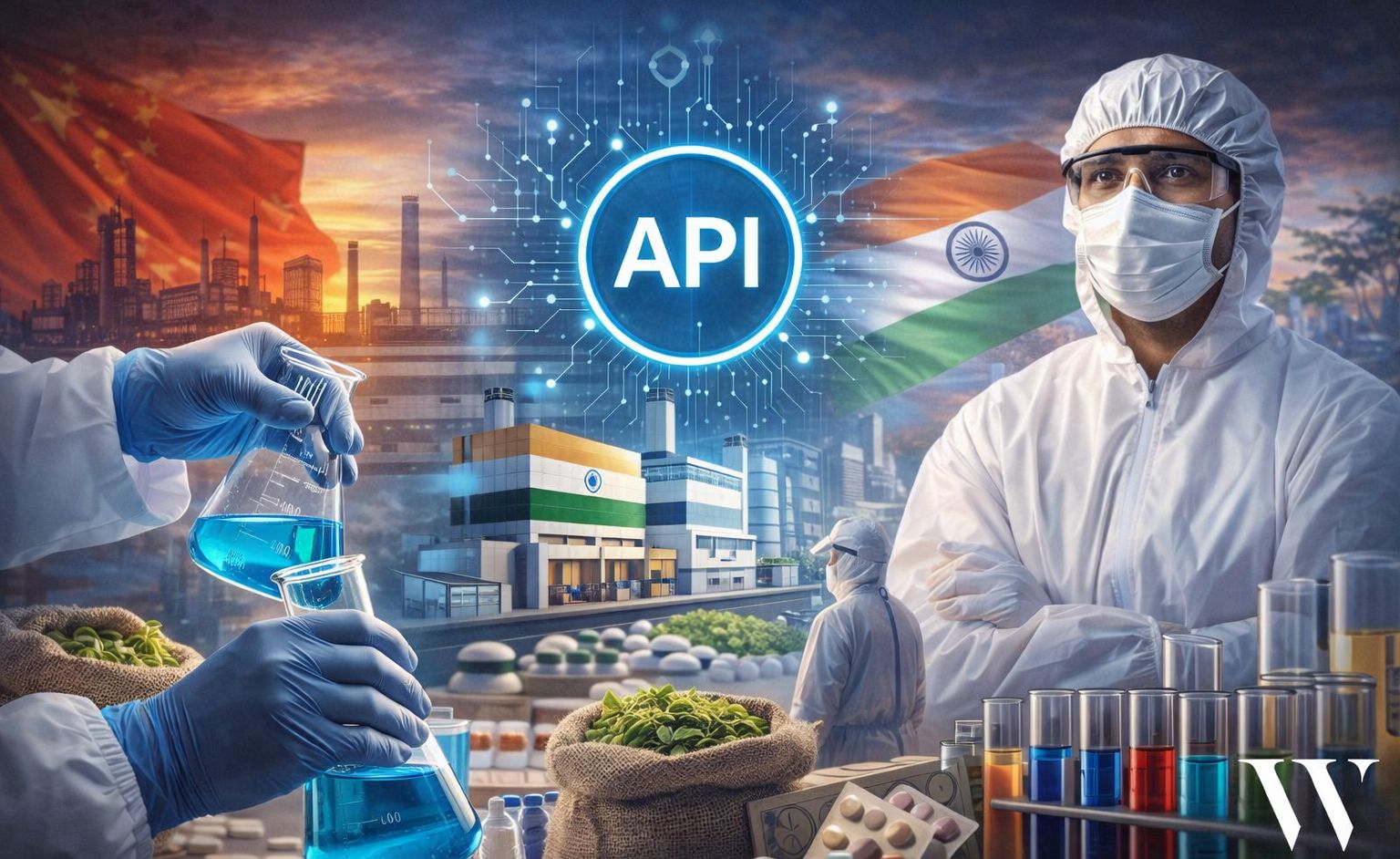
India’s pharmaceutical industry is refocusing on active pharmaceutical ingredient (API) self-reliance to reduce dependence on imports, particularly from China. Government initiatives like the Production Linked Incentive (PLI) scheme and bulk drug parks aim to strengthen domestic manufacturing, ensuring supply chain resilience and safeguarding India’s position as the “pharmacy of the world.”
India’s pharma sector, valued globally for its affordable generics, has long relied on imported APIs—the essential raw materials for drug production. With nearly 70% of APIs sourced from China, supply chain vulnerabilities became evident during the COVID-19 pandemic.
To address this, the government has placed API self-reliance back at the center of its pharma strategy. The PLI scheme incentivizes domestic production of critical APIs, while bulk drug parks are being established to provide infrastructure and reduce costs. Industry leaders argue that this push is vital not only for economic independence but also for national health security.
Experts highlight that strengthening API manufacturing will help India maintain its global leadership in generics, while reducing risks from geopolitical tensions and supply disruptions.
Major Takeaways
-
India imports ~70% of APIs from China, raising dependency concerns
-
PLI scheme incentivizes local API production
-
Bulk drug parks provide infrastructure for cost-effective manufacturing
-
COVID-19 exposed supply chain vulnerabilities in pharma
-
API self-reliance ensures health security and global competitiveness
Conclusion
India’s renewed focus on API self-reliance marks a strategic shift in its pharma policy. By building domestic capacity, the country aims to secure its supply chains, reduce import dependency, and reinforce its role as a trusted global healthcare provider.
Sources: The Hindu Business Line, Economic Times, Financial Express