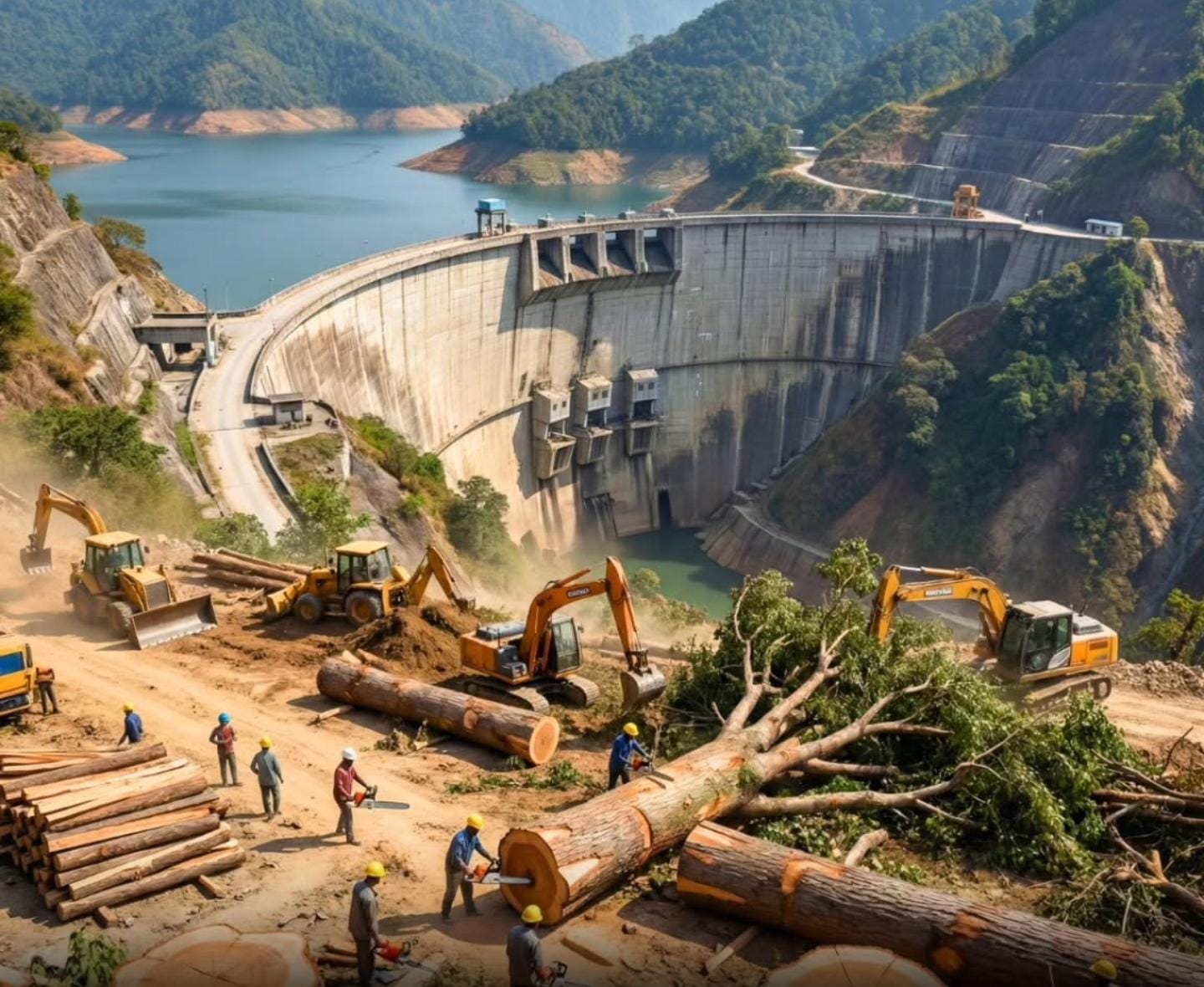






India’s Environment Ministry has cleared NHPC’s Kamala hydroelectric project in Arunachal Pradesh, which will result in the loss of 23.4 lakh trees. Since degraded forest land is unavailable locally, compensatory plantations will be carried out in Madhya Pradesh. While the project promises clean energy, environmentalists raise concerns about biodiversity loss.
A massive hydropower project in Arunachal Pradesh, the 1,720 MW Kamala hydroelectric project, has received clearance from India’s Environment Ministry expert panel. The project will lead to the felling of approximately 23.4 lakh trees, with compensatory afforestation planned in Madhya Pradesh due to land constraints in Arunachal. The Kamala hydroelectric project, estimated at Rs 23,764 crore, is part of India’s push to expand renewable energy infrastructure in the Northeast. The project involves building a 216-meter-high dam and creating a large reservoir, but its environmental cost is significant.
Key highlights
-
The Environment Ministry’s Expert Appraisal Committee (EAC) has recommended clearance for the project, stressing the need for a robust ecosystem restoration plan.
-
Around 23.4 lakh trees will be felled, impacting biodiversity-rich forests in Arunachal Pradesh.
-
Compensatory afforestation will be carried out in Madhya Pradesh, as Arunachal lacks sufficient degraded forest land for replantation.
-
The project is expected to affect nearly 5,400 families across 126 villages, raising concerns about displacement and livelihood loss.
-
NHPC has been directed to prepare a comprehensive forest clearance and restoration strategy before moving ahead.
-
Environmental groups argue that plantations in another state cannot replicate the ecological value of Arunachal’s forests, which are home to diverse flora and fauna.
-
Officials highlight the project’s role in boosting renewable energy capacity and reducing dependence on fossil fuels, aligning with India’s climate commitments.
The development underscores the complex trade-off between clean energy expansion and ecological preservation. While hydropower is vital for India’s energy transition, the ecological and social costs of such projects remain a pressing challenge.
Sources: Outlook India, The Indian Express, Hindustan Times