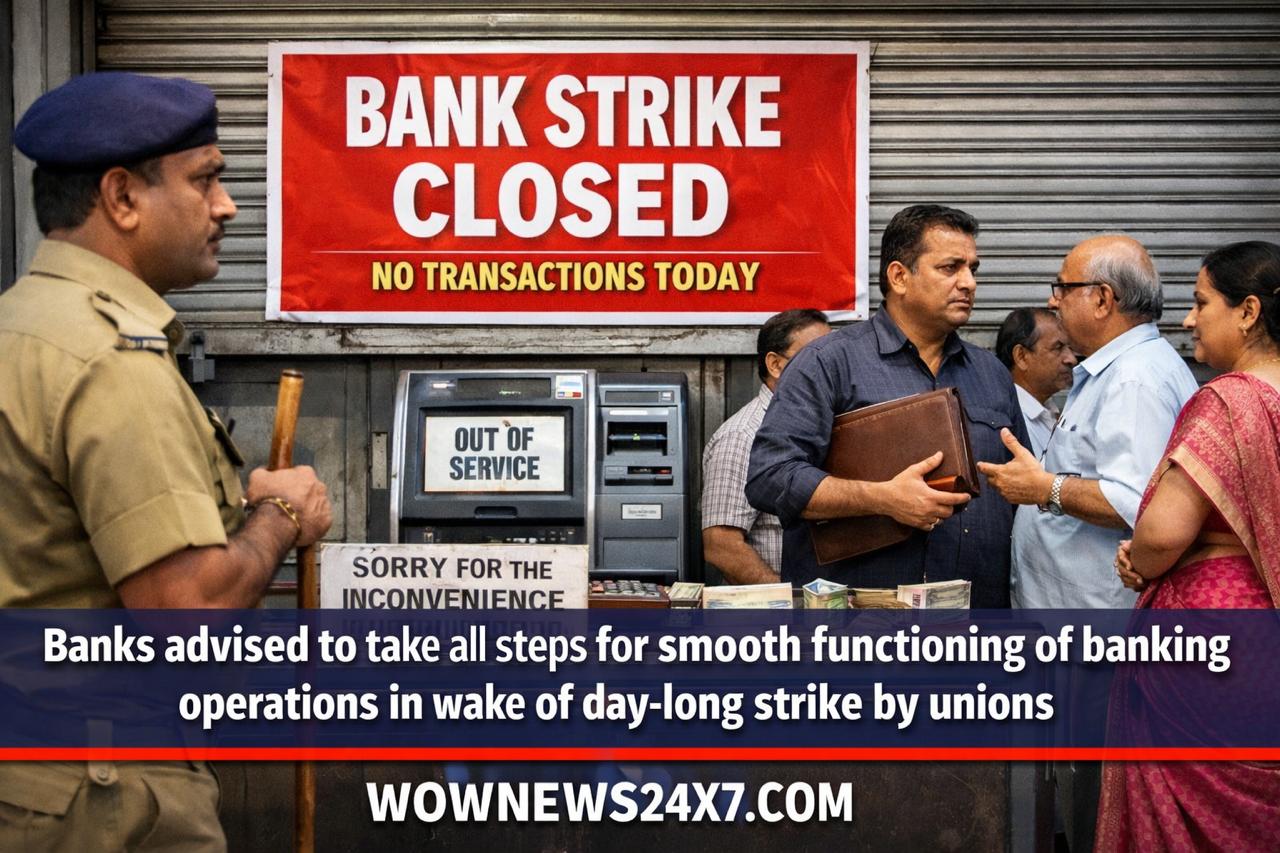

In response to a day-long strike by bank unions, authorities have advised banks to take all necessary measures to ensure uninterrupted operations. The strike, called to press demands on wage revision and working conditions, has raised concerns over customer services. Regulators emphasize contingency planning to minimize disruption and safeguard public convenience.
India’s banking sector is bracing for a day-long strike organized by unions, prompting authorities to issue directives for maintaining smooth operations. The strike, driven by demands related to wage revision, job security, and working conditions, has the potential to impact services such as cash transactions, cheque clearances, and branch operations.
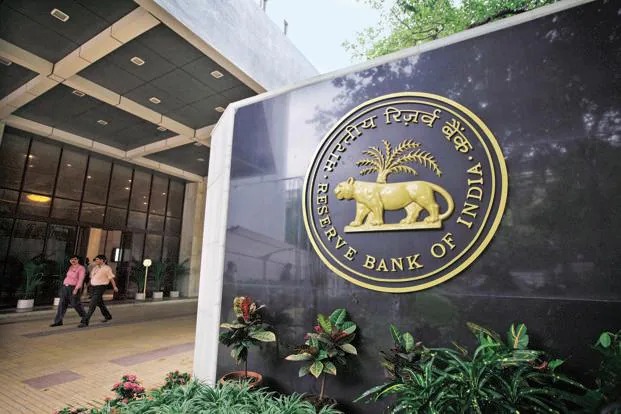
The Finance Ministry and Reserve Bank of India (RBI) have urged banks to adopt contingency measures, including deploying additional staff, strengthening digital channels, and ensuring ATM functionality. Officials stressed that customer convenience must remain a priority, even as unions exercise their right to protest.
Industry experts note that while digital banking may cushion the impact, rural and semi-urban areas could face challenges due to reliance on physical branches. The situation underscores the need for balancing employee concerns with uninterrupted public services.
Key Highlights / Major Takeaways
Day-long strike called by bank unions over wage and working conditions
Authorities advise contingency planning to ensure smooth operations
Focus on ATM availability, digital banking, and customer support
Potential disruption in cash transactions and cheque clearances
Strike highlights tension between employee demands and service continuity
Sources: Economic Times, Business Standard, NDTV Business