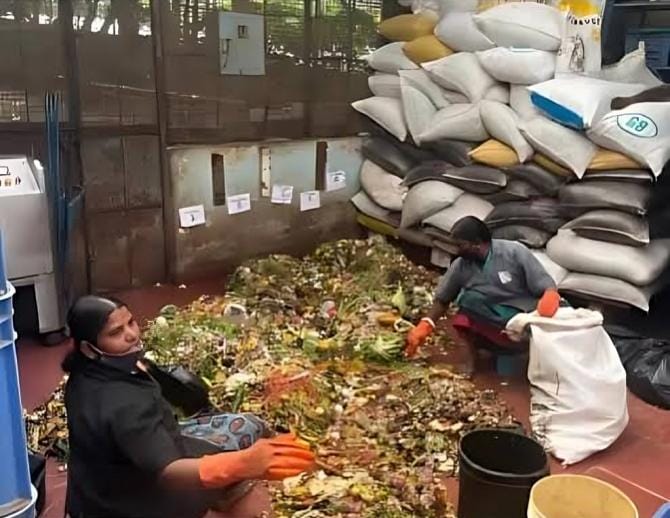



Bengaluru is transforming its waste management system by converting non-recyclable city garbage into useful resources such as fuel for cement plants and agricultural inputs. The initiative has dramatically increased waste processing volumes, reduced landfill pressure, and created new revenue streams while promoting sustainable urban and environmental practices.
Bengaluru is redefining urban waste management by converting city garbage into valuable resources that benefit agriculture and industry. Civic agencies have intensified efforts to process non-recyclable waste and channel it into productive uses, marking a shift from landfill dependence to circular waste management.
The initiative is led by Bengaluru Solid Waste Management Ltd (BSWML), which has introduced a system that processes large volumes of non-recyclable plastic and other dry waste into Refuse Derived Fuel (RDF). This fuel is then supplied to cement plants for co-processing, where waste replaces conventional fossil fuels.
The new approach not only reduces environmental pressure caused by mounting garbage but also generates revenue through Extended Producer Responsibility (EPR) credits. Under the Plastic Waste Management Rules, producers are responsible for managing the waste generated from their products. Companies can earn credits by supporting recycling and co-processing initiatives.
Between October 2025 and February 2026, Bengaluru significantly scaled up waste collection and processing. Nearly 19,470 metric tonnes of RDF were collected, with more than 18,600 tonnes transported to a cement plant in Andhra Pradesh for co-processing.
The transformation demonstrates how urban waste can be redirected from landfills into energy generation and industrial use, offering environmental and economic benefits simultaneously.
Key Highlights
-
City waste is being converted into Refuse Derived Fuel and supplied to cement plants, reducing dependence on landfills and fossil fuels
-
Daily RDF collection surged dramatically from about 10 metric tonnes to nearly 520 metric tonnes after awareness campaigns and improved segregation systems
-
Over 19,000 metric tonnes of processed waste were collected between October 2025 and February 2026
-
More than 18,600 metric tonnes of waste were transported to a cement plant for co-processing
-
The system generates Extended Producer Responsibility credits worth around Rs 2,500 per tonne, creating a net gain of roughly Rs 1,000 per tonne after transport costs
-
The initiative is helping Bengaluru move toward a circular waste economy where garbage becomes a valuable resource rather than a disposal problem
Sources: The Times of India, Deccan Herald, DW