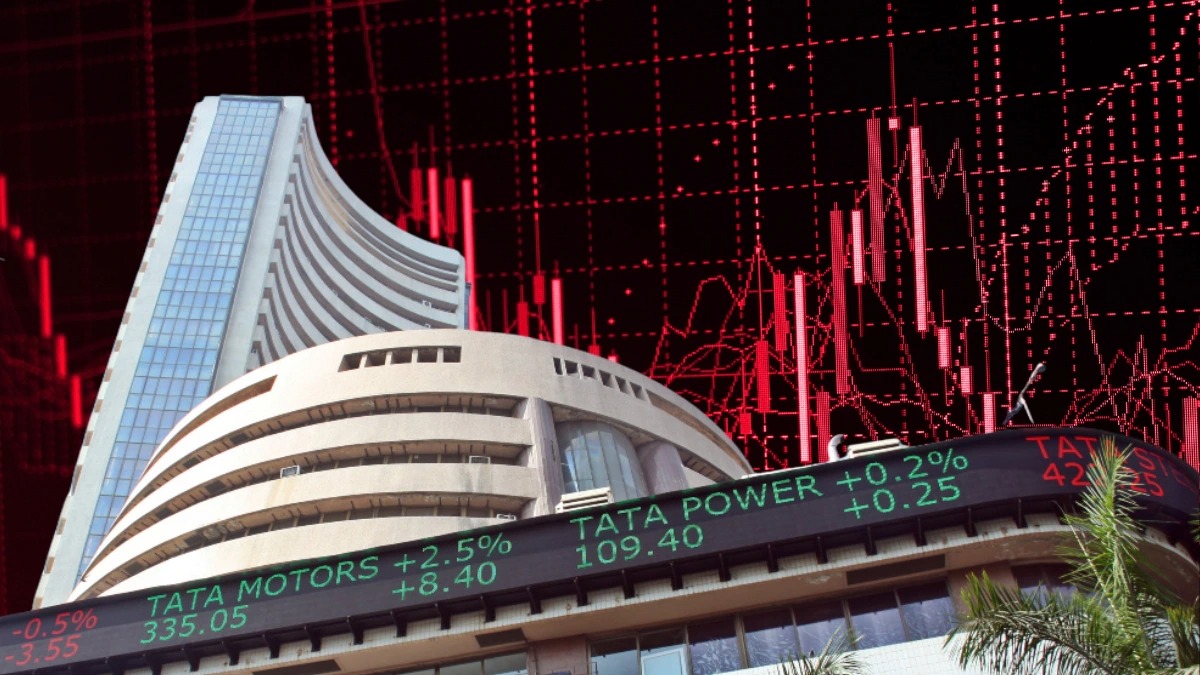

On February 1, 2026, at 3:30 PM IST, India’s benchmark Nifty 50 index provisionally closed 2.19% lower at 24,780.20, extending sharp losses from earlier sessions. Investors reacted negatively to budgetary measures, including higher Securities Transaction Tax (STT) on derivatives, with banking, IT, and auto stocks leading the decline.
India’s equity markets closed deep in the red on February 1, 2026, as the Nifty 50 index provisionally ended 2.19% lower at 24,780.20. The sell-off coincided with the presentation of the Union Budget 2026-27, which introduced several fiscal measures impacting investor sentiment.
Key Highlights:
Index performance: Nifty 50 dropped 553 points, while the Sensex closed 1,421 points lower at 80,848.10, reflecting broad-based weakness.
Sectoral drag: Banking, IT, and auto stocks bore the brunt of selling pressure, with heavyweights like HDFC Bank, Infosys, and Tata Motors slipping sharply.
STT hike impact: The government’s decision to raise Securities Transaction Tax (STT) on futures and options weighed heavily on derivatives trading, sparking concerns about reduced liquidity.
Investor sentiment: Analysts noted that while infrastructure and defence allocations were positive, near-term volatility was inevitable as markets adjusted to new tax measures.
Global cues: Weakness in Asian markets and cautious global sentiment added to the pressure, amplifying domestic declines.
Outlook:
Market experts expect volatility to persist through the week, with defensive sectors such as pharma and FMCG likely to see relative strength. Investors remain focused on corporate earnings and clarity on budget implementation.
Sources: Economic Times Markets, Mint, Business Standard, Reuters India