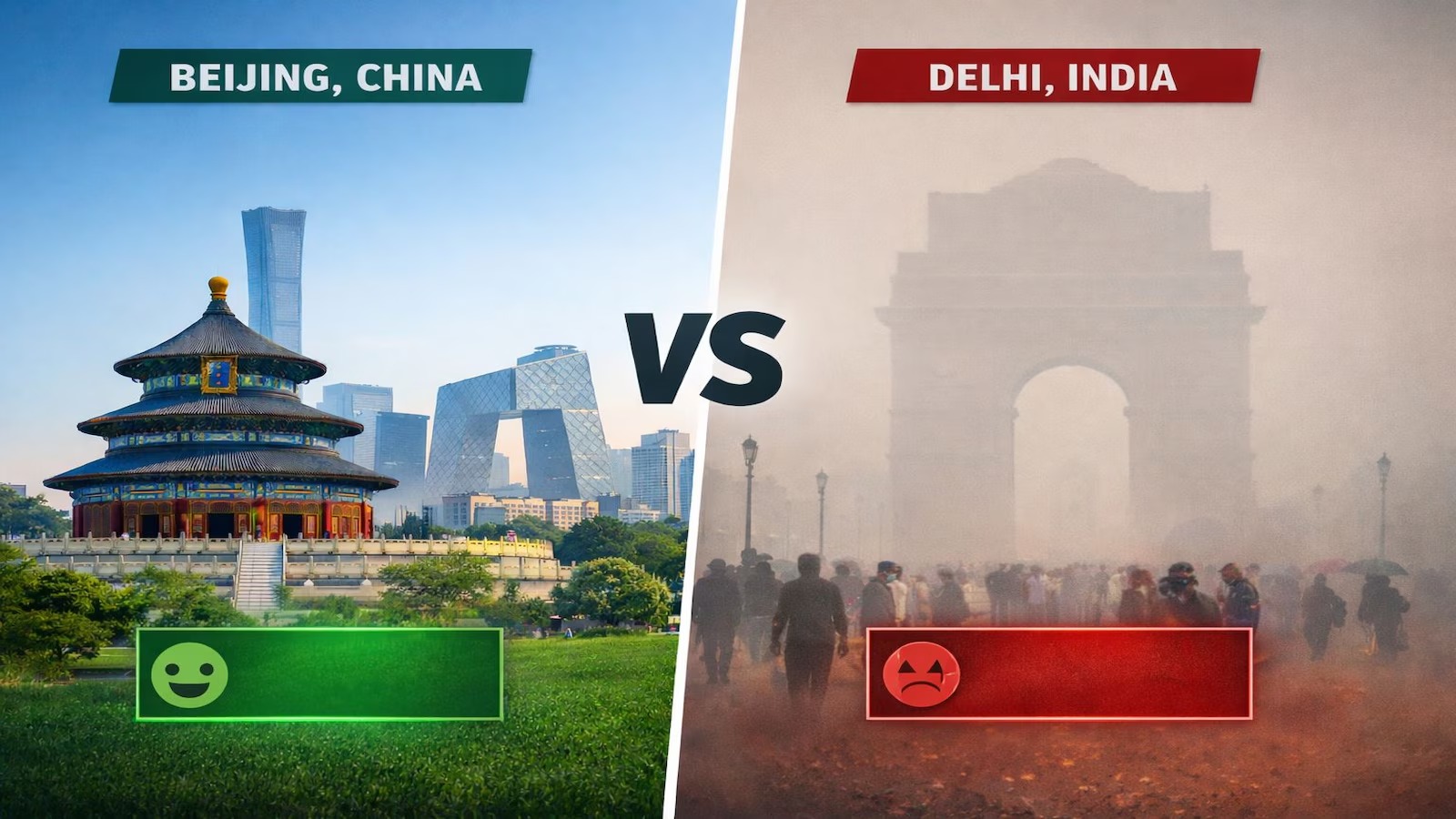






As Delhi grapples with hazardous air quality, the Chinese Embassy in India has shared insights on how Beijing overcame similar challenges. Measures included shutting down heavy industries, strict vehicle emission controls, phasing out old cars, and restructuring industrial zones. Experts say Delhi could adapt these strategies for long-term improvement.
Delhi’s worsening air pollution has drawn comparisons to Beijing’s past struggles, prompting China to share its successful strategies. Once infamous as the “smog capital of the world,” Beijing managed to significantly improve its air quality over the past decade through sustained and coordinated efforts. The Chinese Embassy in India outlined steps that could serve as a roadmap for Delhi.
Key highlights from the announcement include
-
China shut down or relocated heavy industries to reduce emissions.
-
Strict vehicle emission controls were implemented, including phasing out old, high-pollution vehicles.
-
Promotion of electric mobility and cleaner fuels helped reduce transport-related pollution.
-
Industrial restructuring transformed former factory sites into public spaces and economic hubs.
-
Odd-even traffic restrictions were enforced during peak pollution periods.
-
Coordinated regional efforts across Beijing, Tianjin, and Hebei ensured collective emission reductions.
-
Public awareness campaigns and stricter monitoring systems supported compliance and accountability.
Chinese officials emphasized that both India and China face similar challenges due to rapid urbanization and industrial growth. While the problem remains complex, Beijing’s experience demonstrates that sustained policy action, technological innovation, and public cooperation can deliver measurable improvements.
For Delhi, adopting a mix of these strategies could help tackle its recurring winter smog crisis. Experts suggest that shutting down polluting industries, enforcing stricter vehicle norms, and expanding green mobility solutions are critical steps. Regional coordination with neighboring states, much like Beijing’s collaboration with Tianjin and Hebei, could also be vital in reducing emissions.
The broader lesson is that combating pollution requires long-term commitment, structural reforms, and public participation. As Delhi continues to battle hazardous air quality, Beijing’s playbook offers a tested model that could guide India’s path toward cleaner skies.
Sources: Livemint, Times of India, News18, India Today