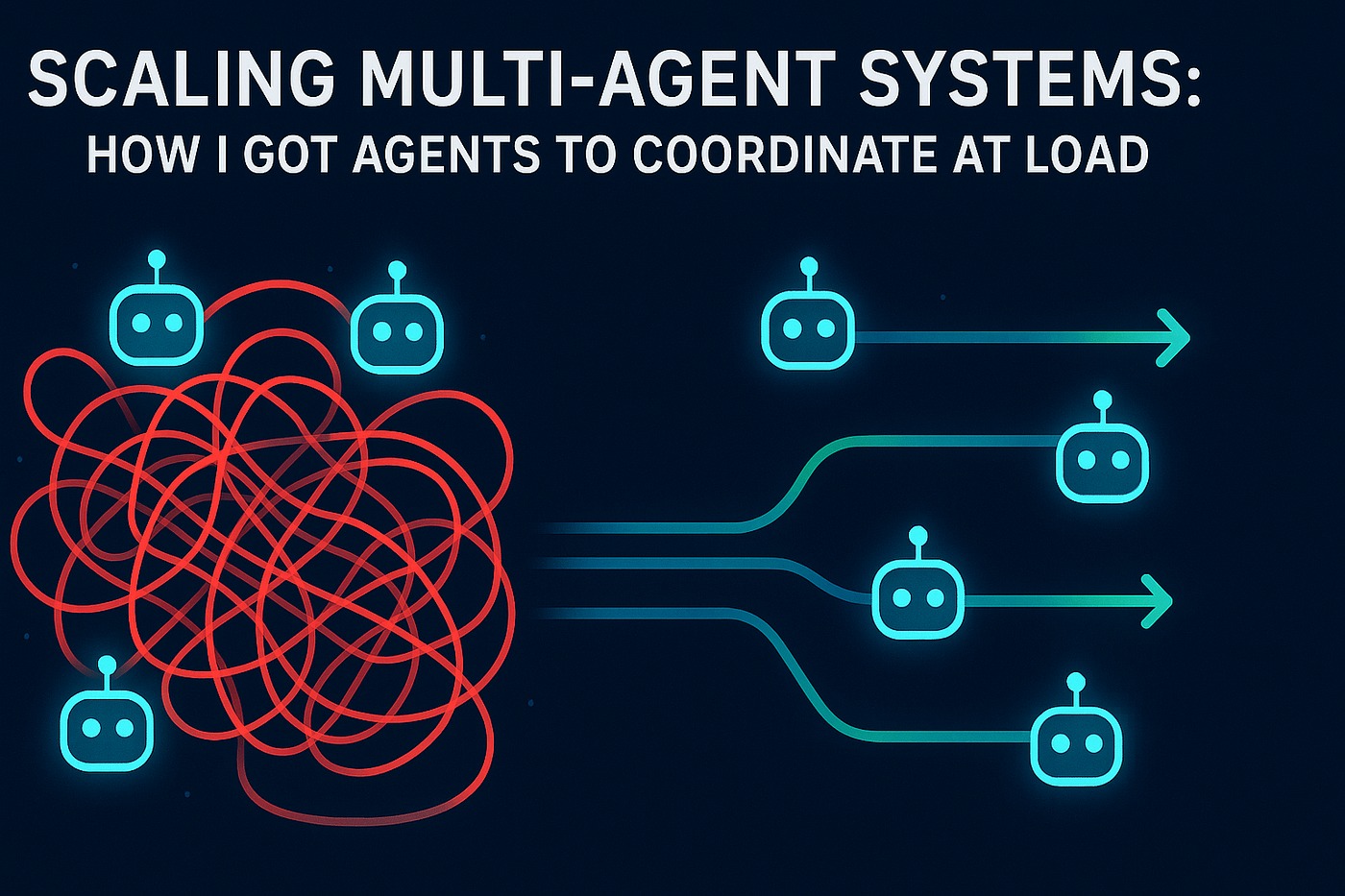









Google Research has unveiled the first quantitative scaling principles for multi-agent AI systems. Through controlled evaluation of 180 agent configurations, the study shows that adding more agents does not always improve performance. Instead, benefits depend on task type, with parallelizable tasks gaining while sequential tasks may suffer.
Google Research has taken a significant step toward understanding how multi-agent systems scale. By analyzing 180 different agent configurations, the team derived quantitative principles that challenge the common belief that “more agents are always better.”
The findings reveal that multi-agent coordination improves performance on parallelizable tasks, such as distributed problem-solving, but can reduce efficiency on sequential tasks requiring ordered execution. The study also introduced a predictive model that identifies optimal architectures for nearly 87 percent of unseen tasks, offering practical guidance for AI developers.
This research is particularly relevant as AI applications shift from single-shot question answering to sustained, multi-step interactions. From coding assistants to healthcare advisors, multi-agent systems are becoming central to real-world AI use cases. Google’s work provides a scientific foundation for designing scalable, efficient agent systems.
Key Highlights
-
Google Research studied 180 agent configurations
-
Derived first quantitative scaling principles for multi-agent systems
-
Multi-agent coordination boosts parallel tasks but hinders sequential ones
-
Predictive model identifies optimal architectures for 87 percent of tasks
-
Findings challenge the assumption that more agents always improve results
Sources: InfoQ, Google Research Blog, arXiv