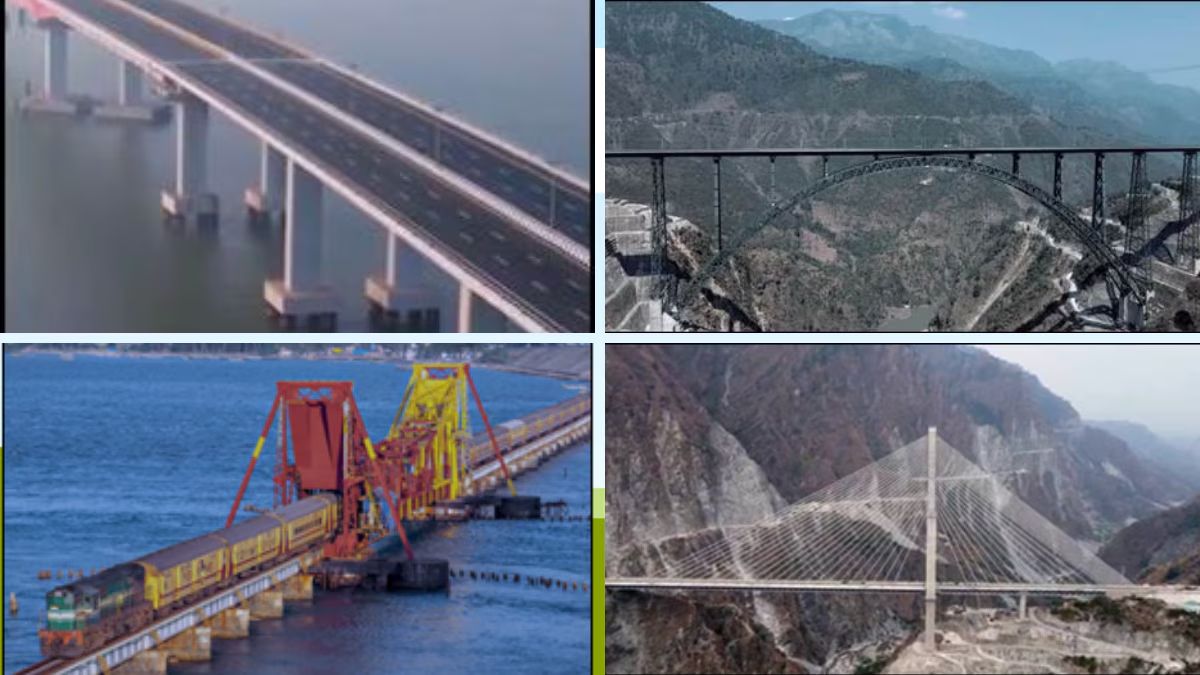









India’s iconic bridges, from the Chenab Rail Bridge in Jammu & Kashmir to the recently inaugurated Atal Setu in Mumbai, showcase groundbreaking engineering. These structures not only connect regions but also symbolize India’s technological prowess, overcoming geographical challenges and setting new benchmarks in infrastructure development and global engineering excellence.
India’s infrastructure journey has been marked by extraordinary feats of engineering, with bridges that defy terrain, weather, and conventional design. The Chenab Rail Bridge, the world’s highest railway arch bridge, stands tall in Jammu & Kashmir, while the Atal Setu, India’s longest sea bridge, now links Mumbai with Navi Mumbai, transforming connectivity.
These projects highlight India’s ability to merge innovation with necessity, ensuring smoother transport, economic growth, and national pride. Engineers overcame extreme conditions—from seismic zones to deep waters—proving that Indian infrastructure can rival global standards.
Notable Updates & Major Takeaways
Chenab Rail Bridge:
World’s highest railway arch bridge at 359m above riverbed.
Built in seismic zone, designed to withstand high winds and earthquakes.
Atal Setu (Mumbai Trans Harbour Link):
India’s longest sea bridge at 21.8 km.
Reduces Mumbai–Navi Mumbai travel time from 2 hours to 20 minutes.
Engineering Impact:
Showcases India’s expertise in tackling extreme terrains and marine conditions.
Boosts connectivity, trade, and regional development.
Conclusion
From the mountains of Jammu & Kashmir to the Arabian Sea, India’s bridges are more than transport links—they are symbols of resilience, innovation, and ambition. The Chenab and Atal Setu exemplify how infrastructure can rewrite engineering rules while reshaping the nation’s future.
Sources: Economic Times, Hindustan Times, The Hindu