

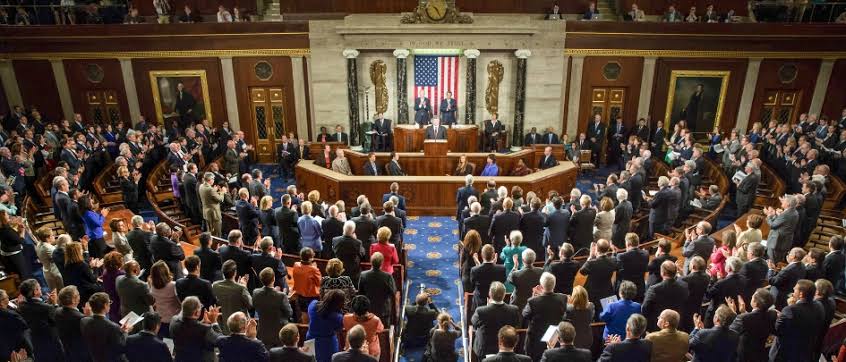
The US House of Representatives has advanced a major government funding bill, overcoming a key procedural hurdle that sets the stage for a final vote. The legislation aims to end the partial government shutdown by funding federal agencies, while extending Department of Homeland Security funding for two weeks.
The US House of Representatives moved forward on Tuesday, February 3, 2026, by clearing a critical procedural step for a sweeping government funding package. This development comes amid a partial shutdown that has disrupted operations across several federal agencies, including Defense, State, Treasury, Health, and Education. The bill, structured as a minibus package, combines five full-year appropriations bills with a short-term extension for the Department of Homeland Security (DHS).
Key Highlights:
-
The House Rules Committee advanced the legislation late Monday, voting 8-4 along party lines, paving the way for floor debate and a final vote.
-
The package funds major departments such as Defense, State, and Treasury, ensuring continuity of essential federal services.
-
A two-week extension for DHS funding was included to allow further negotiations on immigration enforcement reforms, a sticking point between Republicans and Democrats.
-
House Speaker Mike Johnson faces the challenge of uniting the GOP conference, as divisions persist over DHS provisions, particularly related to Immigration and Customs Enforcement (ICE) operations.
-
Democrats, led by House Minority Leader Hakeem Jeffries, have pushed for reforms in immigration enforcement, while Senate Minority Leader Chuck Schumer has emphasized the need for accountability in ICE operations.
-
More than one million federal workers remain impacted by the shutdown, with furloughs looming if the impasse continues.
-
The procedural vote marks a significant step toward ending the shutdown, though the final passage of the bill remains uncertain given partisan disagreements.
The outcome of the upcoming vote will determine whether the government reopens fully or continues under partial closure, with critical implications for federal employees and public services.
Sources: Reuters, CBS News, The Hill