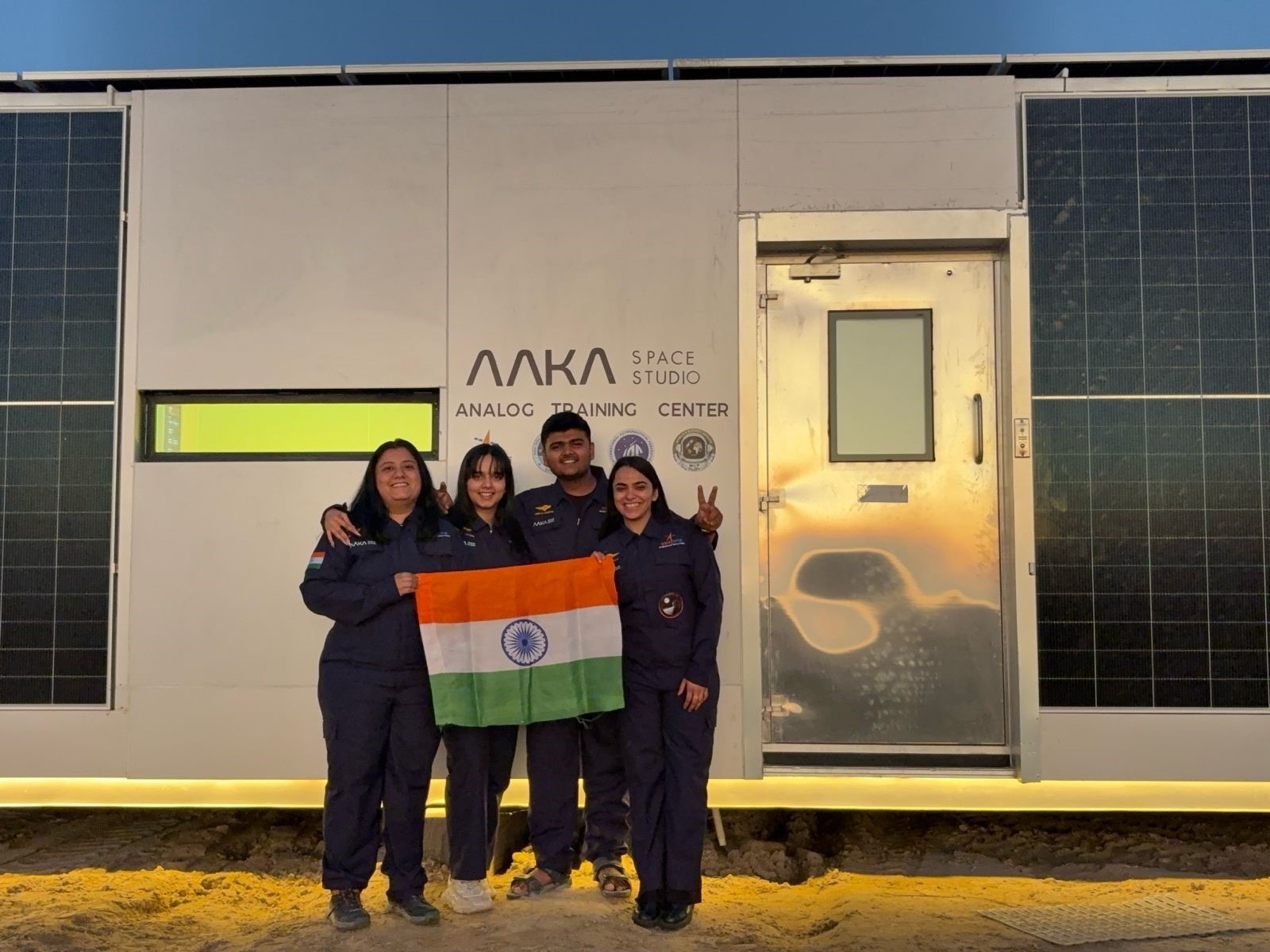

Seventeen-year-old Aditya Pandya has become India’s youngest analog astronaut after completing an eight-day lunar habitat simulation in Gujarat’s Dholavira. Conducted by AAKA Space Studio, the mission tested isolation, crew autonomy, and system reliability, marking a milestone in India’s growing space research ecosystem.
Mission Details
From February 1 to 8, 2026, Aditya Pandya joined a four-member crew inside a container-based lunar analog habitat. The team lived in isolation under strict protocols designed to replicate Moon-like conditions, focusing on survival, teamwork, and autonomous operations.
Role And Achievements
Aditya Pandya led the mission’s hardware, IoT, and habitat intelligence systems, contributing to the study of how humans adapt to confined environments. His participation highlights the increasing involvement of India’s youth in advanced space research and simulation programs.
Significance For India
The mission, organized by AAKA Space Studio—a registered ISRO Space Tutor—underscores India’s commitment to preparing for future lunar and planetary missions. It also demonstrates the country’s ability to train young talent in cutting-edge space technologies and analog astronautics.
Key Highlights
-
17-year-old Aditya Pandya becomes India’s youngest analog astronaut
-
Eight-day lunar habitat simulation conducted in Dholavira, Gujarat
-
Mission tested isolation, crew autonomy, and system reliability
-
Aditya led hardware, IoT, and habitat intelligence systems
-
Organized by AAKA Space Studio, an ISRO Space Tutor
Conclusion
Aditya Pandya’s achievement as India’s youngest analog astronaut reflects the nation’s growing emphasis on space innovation and youth participation. The mission not only strengthens India’s research capabilities but also inspires the next generation to pursue careers in space exploration.
Sources: India Today, The Tribune, AAKA Space Studio