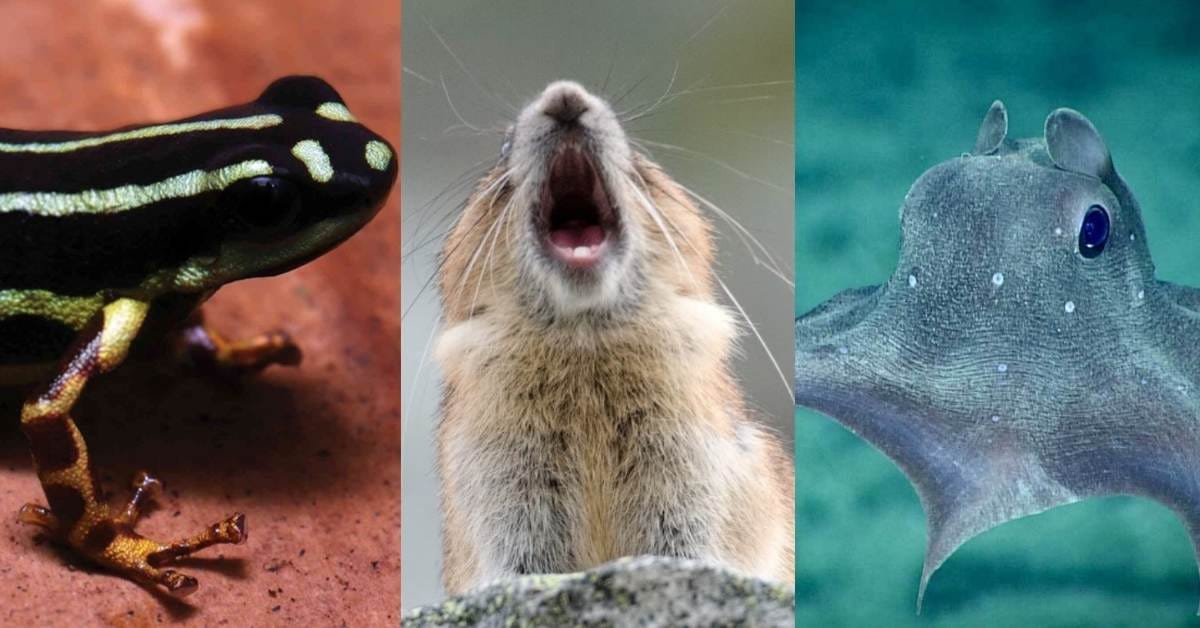





In 2025, scientists revealed nine stunning new species, including the aquamarine poison dart frog from Brazil’s Amazon basin. With its metallic hues and rare monogamous traits, the frog stands out among discoveries like the screaming pika and isolated butterfly. These finds highlight biodiversity’s richness and urgent conservation needs.
Scientists have announced the discovery of nine remarkable new species in 2025, a year that has already proven extraordinary for biodiversity research. Among these finds, the aquamarine poison dart frog from the Amazon has captured global attention with its dazzling colors and unique ecological traits.
Key Highlights
-
The aquamarine poison dart frog, formally named Ranitomeya aquamarina, was identified in Brazil’s Juruá River basin. Its metallic copper legs and pale blue-green stripes make it one of the most visually striking amphibians discovered in recent years.
-
Researchers note that this frog may exhibit monogamous behavior, a rarity among amphibians, adding to its scientific intrigue.
-
Other discoveries include a screaming pika, a curiously isolated butterfly, and several deep-sea species that highlight the unexplored richness of Earth’s ecosystems.
-
The discoveries were published in journals such as PLOS One and ZooKeys, underscoring the importance of rigorous scientific documentation in conservation.
-
These findings are not just about aesthetics; they serve as urgent reminders of the fragile ecosystems where these species live. Conservationists stress that protecting habitats in the Amazon and beyond is critical to ensuring these creatures survive beyond the headlines.
-
The announcement has sparked renewed calls for global conservation efforts, with scientists emphasizing that each new species represents a vital piece of the ecological puzzle.
The unveiling of these nine species demonstrates the resilience and mystery of nature, even in an era of environmental challenges. From the Amazon’s hidden gems to the ocean’s depths, 2025 has reinforced the importance of exploration and preservation.
Sources: Good Good Good, Popular Science, Nature