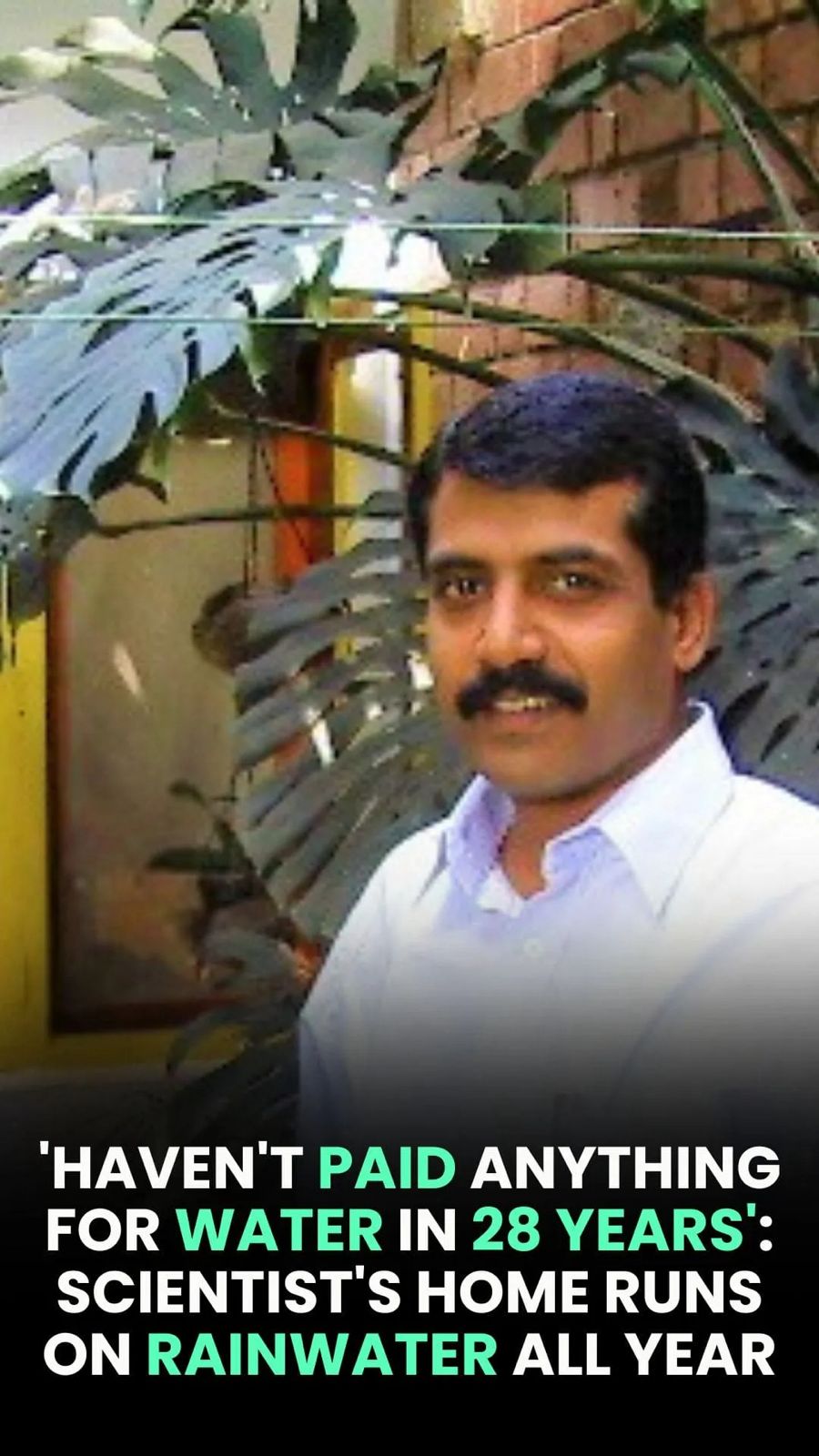






Bengaluru scientist A.R. Shivakumar has lived without paying a water bill for 28 years, thanks to a self-designed rainwater harvesting system at his home, Sourabha. Using rainfall data and smart storage methods, his model demonstrates how urban households can achieve year-round water self-sufficiency, addressing India’s looming water crisis.
In 1995, scientist A.R. Shivakumar, affiliated with the Karnataka State Council for Science and Technology (KSCST), built his home Sourabha in Bengaluru with a unique vision: to rely entirely on rainwater harvesting. By analyzing 100 years of rainfall data and household water usage, he designed a system that stores and filters rainwater to last throughout the year.
His family has not depended on municipal supply or borewells since, proving that urban water independence is possible. Shivakumar emphasizes that Bengaluru receives sufficient rainfall—the challenge lies in storage, planning, and preventing wastage. His home has become a living laboratory, inspiring policymakers, researchers, and citizens to adopt sustainable water practices.
Major Takeaways
-
Scientist A.R. Shivakumar’s home Sourabha runs entirely on rainwater since 1995
-
Family has not paid a water bill in 28 years
-
System designed using 100 years of Bengaluru rainfall data
-
Focus on storage, planning, and efficient usage rather than external supply
-
Demonstrates urban households can achieve water self-sufficiency
-
Serves as a model for sustainable living amid India’s water crisis
Conclusion
Shivakumar’s rainwater-powered home is a blueprint for sustainable urban living, showing how science and foresight can solve pressing resource challenges. As India faces increasing water scarcity, his model underscores the urgent need for rainwater harvesting and conservation in cities nationwide.
Sources: The Better India, Times of India, KSCST