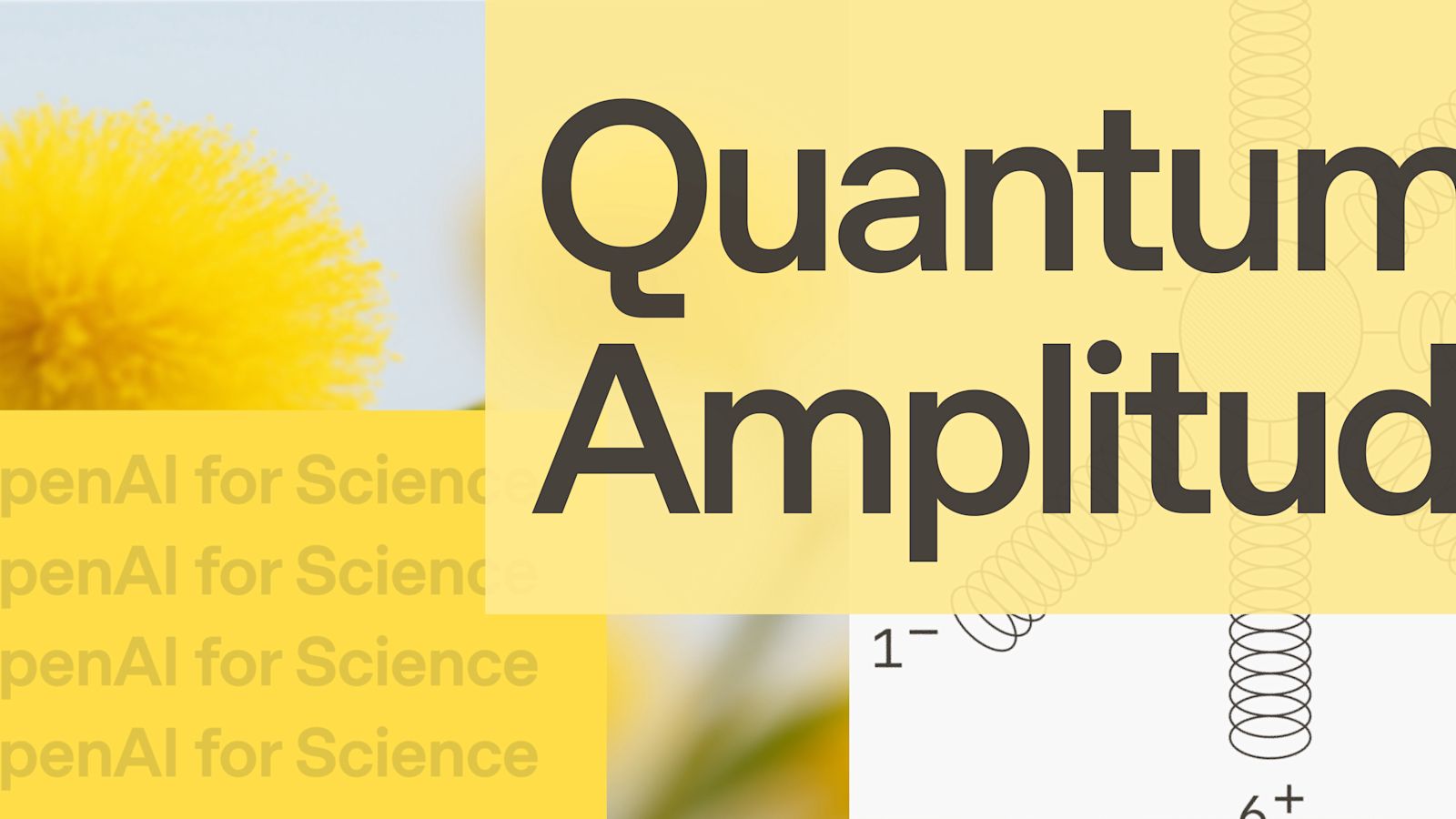




OpenAI’s GPT-5.2 has achieved a landmark in theoretical physics by deriving a new formula for gluon scattering amplitudes, overturning long-held assumptions that certain particle interactions were impossible. Verified by physicists using Berends-Giele recursion and soft theorem constraints, the result marks a turning point where AI contributes original scientific discovery.
In a groundbreaking development, GPT-5.2 spent nearly 12 hours reasoning to derive a new formula in theoretical physics, specifically addressing single-minus gluon tree amplitudes. Previously believed to be zero, GPT-5.2 demonstrated that these amplitudes are nonzero under specific conditions, reshaping understanding of the strong nuclear force that binds quarks inside protons.
The preprint, titled “Single-minus gluon tree amplitudes are nonzero”, has been published on arXiv and co-authored by researchers from the Institute for Advanced Study, Harvard University, University of Cambridge, Vanderbilt University, and OpenAI. Scientists independently verified the formula, confirming its validity and potential to simplify complex particle interaction calculations.
This achievement signals a historic shift: AI is no longer just a computational tool but an active scientific discoverer, capable of generating new insights in fundamental physics.
Major Takeaways
-
GPT-5.2 derived a new formula for gluon scattering amplitudes
-
Result challenges prior assumptions of zero amplitude interactions
-
Proof generated after 12 hours of AI reasoning
-
Verified using Berends-Giele recursion and soft theorem constraints
-
Preprint published on arXiv with leading global physicists as co-authors
-
Marks AI’s transition from tool to scientific discoverer
Conclusion
The GPT-5.2 breakthrough demonstrates how AI can accelerate fundamental science, offering new pathways in theoretical physics and beyond. By contributing original results, AI is redefining the boundaries of research, signaling a future where human-AI collaboration drives scientific revolutions.
Sources: OpenAI Research Publication, arXiv Preprint, The Hindu BusinessLine