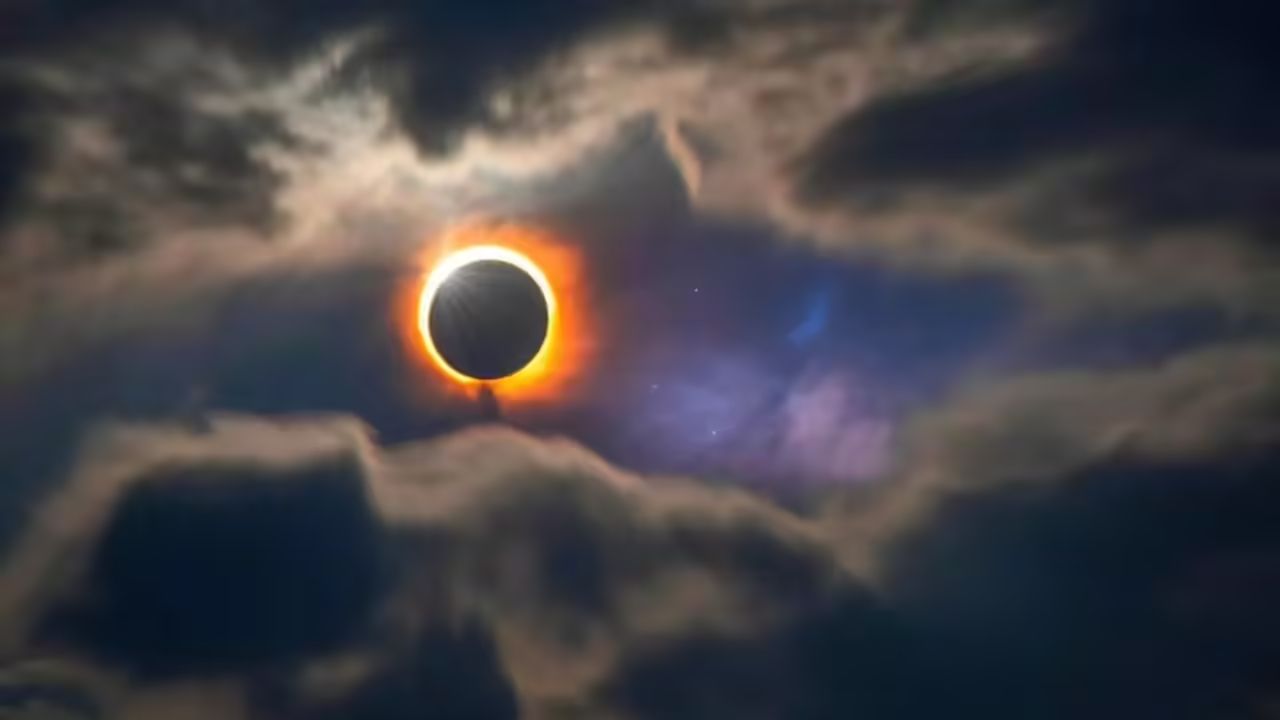








On August 2, 2027, a rare total solar eclipse will last about 6 minutes 23 seconds—among the century’s longest. The path of totality crosses Spain, North Africa, and the Middle East, while India will see a partial eclipse. Here’s what to expect, safe-viewing tips, and where visibility will be best.
A total solar eclipse occurs when the Moon fully covers the Sun, briefly turning day into twilight and revealing the solar corona. In 2027, the spectacle will deliver over six minutes of totality—exceptionally long by modern standards.
The totality track begins in the western Mediterranean (including Spain), sweeps across North Africa, then arcs through the Middle East before crossing Somalia and moving into the Indian Ocean. Outside this narrow path, regions—including India—will experience a partial eclipse.
Key highlights and notable updates
Record-setting duration: Totality around 6 minutes 23 seconds—one of the longest eclipses in over 100 years.
India’s view: Expect a partial eclipse across much of the country; totality will not pass over India.
Path of totality: Spain → North Africa → Middle East → Somalia → Indian Ocean; optimal viewing in these zones.
What you’ll experience: Dimming daylight, drop in temperature, planets visible at “midday,” and the Sun’s corona during totality (in path).
Safe viewing: Use certified solar eclipse glasses or indirect viewing methods; never look at the Sun without proper protection during partial phases.
Major takeaways for Indian observers
Plan for partial: From India, you’ll see a partial “bite” of the Sun; use certified filters throughout the event. Travel to the path of totality (e.g., Spain/North Africa) if you want the full six-minute experience.
Check local timings: Eclipse circumstances vary by location; monitor official advisories for precise contact times and magnitude near you.
Photography prep: Use solar filters on lenses; remove filters only during totality if you’re within the path. In India, filters stay on for the entire observation.
Why this eclipse stands out
Long totalities demand a near-perfect alignment when the Moon is relatively close to Earth and the Sun slightly farther, maximizing the lunar disk’s coverage. That geometry makes 2027 a once-in-a-generation opportunity—especially for travelers targeting the totality corridor.
Sources: Times Now, WION, Times of India (Etimes), Times of India