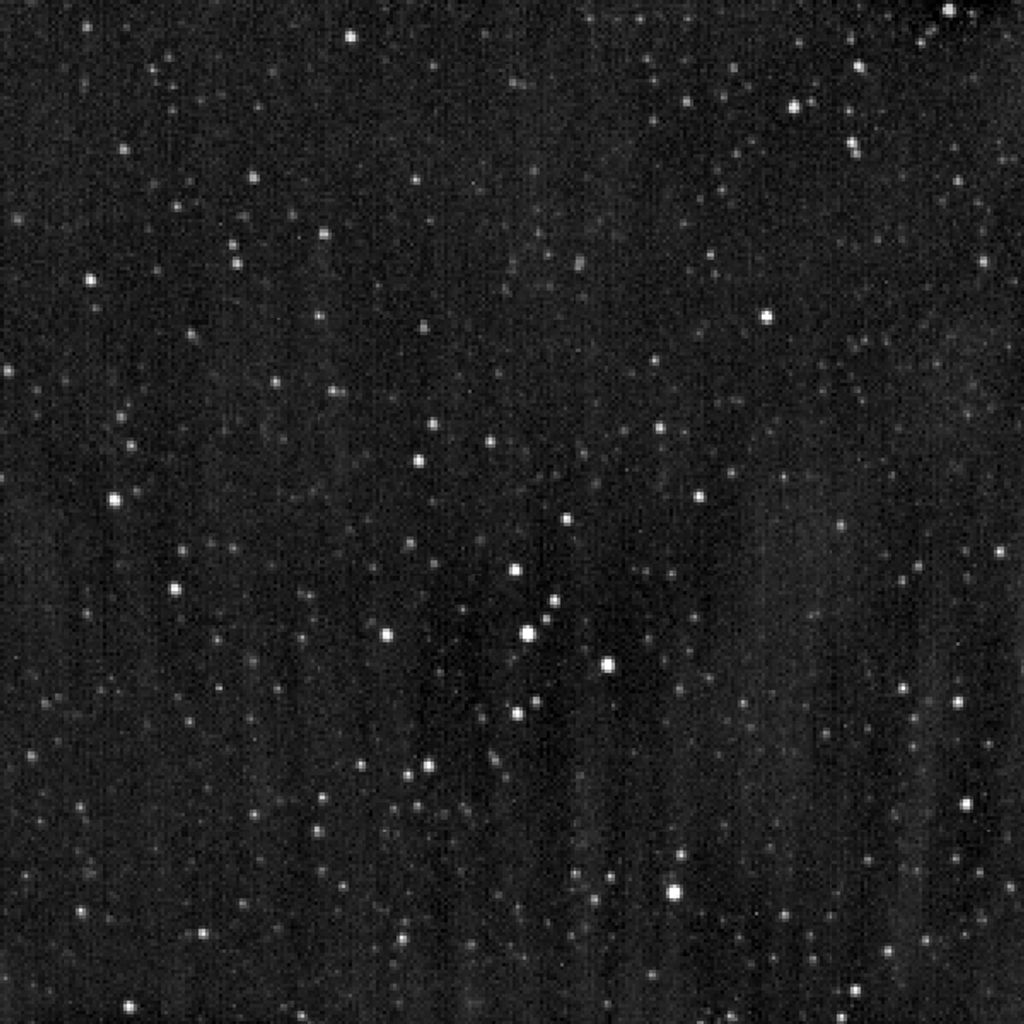






NASA’s Europa Clipper spacecraft, en route to Jupiter’s moon Europa, captured a distant image of Uranus using its star tracker camera. Taken on November 5, 2025, the photo was part of a test of the spacecraft’s navigation system. The unexpected planetary cameo highlights the precision of Clipper’s instruments during cruise.
NASA’s Europa Clipper mission, launched in 2024 to study Jupiter’s icy moon Europa, has delivered a cosmic bonus while testing its navigation systems. On November 5, 2025, the spacecraft’s star tracker camera—designed to map starfields for orientation—captured the planet Uranus alongside background stars.
The image, released by NASA’s Jet Propulsion Laboratory, shows Uranus as a bright dot moving slightly against the starfield over a 10-hour interval. While the star tracker’s primary role is to help the spacecraft maintain orientation, this test demonstrates its ability to capture scientifically valuable imagery during its cruise phase.
Major Takeaways
Unexpected Capture: Uranus appeared in the star tracker’s field of view during a navigation test.
Instrument Precision: Star trackers are crucial for spacecraft orientation, ensuring accurate trajectory to Europa.
Mission Timeline: Europa Clipper is scheduled to arrive at Jupiter in 2030.
Scientific Bonus: Though not designed for planetary imaging, the star tracker provided a rare view of Uranus.
Public Engagement: NASA released annotated versions of the image, sparking excitement among space enthusiasts.
Notable Updates
The spacecraft continues to test instruments during its cruise, ensuring readiness for Europa’s exploration.
Europa Clipper’s mission will investigate Europa’s subsurface ocean and potential habitability.
The Uranus image underscores how even navigation tools can yield unexpected scientific and public outreach value.
Conclusion: Europa Clipper’s snapshot of Uranus is a reminder that space exploration often delivers surprises beyond its primary mission goals. As the spacecraft heads toward Europa, its instruments are already proving their versatility, offering glimpses of distant worlds while preparing to unlock the secrets of Jupiter’s icy moon.
Sources: NASA Science, Orbital Today, MSN News.