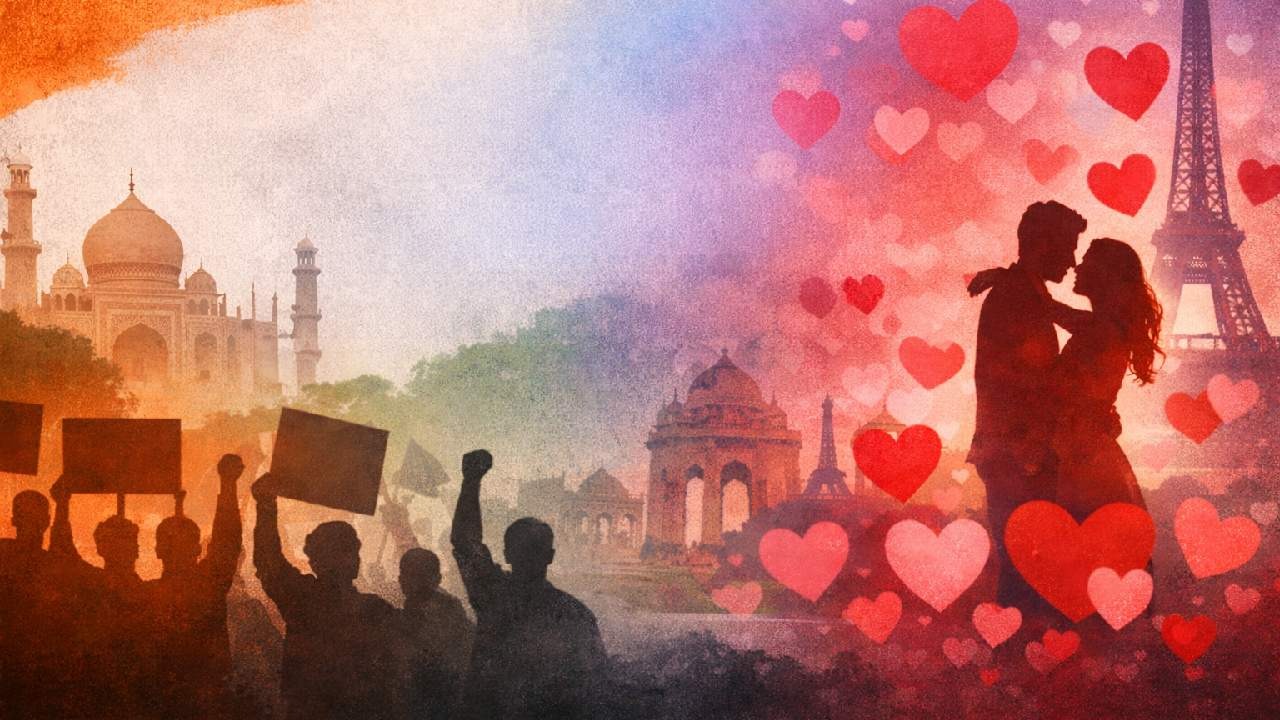
Valentine’s Day in India sparks both celebration and conflict. While urban youth embrace it as a modern ritual of love, conservative groups view it as a Western cultural import eroding traditional values. The day highlights India’s cultural crossroads—balancing global influences with local traditions, often leading to disputes and public debates.
Valentine’s Day, celebrated globally on February 14, has become a cultural flashpoint in India. For many young Indians, especially in urban centers, it is a day of romance, companionship, and modern rituals. Yet, for others, it represents a Western cultural intrusion that clashes with traditional Indian values. This tension has made Valentine’s Day one of the most debated festivals in the country.
A Pop-Up Festival in India
Unlike traditional Indian festivals, Valentine’s Day is not a public holiday. Schools, offices, and government institutions function as usual. Yet, in cities like Delhi, Mumbai, and Bengaluru, the day transforms into a pop-up celebration, with malls, cafes, and social media buzzing with red hearts, couple offers, and themed events. For urban youth, it fits neatly into their daily schedules-quick meetups before lectures, surprise lunches, or long calls between work shifts.
The Cultural Backlash
Conservative groups and right-wing organizations such as the Vishwa Hindu Parishad (VHP) and Bajrang Dal have long opposed Valentine’s Day. They argue that it promotes consumerism, individualism, and behaviors contrary to Sanatan Dharma, including public displays of affection that challenge traditional notions of family honor and restraint. In past years, protests have erupted in cities like Ghaziabad and Hyderabad, with activists calling for boycotts and even staging demonstrations against couples celebrating the day.
Key Highlights
Urban Adoption: Valentine’s Day is widely celebrated among India’s youth, especially in metropolitan areas.
Cultural Resistance: Hindu organizations view it as a threat to Indian morality and traditions.
Commercial Influence: Retailers and brands aggressively market Valentine’s Day, amplifying its visibility.
Social Divide: While some embrace it as harmless fun, others see it as cultural erosion.
Global vs. Local: The debate reflects India’s broader struggle between globalization and preservation of heritage.
Why the Strife Matters
The disputes surrounding Valentine’s Day are not just about romance-they reflect India’s cultural identity in a globalized world. On one hand, the younger generation sees it as a celebration of love and modernity. On the other, traditionalists fear it undermines centuries-old values rooted in family, dharma, and restraint. This clash illustrates how festivals can become battlegrounds for cultural narratives.
Looking Ahead
As India continues to modernize, Valentine’s Day will likely remain a symbol of cultural negotiation. For some, it is a joyful occasion to express affection; for others, it is a reminder of Western influence. The ongoing debate underscores the complexity of India’s evolving identity-where tradition and modernity coexist, sometimes uneasily.
Sources: Daily Pioneer, Hindutone, NRI Globe, Reuters