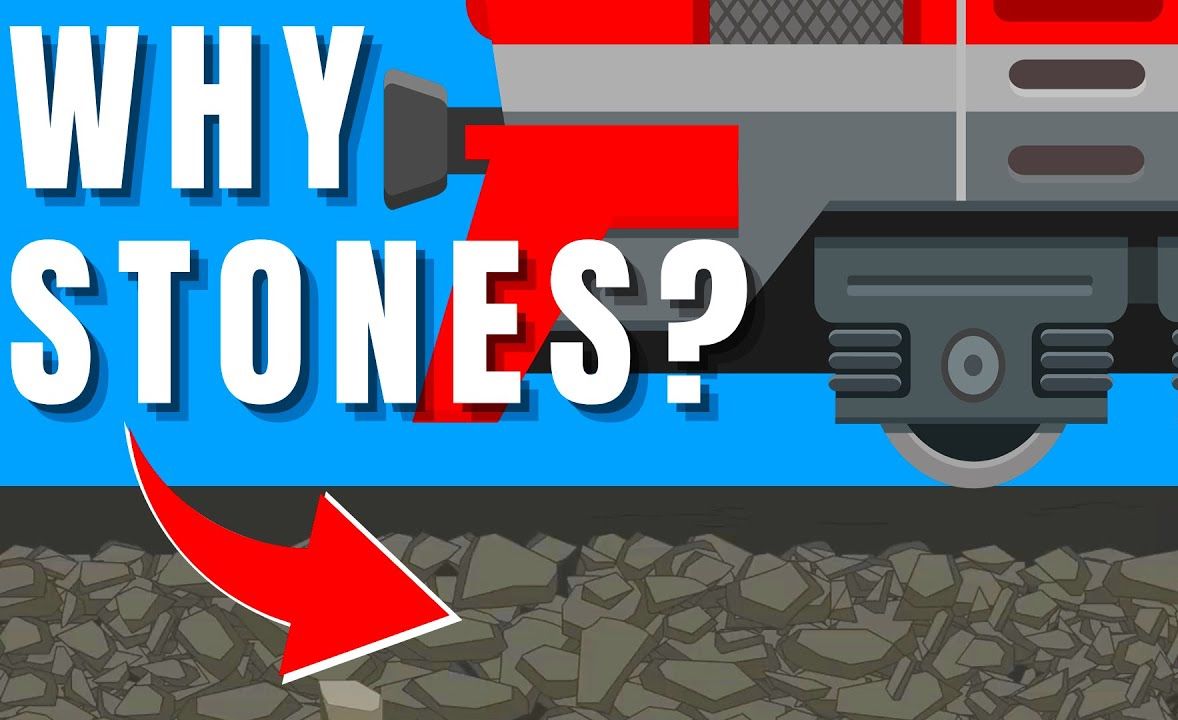





The jagged rocks beneath train tracks, known as track ballast, are not decorative but essential. They stabilize rails, distribute weight, prevent vegetation growth, and improve drainage. By absorbing vibrations and keeping sleepers in place, ballast ensures trains run safely and smoothly, forming the backbone of railway engineering worldwide.
Ever noticed sharp stones lining railway tracks and wondered why they’re there? These rocks, called track ballast, are a crucial engineering solution. Packed between and beneath sleepers, ballast provides stability, durability, and safety for trains carrying millions of tonnes across vast distances.
Ballast acts like a shock absorber, distributing the immense weight of trains evenly across the ground. It also prevents tracks from shifting under pressure, while keeping vegetation from growing and obstructing rails. Additionally, ballast allows water to drain away, protecting tracks from erosion and weakening.
Without ballast, rails would quickly deform, leading to unsafe conditions and costly repairs. This simple yet effective system has been used for centuries, proving that sometimes the most basic solutions are the most powerful.
Major Takeaways
-
Rocks under train tracks are called track ballast
-
Ballast stabilizes sleepers and keeps rails properly aligned
-
Distributes train weight evenly to prevent track deformation
-
Absorbs vibrations and reduces wear on rails and trains
-
Prevents vegetation growth around tracks
-
Improves drainage, protecting tracks from erosion and flooding
Conclusion
The jagged stones under railway tracks are a silent guardian of train safety, ensuring smooth journeys and long-lasting infrastructure. By combining stability, drainage, and durability, ballast remains one of the most effective and timeless innovations in railway engineering.
Sources: ScienceABC, Times Now, India Today