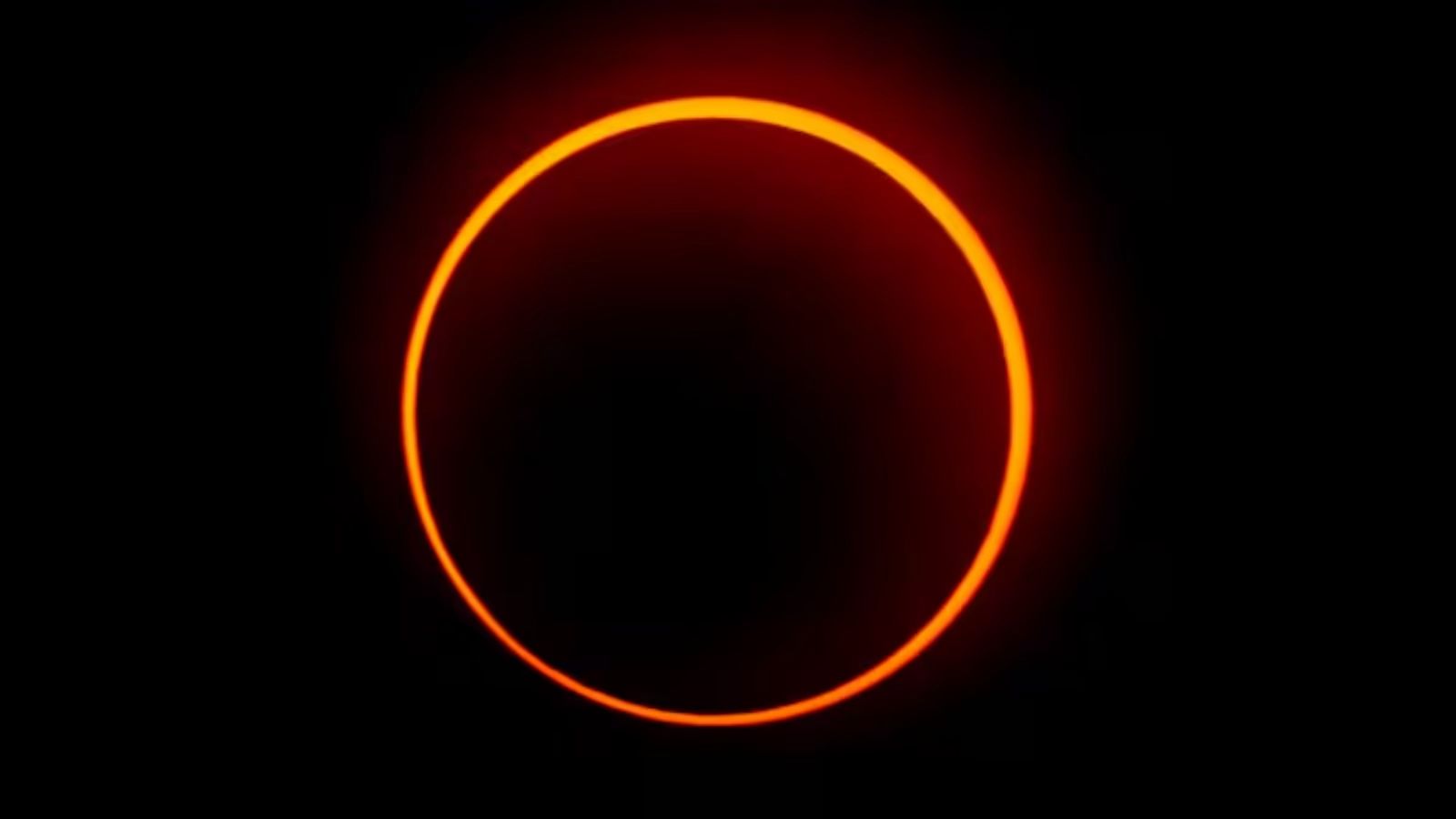







The annular solar eclipse on February 17, 2026, will begin at 07:01 UTC (12:31 PM IST) and reach its peak at 12:59 UTC (6:29 PM IST). Known as the “Ring of Fire,” the eclipse will be visible across parts of Africa, South America, Antarctica, and the oceans, but not in India.
Skywatchers worldwide are preparing for the first solar eclipse of 2026, an annular event where the Moon covers the Sun’s center, leaving a glowing ring around its edges. This rare spectacle, often called the “Ring of Fire,” coincides with the new moon phase.
The eclipse will begin at 07:01 UTC (12:31 PM IST), with the annular phase starting at 11:42 UTC (5:12 PM IST). The maximum eclipse will occur at 12:59 UTC (6:29 PM IST), before ending at 14:17 UTC (7:47 PM IST). While India will not witness this event, regions in southern Africa, South America, Antarctica, and parts of the Atlantic, Pacific, and Indian Oceans will enjoy the celestial show.
Astronomers emphasize the importance of protective eyewear during observation, as direct viewing of the Sun can cause permanent eye damage.
Major Takeaways
-
Annular solar eclipse scheduled for February 17, 2026
-
Eclipse begins at 07:01 UTC (12:31 PM IST)
-
Annular “Ring of Fire” phase starts at 11:42 UTC (5:12 PM IST)
-
Maximum eclipse at 12:59 UTC (6:29 PM IST)
-
Event ends at 14:17 UTC (7:47 PM IST)
-
Visible in Africa, South America, Antarctica, and oceans; not visible in India
-
Protective eyewear essential for safe viewing
Conclusion
The February 17, 2026 annular solar eclipse promises a breathtaking “Ring of Fire” spectacle for skywatchers across multiple continents. Though India will miss out, the event underscores the universal fascination with celestial phenomena, reminding us of the shared wonder of astronomy across cultures and geographies.
Sources: Times Now, News18, timeanddate.com, Business Today