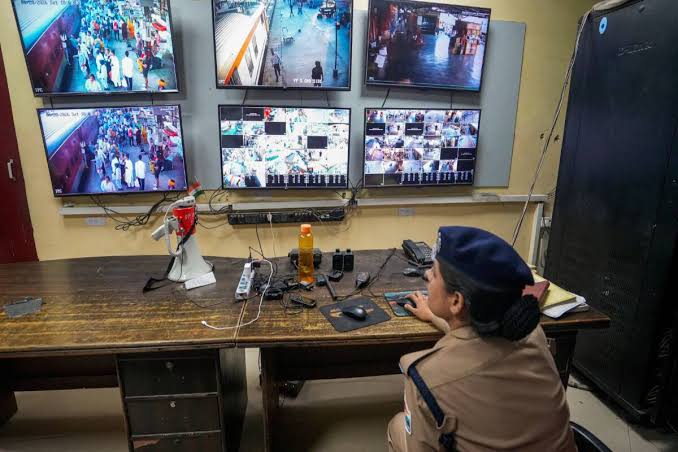
The National Testing Agency is conducting the NEET-UG 2026 re-examination today under an unprecedented multi-layered security blanket. Featuring 1.38 lakh AI-monitored CCTVs, 51K signal jammers, and doubled biometric authentication teams, the comprehensive framework aims to guarantee absolute transparency for over 22 lakh medical aspirants across the globe.
NTA Deploys 1.38 Lakh CCTVs and 51K Jammers for NEET Re-Exam Today
The National Testing Agency implements a multi-layered surveillance protocol to safeguard the medical entrance test.
NEW DELHI, India — The National Testing Agency (NTA) has initiated an unprecedented surveillance and tech-driven security operation across the country today for the highly anticipated NEET-UG 2026 re-examination. Following the systemic cancellation of the original May 3 test due to widespread paper-leak allegations, the federal testing body has deployed 1,38,560 CCTV cameras, 51,311 mobile signal jammers, and over two lakh administrative personnel to ensure the absolute transparency and sanctity of the medical entrance process.
The re-examination, scheduled to run from 2:00 PM to 5:15 PM IST on June 21, 2026, involves more than 22.79 lakh registered medical aspirants. Given the severe public backlash and political friction surrounding the initial cancellation seven weeks ago, this mega-security framework represents a high-stakes effort by the central government to restore public trust in the country's competitive educational infrastructure.
High-Tech Surveillance and Artificial Intelligence Integration
The core of the NTA’s anti-malpractice infrastructure is an expansive, live-monitored digital network. More than 95,000 examination rooms have been individually equipped with high-definition CCTV cameras. Unlike standard video feeds, these streams are being routed simultaneously to national, state, and ministry-level command centers for real-time observation.
To identify irregularities that human monitors might miss, the agency has integrated advanced artificial intelligence (AI) analytical tools into the network. The AI software is calibrated to automatically flag anomalies, suspicious behavioral patterns, or unauthorized movements within any test room.
Furthermore, to block any digital transmissions or wireless communication networks, the NTA has installed 51,311 signal jammers across all venues. These units were manufactured and deployed through state-run defense public sector undertakings, with 17,054 provided by the Electronics Corporation of India Limited (ECIL) and 34,257 sourced via Bharat Electronics Limited (BEL).
Strict Ground Logistics and Biometric Verification
On-the-ground human deployment has been heavily reinforced to complement the digital tech layer. The NTA has mandated that every single examination room house a minimum of two active invigilators, supplemented by more than ten additional administrative functionaries stationed at every test site.
Identity verification protocols have undergone a major structural tightening:
Frisking Personnel: A total of 38,795 dedicated staff members have been deployed to execute meticulous physical checks at entry gates.
Biometric Authentication: The agency has doubled its biometric verification manpower to 48,448 personnel, utilizing cross-referenced face authentication systems to systematically eliminate candidate impersonation.
Independent Oversight: The operations are being scrutinized by approximately 6,700 ground-level observers and over 100 centralized virtual monitors.
Paramilitary Support: An average of 40 to 50 security personnel, including local police and paramilitary forces, are actively guarding each of the 5,440 designated test centers.
Secure Logistical Channels and Government Oversight
To prevent potential chain-of-custody failures, the transportation of all confidential examination materials has been heavily militarized. Question papers and OMR answer sheets are being moved via GPS-enabled vehicles under direct police and paramilitary escort teams. The NTA has partnered with approximately 1,500 custodian bank branches to store materials, while the Department of Posts has mobilized specialized teams across 700 collection centers to immediately secure completed answer keys.
To ensure technical synchronization, the agency successfully executed a mandatory, nationwide mock drill on Saturday, June 20. This exercise tested the operational status of every signal jammer, biometric reader, and AI-monitored camera link. Additionally, as an emergency measure to neutralize organized cheating networks, the central government has temporarily restricted access to the Telegram messaging application nationwide.
Official Sources Section
According to official administrative press releases published by the National Testing Agency (NTA), test protocols are being active across 551 domestic cities and 14 international centers. Statutory directives issued by the National Medical Commission (NMC) ordered all medical colleges and allied institutions nationwide to deny leave requests to students on June 20 and 21 to prevent any institutional insider involvement in malpractice syndicates.
Quote Section
"According to officials from the National Testing Agency, the implementation of this multi-layered zero-trust architecture is designed to completely eliminate electronic and manual malpractice. The combination of dual biometrics, AI video analysis, and military-grade jammers ensures a level playing field for all 22 lakh aspirants."
Why It Matters
The absolute structural enforcement of the NEET re-test carries serious practical implications for India's healthcare pipeline, retail consumers, and families. For medical aspirants and their parents, a secure, leak-free examination protects months of rigorous academic preparation and preserves the meritocratic integrity of highly sought-after public medical seats. For the broader educational ecosystem, the success of this high-tech deployment sets a new baseline framework for conducting mass national examinations safely in a digitized society.
Key Facts at a Glance
Unprecedented Surveillance: 1,38,560 CCTV cameras running live AI analysis across 95,000 examination rooms.
Signal Blockade: 51,311 defense-grade jammers deployed via ECIL and BEL to stop electronic cheating.
Identity Defense: Biometric verification personnel doubled to 48,448, supported by full facial authentication.
Secure Logistics: Material transport handled via GPS-tracked vehicles, police escorts, and the Indian Air Force.
Candidate Relief: Extended entry windows, mandatory wall clocks, and specialized layouts for left-handed students.
FAQ Section
Q: What time do the exam centre gates close for the NEET re-examination today? A: Entry gates open at 11:00 AM and will close sharply at 1:30 PM IST. The NTA has strictly warned that no candidate will be granted entry under any circumstances after 1:30 PM.
Q: Why has the government temporarily restricted Telegram today? A: Federal security agencies implemented temporary access restrictions on Telegram to disrupt digital cheating syndicates and prevent the viral spread of fraudulent paper-leak rumors.
Q: Are candidates allowed to bring water bottles or food items inside? A: Candidates are permitted to bring a completely transparent water bottle. Diabetic candidates are explicitly allowed to carry sugar tablets and fruits like bananas, apples, or oranges, subject to thorough frisking.
Source: National Testing Agency (NTA) Official Portal, Press Information Bureau (PIB) India