Oman's Public Authority for Special Economic Zones has signed an agreement with the ACME Group for the $4.2 billion downstream expansion of Phases 2 and 3 of its green hydrogen project in Duqm. The expansion will add 800,000 tonnes of green ammonia capacity annually, scaling operations by 2030.
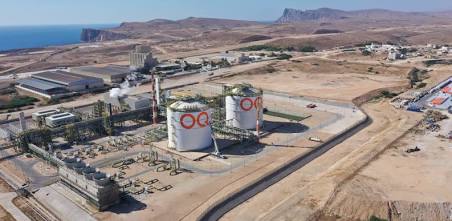
AL DUQM — The Public Authority for Special Economic Zones and Free Zones (OPAZ) has formalized a massive $4.2 billion (RO 1.6 billion) investment agreement with the India-based renewable energy corporation ACME Group. The landmark deal secures the downstream development of Phases 2 and 3 of the premier ACME Green Hydrogen Project located within the strategic coastal hub of Duqm.
The transaction forms the core of an expansive 2.9 billion Omani rial ($7.5 billion) industrial development package executed by state officials to establish the Sultanate as a dominant player in the global green economy. The agreement transitions the specialized facility from an early-stage venture into a scaled downstream asset aligned with the national carbon-neutrality targets.
Technical Scope and Production Benchmarks
The newly ratified framework brings the downstream infrastructure of Phases 2 and 3 under a structured regulatory timeline managed by Hydrogen Oman (Hydrom), the orchestrator of the country’s national hydrogen roadmap.
Spanning an allocated territory of 80 square kilometers inside the Special Economic Zone at Duqm (SEZD), the expansion builds upon the engineering works of Phase 1, which maintains a commercial offtake supply agreement with Norway’s Yara International.
According to technical specifications published by project engineers, the operational targets for the subsequent phases are strictly delineated:
Per-Phase Annual Output: 71,000 tonnes of green hydrogen synthesized directly into 400,000 tonnes of green ammonia.
Combined Expansion Capacity: 142,000 tonnes of pure green hydrogen and 800,000 tonnes of transportable green ammonia per annum.
Cumulative Facility Target: 900,000 tonnes of green ammonia annually upon the complete synchronization of all three development phases.
The manufacturing process utilizes zero-carbon electricity generated from high-yield solar arrays and onshore wind farms to drive water-splitting electrolyzers, entirely bypassing natural gas feedstocks.
Strategic Infrastructure Matrix at Duqm
The selection of the Al Wusta Governorate for this multi-billion dollar downstream footprint reflects calculated logistics planning. The Special Economic Zone provides immediate access to deep-water maritime channels along the Arabian Sea, minimizing transit times to primary energy import markets in Europe and the Asia-Pacific region.
| Project Metric | Phase 1 (Under Construction) | Phase 2 (Downstream Deal) | Phase 3 (Downstream Deal) |
| Investment Value | ~$490 Million | Multi-Billion Apportioned | Multi-Billion Apportioned |
| Target Commissioning | Q1 2027 | 2030 | 2033 |
| Primary Output | 100,000 Tonnes Ammonia | 400,000 Tonnes Ammonia | 400,000 Tonnes Ammonia |
| Offtake / Destination | Yara International (Europe) | Global Spot / Open Tenders | Global Spot / Open Tenders |
National Economic Context and Vision 2040 Alignment
The $4.2 billion downstream agreement expands Oman's current green energy portfolio to nine utility-scale hydrogen assets distributed across the Al Wusta and Dhofar governorates. Collectively, these initiatives represent more than $50 billion in foreign direct investment (FDI) commitments aimed at delivering 1.5 million tonnes of green hydrogen annually by the end of the current decade.
Government ministries are positioning the Duqm zone to capture high in-country value (ICV). The physical construction and long-term operation of the ACME facilities are projected to stimulate local engineering supply chains, mandate national hiring quotas for specialized technicians, and absorb auxiliary output from an adjacent 890-megawatt independent power asset being developed concurrently within the industrial zone.
Official Sources Section
The investment values, production capacities, land dimensions, and commercial operating timelines presented in this report are verified by formal project disclosures released by the Public Authority for Special Economic Zones and Free Zones (OPAZ) and the state-owned energy transition vehicle, Hydrogen Oman (Hydrom).
The underlying land usufruct parameters and development frameworks were authorized under the executive oversight of His Excellency Eng. Salim bin Nasser Al Aufi, Minister of Energy and Minerals, alongside senior regional directors representing the ACME Group's cross-border project management division.
Executive Commentary
"According to officials managing the Special Economic Zone, the downstream validation confirms that Duqm has successfully transitioned from an experimental clean-energy testing ground into an integrated commercial export platform capable of securing institutional project financing."
Why It Matters
For global energy markets, the capitalization of the ACME project provides verified evidence that heavy utility-scale green hydrogen infrastructure can secure standard commercial viability without relying on local natural gas buffers.
For international industrial consumers, the $4.2 billion execution guarantees a highly stable, long-term supply corridor of green ammonia—a critical component needed to decarbonize global maritime shipping operations, fertilizer manufacturing, and advanced chemical refining processes over the next twenty years.
Key Facts at a Glance
Total Transaction Value: $4.2 billion (RO 1.6 billion) allocated exclusively to the downstream expansion of Phases 2 and 3.
Physical Footprint: 80 square kilometers of specialized land secured under a unified usufruct framework in Duqm.
Volume Benchmarks: Adds 800,000 tonnes of annual green ammonia capacity to the national portfolio.
Project Execution Timelines: Commercial operations are scheduled to commence in 2030 for Phase 2 and 2033 for Phase 3.
Macro Objective: Supports Oman’s strategic economic diversification mandates outlined under Vision 2040 and the 2050 net-zero policy.
Frequently Asked Questions (FAQ)
What specific assets will the $4.2 billion investment fund?
The investment directly funds the downstream processing plants, synthesis blocks, storage tanks, and specialized port loading infrastructure required for Phases 2 and 3 of the ACME facility.
How is green hydrogen converted for global transport?
The captured green hydrogen is combined with atmospheric nitrogen via an energy-efficient synthesis process to create green ammonia, which remains stable at higher temperatures and can be transported safely via conventional ocean-going gas carriers.
When will the newly announced phases enter commercial service?
According to official development roadmaps, Phase 2 is targeted to begin commercial shipping operations in 2030, followed by the deployment of Phase 3 infrastructure in 2033.
Who is responsible for purchasing the clean fuels produced?
While Phase 1 output is fully committed to Norway's Yara International under a long-term commercial contract, the expanded volumes from Phases 2 and 3 are being positioned to supply emerging industrial demand clusters across Western Europe and East Asia.
What is the source of electricity for the water electrolysis process?
The Duqm facility relies on dedicated local co-located renewable generation assets, utilizing large-scale solar photovoltaic (PV) installations and high-capacity wind turbine farms to achieve zero-emissions power.
Source: Public Authority for Special Economic Zones and Free Zones Media Portal, Oman Ministry of Energy and Minerals Official Statements