ONGC has appointed BP’s Indian subsidiary as a Technical Services Provider to boost output from Western Offshore fields. The 10-year partnership aims to increase crude and gas production by ~24% using global reservoir management and operational technologies, targeting full-scale production gains by fiscal year 2030 to bolster India's energy security.
Oil and Natural Gas Corporation (ONGC) has appointed BP Exploration Services India Limited, a subsidiary of the British energy major BP Plc, as a Technical Services Provider (TSP) to enhance hydrocarbon production across its Western Offshore fields. The 10-year agreement, finalized following an international competitive bidding process, marks a strategic expansion of the partnership between the two companies.
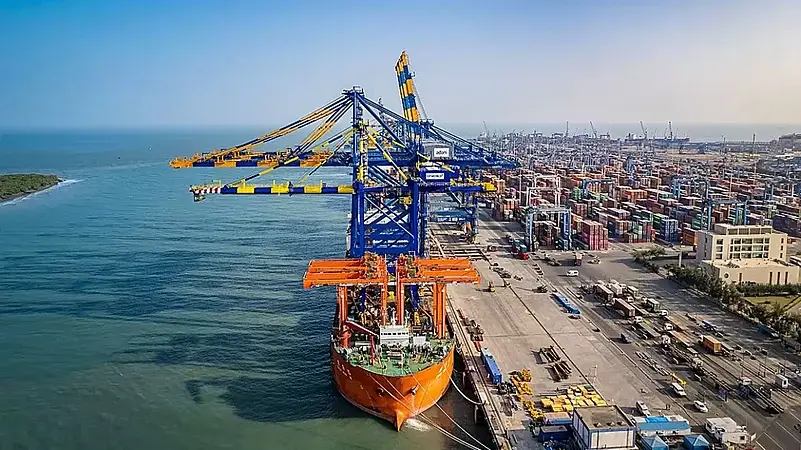
The move, announced in late May 2026, focuses on optimizing production from mature offshore assets in the Mumbai Offshore Basin, excluding the flagship Mumbai High field, which is already under a similar technical services arrangement. By leveraging global reservoir management expertise and advanced recovery technologies, ONGC aims to stabilize decline curves and boost long-term output in one of India's most prolific energy regions.
Expanding the Scope of Technical Collaboration
The Western Offshore Basin remains a cornerstone of India’s domestic energy production, accounting for a substantial share of the country’s crude oil and natural gas output. The new partnership will see BP providing technical oversight to review field performance, enhance surveillance, and de-bottleneck facilities across 43 hydrocarbon-producing blocks.
"The TSP will review the field performance and identify improvements in reservoir, facilities and wells to enhance production from Western Offshore fields," ONGC stated in a regulatory filing. The collaboration is expected to deploy best-in-class operational practices, addressing the challenges inherent in aging reservoirs where production naturally tends to decline over time.
Production Targets and Economic Outlook
The initiative is projected to deliver significant gains in hydrocarbon recovery. According to ONGC’s performance estimates, the 10-year contract aims for a roughly 10.8% increase in crude oil production and a 31.5% rise in natural gas output. Collectively, this is expected to drive a 24.1% increase in total oil and oil-equivalent gas (O+OEG) production, moving from a baseline of 128.93 million tonnes of oil equivalent (MMTOE) to 159.96 MMTOE.
Operational benefits are expected to emerge gradually, with initial improvements likely visible by fiscal year 2027 and full-scale production impacts anticipated by 2030. The contract structure includes a fixed fee for the initial two years, followed by a performance-linked service fee tied to incremental production gains after cost recovery.
Official Sources
Quote Section
"According to officials, the partnership aims to unlock the enhanced potential of the entire Western Offshore portfolio by leveraging cutting-edge technologies and global best practices, securing its future contribution to India’s energy landscape."
Why It Matters
For India, which relies heavily on energy imports, maximizing recovery from existing domestic assets is vital. This partnership helps ONGC transition from traditional operational models to data-driven, technology-intensive reservoir management. For investors, the performance-linked fee structure signals a commitment to capital efficiency and incremental growth, potentially stabilizing the company’s production outlook in the face of natural reservoir depletion.
Key Facts at a Glance
Target: Enhance O+OEG production by ~24.1% over a 10-year period.
Scope: Western Offshore fields (excluding Mumbai High), covering 43 blocks.
Technology Partner: BP Exploration Services India Limited (BPXS).
Expected Timeline: Initial results expected in FY27, with full-scale visibility by FY30.
FAQ
Why was the Mumbai High field excluded from this contract?
The Mumbai High field is already covered under a separate, existing Technical Services Provider contract signed in early 2025 with another BP subsidiary.
How will this affect domestic energy prices?
By increasing domestic production, the initiative aligns with broader efforts to reduce reliance on imported hydrocarbons, which can help stabilize long-term energy supply chains.
What is the payment structure for BP?
BP will receive a fixed fee for the first two years, transitioning to a service fee based on a share of revenue from net incremental production after costs are recovered.
Source: ONGC Official Press Release (NSE), BSE Limited