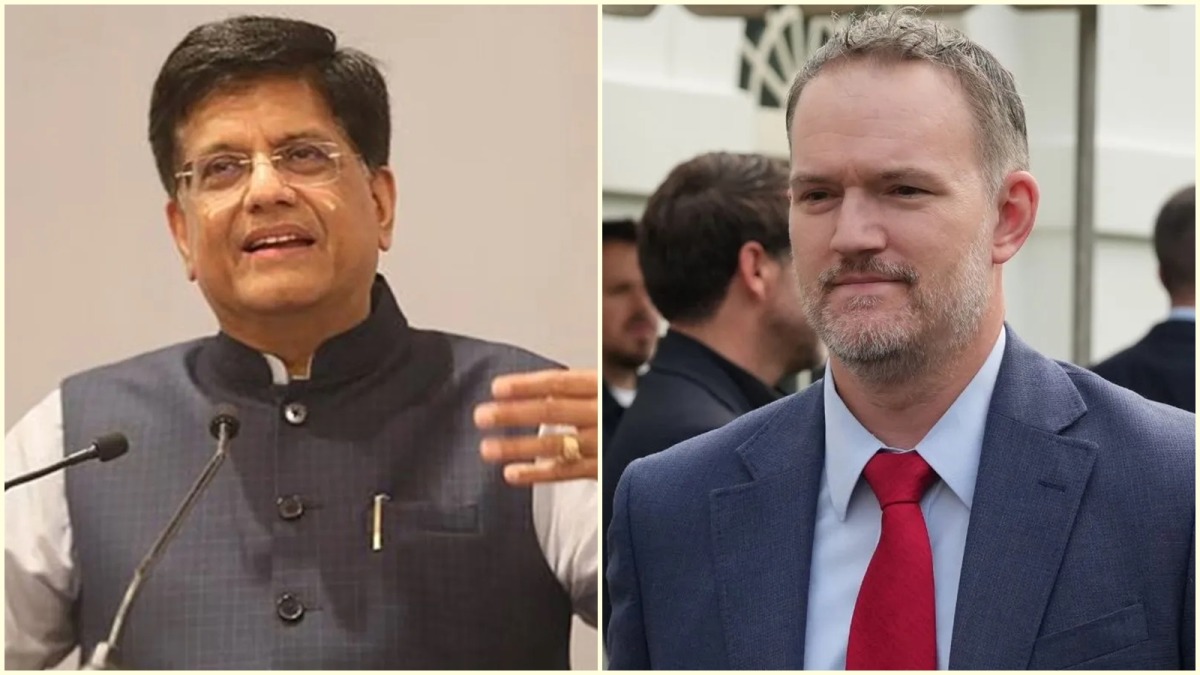
Indian Commerce Minister Piyush Goyal meets Jamieson Greer, the US Trade Representative, in New Delhi for critical two-day talks aimed at finalizing the first phase of an interim Bilateral Trade Agreement by mid-July. The discussions focus on reciprocal tariff reductions, expanding tech partnerships, and resolving pending Section 301 investigations.
NEW DELHI — India’s Union Minister of Commerce and Industry, Piyush Goyal, meets Jamieson Greer, the United States Trade Representative (USTR), in the national capital today, June 23, 2026. The high-profile, two-day ministerial summit is designed to eliminate lingering friction points and provide the final administrative touches to the initial tranche of a comprehensive Bilateral Trade Agreement (BTA). As both nations aim to expand their mutual trade pipeline to an ambitious $500 billion by 2030, this meeting is crucial for exporters, digital technology firms, and strategic industrial supply chains operating across both democratic economies.
Final Touches to the Interim Trade Pact
According to an official procedural briefing detailed by Commerce Secretary Rajesh Agrawal, the main objective of the two-day framework assembly is to formally close out open ends within the interim trade understanding. The blueprint for this cross-border trade framework was initially established during a joint strategic declaration by the leadership of both nations. Following successful chief negotiator-level discussions held in New Delhi earlier this month, the ministerial alignment overseen by Goyal and Greer is expected to pave the way for the dynamic first phase of the agreement to take effect as early as the middle of next month.
The underlying mechanics of the proposed interim deal involve reciprocal economic concessions designed to optimize cross-border commerce:
Indian Tariff Adjustments: New Delhi has offered to lower or entirely remove long-standing import duties on a broad array of American industrial products and agricultural exports. This list includes tree nuts, dried distillers' grains (DDGs), red sorghum for animal feed, fresh fruits, soybean oil, and distilled spirits.
Long-Term Procurement Targets: India intends to purchase roughly $500 billion worth of American energy products, aviation components, commercial aircraft, technology hardware, and coking coal over the next five years.
US Tariff Structures: In return, India is seeking a structural competitive advantage for its domestic exporters, ensuring that its outbound goods face lower net tariffs in the US compared to competing manufacturing nations.
Resolving Section 301 Investigations and Duty Hurdles
A central topic on the table as Piyush Goyal meets Jamieson Greer involves navigating recent regulatory hurdles introduced by the Office of the United States Trade Representative (USTR). Specifically, the USTR has initiated complex investigations under Section 301 of the U.S. Trade Act of 1974. These probes focus on allegations concerning global industrial excess capacity in sectors like steel and textiles, alongside monitoring compliance regarding international forced labor standards.
Furthermore, the implementation timeline is closely linked to the expiration of the temporary 10 percent global additional tariff implemented by Washington earlier this year, which is scheduled to lapse on July 24. After this expiration, Most Favored Nation (MFN) tariff baselines will return as the primary regulatory standard. Minister Goyal has publicly stated that India cannot formally execute the free trade provisions until it secures a clear competitive edge over rival trading blocs. Indian officials remain highly optimistic that concluding this bilateral pact will provide clear answers and strategic exemptions regarding the pending Section 301 reviews.
Broader Economic Impact and Strategic Alliances
The successful resolution of these trade talks will directly affect businesses, digital consumers, and capital investors in both countries. In the 2025–26 fiscal year, India’s outbound shipments to the US reached $87.3 billion, while imports from the US grew by nearly 16 percent to hit $52.9 billion. Although India maintains a healthy trade surplus of $34.4 billion, stabilizing this relationship through a clear legal framework will help reduce supply chain shocks for multinational corporations.
Beyond immediate commodity exchanges, the negotiations are heavily focused on high-tech sectors like artificial intelligence, semiconductor manufacturing, and green energy infrastructure. By coordinating their commercial frameworks, both nations aim to secure critical digital tech corridors and build reliable alternatives to state-dominated manufacturing networks. U.S. Ambassador to India Sergio Gor expressed strong optimism on social media handles ahead of the sessions, noting that multiple dedicated ministerial segments will help solidify the strategic India-US economic alliance.
Official Sources Section
The operational agendas, tariff structures, and transaction values cited throughout this report are compiled from formal updates distributed by the Ministry of Commerce and Industry of India, official statements from the Ministry of External Affairs (MEA), and public briefings released by the Office of the United States Trade Representative (USTR).
Quote Section
"According to officials from the Ministry of Commerce, the ongoing talks represent an advanced stage of diplomacy, where both nations are heavily focused on creating a mutually beneficial framework that protects domestic manufacturing while aggressively expanding bilateral trade volumes."
Why It Matters
For industrial manufacturers, agricultural producers, and global tech firms, this high-level meeting helps establish clear long-term trade policies. Finalizing an interim pact will lower import costs for American agricultural goods in India while giving Indian steel, textile, and technology exporters a distinct tariff advantage over global competitors in the massive US consumer market.
Key Facts at a Glance
Summit Context: Union Minister Piyush Goyal meets Jamieson Greer in New Delhi for a two-day high-level ministerial trade summit.
Core Target Milestone: Both nations are aiming to execute the first phase of the interim trade pact by the middle of next month.
Long-Term Trade Goal: The framework supports an ambitious bilateral trade target of $500 billion by 2030, driven by technology and energy sectors.
Key Areas of Negotiation: Focuses on lowering duties on US agricultural products, increasing India's energy purchases, and resolving Section 301 trade investigations.
FAQ Section
What is the main goal of the meeting between Piyush Goyal and Jamieson Greer?
The primary goal is to finalize the first phase of an interim Bilateral Trade Agreement (BTA), resolving outstanding tariff disagreements and establishing a stable framework for future trade expansion.
How will this trade agreement affect American agricultural exports to India?
Under the proposed framework, India has agreed to reduce or eliminate import tariffs on a variety of US agricultural items, including tree nuts, fresh fruits, soybean oil, and grains for animal feed.
What are the Section 301 investigations mentioned in the trade talks?
Section 301 investigations are regulatory reviews conducted by the USTR to determine whether a trading partner's policies create unfair trade barriers. In this case, the probes cover industrial capacity and labor standards, and India is working to resolve them through this bilateral pact.
Source: Official trade circulars and press registries maintained by the Ministry of Commerce and Industry of India and congressional policy reports published by the Office of the United States Trade Representative (USTR).