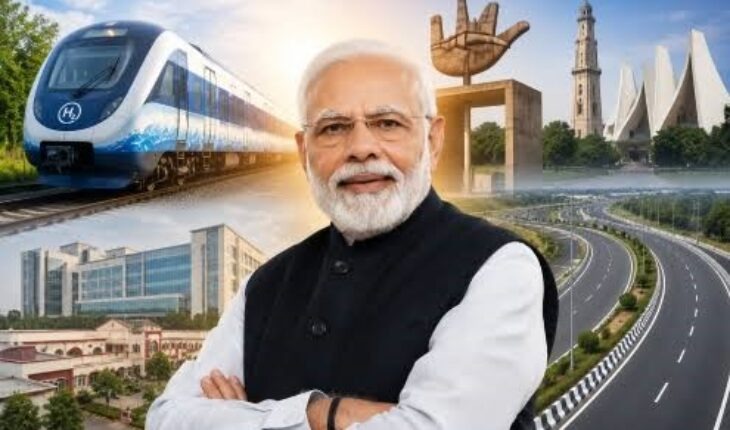
Prime Minister Narendra Modi is launching development projects worth over ₹25,000 crore across Haryana, Punjab, and Chandigarh. The initiatives, which include major road infrastructure like the Delhi-Amritsar-Katra Expressway, alongside new medical colleges and educational institutions, aim to enhance regional connectivity, bolster healthcare access, and promote human capital development in Northern India.
The Prime Minister’s multi-state tour will unveil vital infrastructure initiatives across Haryana, Punjab, and Chandigarh to bolster regional connectivity and public services.
NEW DELHI – Prime Minister Narendra Modi is scheduled to inaugurate and lay the foundation stones for a series of development projects today, July 17, 2026, collectively valued at over ₹25,000 crore. The projects, spanning the states of Haryana, Punjab, and the Union Territory of Chandigarh, are focused on modernizing critical infrastructure, including road networks, higher education institutions, and advanced healthcare facilities.
This visit underscores the government's ongoing commitment to strengthening regional connectivity and social infrastructure. By focusing on multi-sectoral growth, the administration aims to facilitate industrial movement, improve access to specialized medical care, and expand educational opportunities for youth in Northern India.
Transforming Road and Transit Infrastructure
A significant portion of the total investment is dedicated to the expansion of road infrastructure, which officials believe will serve as a catalyst for economic growth in the region. The flagship project includes the foundational work for key segments of the Delhi-Amritsar-Katra Expressway. This high-speed corridor is designed to drastically reduce travel time between major commercial hubs, facilitating more efficient interstate logistics and movement of goods.
In addition to expressway developments, the Prime Minister will inaugurate several bypasses and regional connectivity projects aimed at alleviating traffic congestion in rapidly urbanizing corridors. According to official reports, these road infrastructure projects are expected to enhance the supply chain efficiency for local industries and improve passenger transit between rural and urban centers.
Advancements in Healthcare and Education
Addressing public health and educational accessibility remains a primary focus of the government's development agenda. During his visit, the Prime Minister will dedicate several state-of-the-art medical colleges and super-specialty hospitals to the public. These facilities are intended to bridge the urban-rural health divide by providing advanced diagnostic and treatment services to regions that previously relied on facilities in distant metro cities.
The educational initiatives include the launch of new technical universities and skill development centers. These institutions are established to align with the national objective of fostering human capital, providing students with advanced technical education and vocational training designed to meet the demands of the evolving national economy.
Official Sources and Implementation
The development agenda is being executed in coordination with state-level administrative bodies and central ministries. According to the Prime Minister’s Office (PMO), the planning and execution of these projects follow extensive consultations with the Ministry of Road Transport and Highways, the Ministry of Health and Family Welfare, and the Ministry of Education.
The PMO stated that the timely completion of these infrastructure projects is being monitored through integrated digital dashboards to ensure fiscal transparency and adherence to project timelines. The state governments in Haryana and Punjab have been instructed to provide the necessary land-use clearances and local support to expedite the construction phases of these initiatives.
Why It Matters
For citizens, the launch of these road infrastructure projects and healthcare facilities translates into improved accessibility, reduced travel time, and enhanced quality of life. For businesses, the reliable connectivity provided by the expanded expressway networks will lower operational costs and broaden access to markets. The investment in educational and medical institutions ensures that the region is equipped to support a growing population with sustainable, long-term public services.
Key Facts at a Glance
Total Investment: The development projects represent a cumulative expenditure of over ₹25,000 crore across three regions.
Sectoral Focus: The projects span major pillars of development: road connectivity, higher education, and advanced healthcare.
Key Infrastructure: The launch includes foundational milestones for the Delhi-Amritsar-Katra Expressway, aimed at accelerating interstate commerce.
Social Impact: The inauguration of new medical colleges and hospitals seeks to bring super-specialty healthcare closer to residents in underserved areas.
Frequently Asked Questions
Which regions are covered by these new development projects?
The projects are focused on Northern India, specifically spanning Haryana, Punjab, and the Union Territory of Chandigarh.
What is the significance of the road infrastructure projects being unveiled?
These projects, including sections of the Delhi-Amritsar-Katra Expressway, are vital for improving commercial transit, reducing travel time, and boosting economic connectivity between key industrial hubs.
When will these facilities be operational?
While the Prime Minister is laying the foundation stones and inaugurating the first phases today, the operational timeline for each facility varies, with state and central authorities tasked with meeting strict completion deadlines.
Source: Prime Minister’s Office (PMO), Ministry of Road Transport and Highways, Ministry of Health and Family Welfare, Ministry of Education