San Francisco International Airport is executing a historic $5 billion capital improvement program featuring five cornerstone projects. Key investments include the $2.9B Terminal 3 West modernization, the award-winning Harvey Milk Terminal 1, AirTrain transit expansion, International Terminal digital upgrades, and shoreline resilience defenses—transforming traveler experience without taxpayer funding.
SAN FRANCISCO — San Francisco International Airport (SFO) is advancing a massive multi-billion-dollar capital improvement portfolio designed to reshape Northern California’s primary aviation gateway. Driven by record regional travel demand and aggressive municipal sustainability goals, SFO officials and construction partners are executing five cornerstone projects totaling over $5 billion in public and private capital. The ongoing transformation modernizes aging passenger terminals, streamlines baggage handling, expands transit connectivity, and reinforces coastal flood defenses to protect long-term infrastructure.
The Five Anchor Projects Shaping SFO's Evolution
SFO’s master capital plan centers on five major infrastructure initiatives that collectively represent one of the largest municipal airport modernization programs in North America.
1. Terminal 3 West Modernization Project ($2.9 Billion)
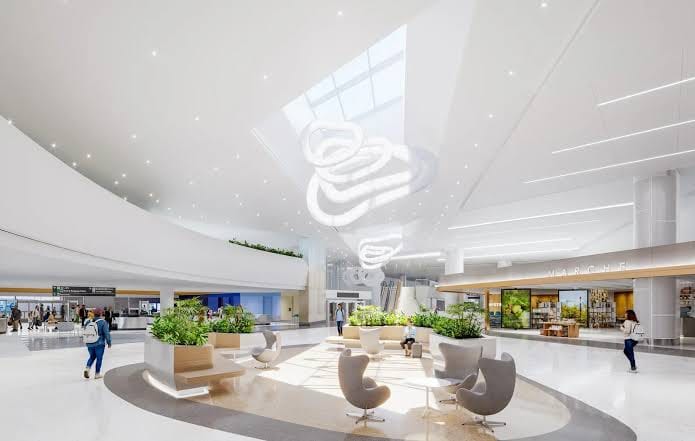
Led by design-build team Turner Construction alongside architects Gensler and TEF Design, the $2.9 billion Terminal 3 West project serves as the flagship initiative of SFO's evolution. The project encompasses a complete overhaul of the 650,000-square-foot western section of Terminal 3, adding 200,000 square feet of additional floor space. Scheduled for phased openings through 2029, the facility will feature new security checkpoints, seismic retrofitting, consolidated airline lounge facilities, and expanded concession spaces targeting LEED-Platinum certification.
2. Harvey Milk Terminal 1 Redevelopment ($2.5 Billion)
Named in honor of the pioneering civil rights leader, the $2.5 billion Harvey Milk Terminal 1 redevelopment replaces outdated 1960s facilities with a state-of-the-art 900,000-square-foot concourse. Designed by Gensler, Kuth Ranieri, and built by Hensel Phelps and Austin Commercial, the terminal features 25 operational gates, energy-efficient displacement ventilation, and North America’s first individual carrier baggage handling system. The terminal was awarded the world's first LEED-Platinum v4 rating for airport terminals.
3. AirTrain System Expansion and Secure Walkway Connectors
To enhance intermodal transit and airside connectivity, SFO completed a major extension of its automated AirTrain system. The project extended the line to the Long-Term Parking Garages and established seamless, post-security passenger walkways connecting all airport terminals. Travelers can now move between domestic and international concourses without re-clearing Transportation Security Administration (TSA) checkpoints.
4. International Terminal Refresh and Digital Infrastructure
Building on its iconic SOM-designed International Terminal, SFO has deployed widespread upgrades across immigration halls, customs queue areas, and boarding gates. The multi-hundred-million-dollar refresh introduces touchless self-service bag drops, biometric boarding gates, and upgraded power infrastructure across seating areas to accommodate expanding widebody flight operations.
5. Shoreline Protection and Climate Resiliency Master Plan
To defend low-lying runway facilities against rising sea levels and extreme weather, SFO is advancing a comprehensive coastal flood defense project. The initiative reinforces shoreline seawalls, improves airfield storm-water pumping capacity, and embeds green infrastructure along San Francisco Bay to ensure operational continuity over the coming decades.
Official Sources and Regulatory Framework
According to official press announcements from San Francisco International Airport, all capital projects are funded through airport revenue bonds, passenger facility charges (PFCs), and federal grants issued under the Federal Aviation Administration (FAA) Airport Improvement Program. No local San Francisco tax dollars are utilized for airport construction or operational debt servicing.
The San Francisco Airport Commission maintains regulatory oversight alongside environmental disclosures filed with the California Environmental Quality Act (CEQA) and federal environmental compliance agencies.
Official Statement and Leadership Perspective
According to official project disclosures, airport leadership emphasizes that these capital expenditures are structured to maintain long-term competitiveness while reducing carbon footprints.
"Our goal is to create an extraordinary airport experience for our guests, leading the way in sustainability and innovation, and we expect this project will once again raise the bar for what travelers can look forward to at SFO," said SFO Airport Director Ivar Satero in a statement regarding the airport's modern terminal investments.
Why It Matters to Bay Area Travelers and Businesses
SFO’s evolution delivers immediate practical impacts for passenger comfort, regional economic growth, and airline efficiency.
Passengers and Consumers: Reduced security wait times, streamlined bag-track technology, expanded dining options featuring Bay Area businesses, and quieter gate seating areas.
Airlines and Operations: Faster turn times for carrier aircraft, modern ground support equipment, and enhanced airside gate flexibility for widebody jets.
Regional Economy and Jobs: Thousands of union construction, engineering, and architectural jobs created across the Bay Area, alongside expanded commercial opportunities for local retailers.
Key Facts at a Glance
Total Investment: Over $5 billion across five primary capital infrastructure initiatives.
Flagship Project: $2.9 billion modernization of Terminal 3 West, with major openings spanning through 2029.
Sustainability Benchmark: World's first LEED-Platinum v4 certified airport terminal at Harvey Milk Terminal 1.
Funding Mechanism: Revenue bonds, passenger facility fees, and FAA grants—zero local taxpayer funds.
Transit Integration: 100% post-security walkway connectivity linking all four terminals and AirTrain lines.
Frequently Asked Questions (FAQ)
Is SFO using local tax dollars to fund these billion-dollar projects?
No. SFO operates as an enterprise department of the City and County of San Francisco. All construction is funded via airport revenue bonds, tenant airline leases, passenger facility charges, and federal FAA grants.
Will construction cause delays for passengers traveling through SFO?
Airport officials have implemented prefabricated temporary corridors and night-shift construction work to keep passenger traffic moving smoothly during active terminal renovations.
When will the entire capital improvement plan be completed?
Major components like Harvey Milk Terminal 1 are fully operational. Terminal 3 West's western expansion will open in late 2027, with final lobby renovations completing by 2029.
How do these projects contribute to environmental sustainability?
Projects feature low-carbon concrete, recycled water systems, on-site solar photovoltaic panels, and energy-efficient ventilation, positioning SFO toward zero-net-energy operations.
Sources: San Francisco International Airport (SFO) Official Press Room, U.S. Federal Aviation Administration (FAA), Turner Construction Company Project Disclosures