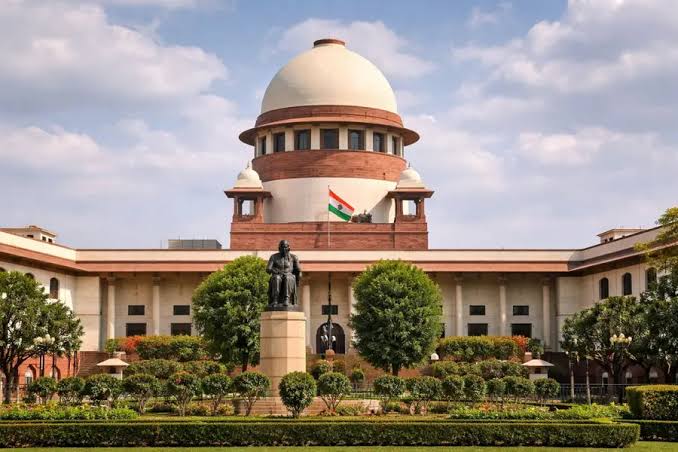
The Supreme Court has dismissed the final remaining appeal in the decades-old Bofors pay-off case, officially closing India's longest-running defense controversy. The ruling rejects the last challenge against the 2005 High Court acquittal, ending nearly 40 years of litigation.
NEW DELHI — Bringing an end to nearly four decades of legal and political controversy, the Supreme Court of India officially dismissed the final surviving appeal challenging the exoneration of accused parties in the Bofors pay-off case.
A bench comprising Justices JB Pardiwala and K Vinod Chandran declined to entertain the petition filed by advocate and public appellant Ajay K Agrawal, refusing requests for further adjournments. The ruling effectively draws a permanent judicial curtain on the sprawling litigation stemming from the 1986 Swedish howitzer defense contract.
Finality of the 2005 High Court Exoneration
The Supreme Court’s decision seals the fate of the long-standing legal battle by upholding the finality of the Delhi High Court's May 31, 2005, judgment. In that ruling, Justice RS Sodhi had quashed all criminal proceedings and charges against the Hinduja brothers (Srichand, Gopichand, and Prakash Hinduja) and the Swedish arms manufacturer AB Bofors, citing a lack of admissible, reliable evidence produced by the prosecution.
During the brief proceedings, the bench questioned the prolonged viability of keeping the matter active. Noting that decades had passed since the original defense acquisition and subsequent High Court relief, the court cut short attempts to prolong the litigation:
Rejection of Adjournment: The bench asserted there was "no question of adjournment" for a petition lingering since 2018.
Exhaustion of Challenges: With the Central Bureau of Investigation's (CBI) separate appeal having been dismissed by the apex court in November 2008/2018 due to unexplained systemic delays, no live legal challenges remain.
Closure of Proceedings: The refusal to entertain the last private challenge firmly closes the judicial chapter on the Rs 1,437-crore defense deal scandal.
Official Sources Section
Supreme Court of India Case Proceedings: Official judicial order records and bench rulings for the Bofors appeal hearings.
Central Bureau of Investigation (CBI) Records: Historical chargesheet filings and prosecution documentation regarding the 1986 howitzer contract.
Quote Section
According to observations made by the Supreme Court bench during the hearing:
"All proceedings were quashed. What is this? How many years have passed? No question of adjournment. It is a 2018 matter."
Why It Matters
The final closure of the Bofors case brings legal closure to an issue that profoundly influenced Indian domestic politics, defense procurement protocols, and investigative transparency for generations. For legal analysts, the finality highlights the boundaries of long-running criminal prosecutions and private public-interest appeals when core investigative agencies fail to secure timely convictions or sustain appellate reviews.
Key Facts at a Glance
Origin of Scandal: Triggered in April 1987 following Swedish Radio reports regarding alleged kickbacks in the Rs 1,437-crore howitzer deal.
Core Exoneration: The Delhi High Court quashed all charges against AB Bofors and the Hinduja brothers in May 2005.
Final Judicial Action: The Supreme Court bench of Justices JB Pardiwala and K Vinod Chandran dismissed the final remaining appeal.
Duration: Concluded nearly 40 years after the initial transaction and investigative fallout.
FAQ Section
What was the Supreme Court's ruling on the Bofors case?
The Supreme Court dismissed the final remaining appeal challenging the 2005 Delhi High Court judgment, bringing a definitive end to all judicial proceedings in the case.
Who filed the final appeal that was dismissed?
The appeal was pursued by advocate and public appellant Ajay K Agrawal, challenging the historical relief granted to the accused parties.
What happened to the CBI's appeal in this case?
The Supreme Court had previously dismissed the CBI's appeal in November 2018 due to an extraordinary and unexplained delay in filing the petition.
Why did the original criminal proceedings get quashed in 2005?
The Delhi High Court quashed the charges because the prosecution failed to present admissible, reliable, and authenticated original documentary evidence establishing a direct bribery trail linking the accused to the contract.
Source: Supreme Court of India, Central Bureau of Investigation, The Hindu