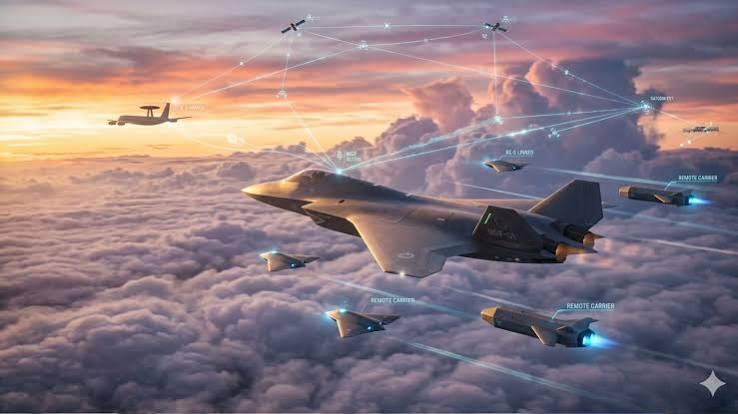
The Indian Ministry of Defence has initiated efforts to join the French-led sixth-generation fighter jet program. Aiming to bridge future air combat gaps, the strategic push targets critical technology transfers including advanced stealth, combat cloud integration, and autonomous drone teaming to bolster national air power capabilities.
NEW DELHI — In a landmark strategic maneuver to secure future air dominance, the Ministry of Defence has formally initiated efforts to explore co-participation in advanced sixth-generation fighter aircraft development programs, with a primary focus on the French-led Future Combat Air System (FCAS).
According to a parliamentary panel report tabled in Parliament, the Indian Air Force (IAF) and national defense planners are proactively carving out a roadmap to align with international consortia. The move comes at a critical juncture as European frameworks navigate internal structural shifts, opening unprecedented opportunities for New Delhi to transition from a buyer to an active co-developer in cutting-edge military aviation.
Strategic Aerospace Alignment and Global Context
The parliamentary Standing Committee on Defence highlighted that global military powers are currently split across major next-generation aviation projects, including the UK-led Global Combat Air Programme (GCAP) and the continental European FCAS initiative. While India continues to advance its indigenous Advanced Medium Combat Aircraft (AMCA) fifth-generation program, defense authorities recognize the imperative of securing early access to sixth-generation attributes.
According to defense disclosures and policy briefs:
Next-Gen Capabilities: Prospective integration aims to secure technology transfers in advanced stealth architecture, combat cloud networking, AI-driven sensor fusion, and manned-unmanned teaming (MUT).
Bilateral Trust: The outreach builds upon decades of deep-rooted defense manufacturing ties between New Delhi and Paris, spanning historical aircraft fleets and ongoing industrial offsets.
Mitigating Technological Lags: By exploring collaborative frameworks early, the IAF seeks to prevent capability gaps as global adversaries accelerate deployment timelines toward the 2040 horizon.
Official Sources Section
Ministry of Defence, Government of India: Parliamentary Standing Committee reports and strategic acquisition roadmaps.
Parliament of India Digital Portal: Official tabling of demands for grants and defense committee recommendations.
Quote Section
According to official parliamentary committee disclosures:
"The Ministry has initiated efforts to co-join the sixth-generation fighter aircraft development programme, and the Indian Air Force will try to join forces with major consortia to ensure that India does not lag in achieving targets for advanced air domain capabilities."
Why It Matters
For India’s defense sector, co-developing sixth-generation platforms promises to fast-track indigenous manufacturing expertise, reduce long-term strategic vulnerabilities, and integrate domestic aerospace firms into high-value global supply chains. For international partners, Indian participation offers industrial scale, financial backing, and a reliable strategic ally to sustain ultra-expensive next-generation air programs.
Key Facts at a Glance
Strategic Objective: India initiates formal planning to engage with sixth-generation fighter development.
Primary Focus Area: Exploring cooperation within the French-led Future Combat Air System (FCAS) ecosystem.
Technology Goals: Acquisition of advanced stealth, combat cloud connectivity, and autonomous drone teaming.
Domestic Parallel: Complements India's indigenous Advanced Medium Combat Aircraft (AMCA) fifth-generation fighter journey.
FAQ Section
What is India's role in the sixth-generation fighter initiative?
The Ministry of Defence has initiated exploratory steps and planning frameworks to co-join international sixth-generation development programs like the French-led FCAS.
Why is India looking outside its domestic programs for 6th-gen tech?
While developing its indigenous AMCA fifth-generation fighter, engaging with global consortia allows India to secure critical technology transfers for futuristic combat cloud and propulsion systems.
What are the key technologies defining a sixth-generation fighter?
Sixth-generation aircraft focus on advanced adaptive cycle engines, quantum-resistant communication networks, extreme stealth, and seamless integration with unmanned swarming drones.
How does this impact India-France defense relations?
It strengthens an already robust defense partnership, expanding cooperation from current platforms like the Rafale into joint R&D for next-century air warfare.
Source: Ministry of Defence, Parliament of India, ThePrint