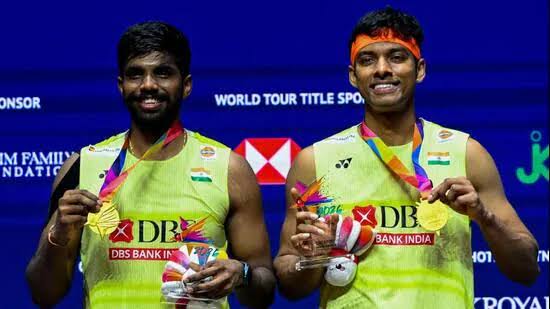
As India seeks to sustain its elite status in badminton, the Badminton Association of India is actively developing the next generation of men's doubles pairs behind Satwiksairaj Rankireddy and Chirag Shetty. Through targeted coaching under Tan Kim Her and increased international exposure, authorities aim to close the nation's historical doubles pipeline gap.
NEW DELHI — As Satwiksairaj Rankireddy and Chirag Shetty continue to anchor India's presence at the pinnacle of international badminton, sports administrators and coaching staff have intensified efforts to build a sustainable talent pipeline. Identifying and nurturing the next generation of men's doubles contenders has become a primary national objective as the sport looks beyond its current world-class spearhead.
While Satwik and Chirag have captured historic titles—including the Indonesia Open, French Open, and Asian Games gold—the transition gap to the second tier of Indian doubles remains a structural challenge. To address this, the Badminton Association of India (BAI) has deployed targeted initiatives, integrating specialized international expertise to elevate rising combinations on the BWF World Tour.
Developing the Next Generation of Contenders
The current domestic pipeline features emerging pairs aiming to establish consistency on the international circuit. Combinations such as M.R. Arjun and Hariharan Amsakarunan, alongside Pruthvi Roy and K. Sai Pratheek, have increasingly featured in main-draw BWF tournaments, gaining critical exposure against top-10 global pairs.
According to strategic updates from national camp organizers:
Targeted Coaching Integration: Veteran doubles specialist Tan Kim Her was re-appointed as India's national doubles coach explicitly tasked with expanding the talent pool and establishing systematic depth.
Early Specialization Focus: Recognizing that Indian badminton has historically favored singles disciplines, coaches are actively identifying young prospects with physical attributes suited for rapid front-court and rear-court doubles dynamics.
Exposure Tours: Emerging pairs are being dispatched to international challenge and Super 300/500 events to accumulate ranking points and adapt to high-tempo global competition.
Official Sources Section
Quote Section
According to official statements released by national coaching administrators:
"We had been looking for quality foreign coaches who could work with our current top players and also guide our next-generation players as we prepare for future multi-sport games and global championships."
Why It Matters
For Indian sports fans and the broader national federation, securing a deep talent pool in men's doubles is essential for long-term international success in team championships like the Thomas Cup. Without a reliable second and third tier of competitive pairs, India risks vulnerability in international team brackets and sustained global representation once top-ranked veterans conclude their peak competitive years.
Key Facts at a Glance
Current Spearhead: Satwiksairaj Rankireddy and Chirag Shetty anchor India's elite men's doubles ranking.
Emerging Pairs: Combinations like M.R. Arjun/Hariharan Amsakarunan and Pruthvi Roy/K. Sai Pratheek lead the immediate successor tier.
Strategic Leadership: Malaysian doubles expert Tan Kim Her oversees the development of the broader doubles squad.
Core Objective: Building robust bench strength and systematic specialization to bridge the historical singles-doubles cultural gap in India.
FAQ Section
Who are the primary successors to Satwik-Chirag in Indian men's doubles?
Rising pairs like M.R. Arjun paired with Hariharan Amsakarunan, and Pruthvi Roy alongside K. Sai Pratheek, represent the next line of players stepping into international BWF draws.
What steps is the Badminton Association of India taking to strengthen the doubles pipeline?
BAI has brought in specialized foreign coaching talent like Tan Kim Her to oversee a larger group of players and construct dedicated, long-term doubles training pathways.
Why has India traditionally lagged in depth for men's doubles?
Historically, Indian badminton culture heavily favored singles. Cultivating specialized doubles reflexes, net play, and power coordination requires deliberate, early-age identification rather than treating doubles as a secondary option.
How do emerging pairs gain qualification for top-tier tournaments?
Younger pairs compete across international challenge series, Super 100, and Super 300 circuits to build ranking points required for entry into major Super 750 and 1000 events.
Source: Badminton Association of India, BWF, Sports Authority of India