A groundbreaking study has revealed that sea levels around the Maldives and India’s Lakshadweep archipelago are rising faster than previously estimated. Using coral microatolls as natural tide-sensitive archives, researchers have extended sea-level records by nearly a century, offering a so...
A groundbreaking study has revealed that sea levels around the Maldives and India’s Lakshadweep archipelago are rising faster than previously estimated. Using coral microatolls as natural tide-sensitive archives, researchers have extended sea-level records by nearly a century, offering a sobering view of climate change’s creeping impact on some of the world’s most vulnerable island ecosystems.
Key findings from the study:
1. Coral microatolls were used to reconstruct sea-level history from 1930 to 2019, offering a much longer and more accurate dataset than traditional tide gauges.
2. The data shows sea-level acceleration began in the late 1950s—decades earlier than previously believed.
3. The Indian Ocean is rising at an average rate of 3.3 mm per year, which is higher than the global average.
4. Above-average ocean warming in the region is intensifying coral bleaching and altering ocean dynamics.
Scientific breakthrough: Coral microatolls as climate archives
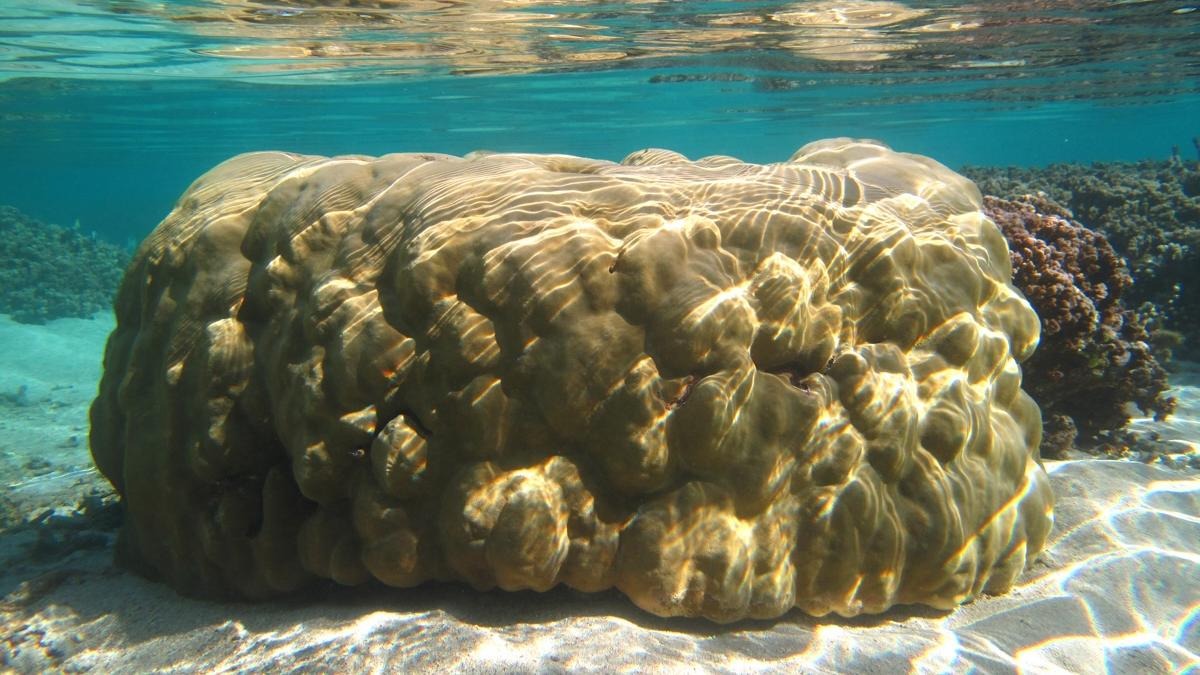
- Led by Professor Paul Kench from the National University of Singapore, in collaboration with Nanyang Technological University, the research team turned to coral microatolls—disk-shaped coral colonies whose upward growth is limited by the lowest tide levels.
- These corals grow slowly and record sea-level changes over decades or centuries. Their upper surfaces reflect the lowest water levels, making them ideal for reconstructing historical sea-level data.
- The study focused on a Porites microatoll on Mahutigalaa reef platform in the Maldives’ Huvadhoo Atoll. By slicing through the coral and analyzing annual growth bands (similar to tree rings), scientists created a precise timeline of sea-level changes.
- Uranium-thorium dating was used to determine the coral’s elevation relative to sea level, revealing that water levels began accelerating in the mid-20th century.
Implications for the Maldives and Lakshadweep
- The Maldives, comprising 1,190 coral islands, is the world’s lowest-lying nation, with over 80 percent of its land less than one meter above sea level.
- Lakshadweep, India’s smallest Union Territory, shares similar topography and vulnerability.
- Rising seas threaten to submerge large portions of both archipelagos, with projections suggesting that many islands could be underwater by 2050 under high-emission scenarios.
- Coastal erosion, saltwater intrusion into freshwater aquifers, and infrastructure damage are already being reported across inhabited islands.
- Coral bleaching events are becoming more frequent due to reduced sunlight penetration and warmer waters, further destabilizing marine ecosystems.
Broader climate context
- The Indian Ocean has been warming faster than other ocean basins, amplifying atmospheric circulation changes and intensifying monsoon variability.
- Historical gaps in sea-level data have hindered accurate forecasting and policy planning. This new study fills a critical void by extending records by 90 years.
- The findings underscore the urgency of climate adaptation strategies, especially for low-lying island nations and coastal communities.
Call to action
- Scientists and policymakers must prioritize high-resolution, long-term monitoring of sea-level rise using natural archives like coral microatolls.
- Urgent investment in climate-resilient infrastructure, freshwater management, and coastal protection is needed to safeguard vulnerable populations.
- Global cooperation is essential to mitigate emissions and slow the pace of ocean warming.
Closing thought
The ocean’s quiet rise is no longer a distant threat—it’s a present reality. As coral microatolls silently record the story of our warming planet, it’s time we listen and act before these island paradises become memories submerged beneath the waves.
Sources: The Hindu, Navbharat Times, Biology Insights