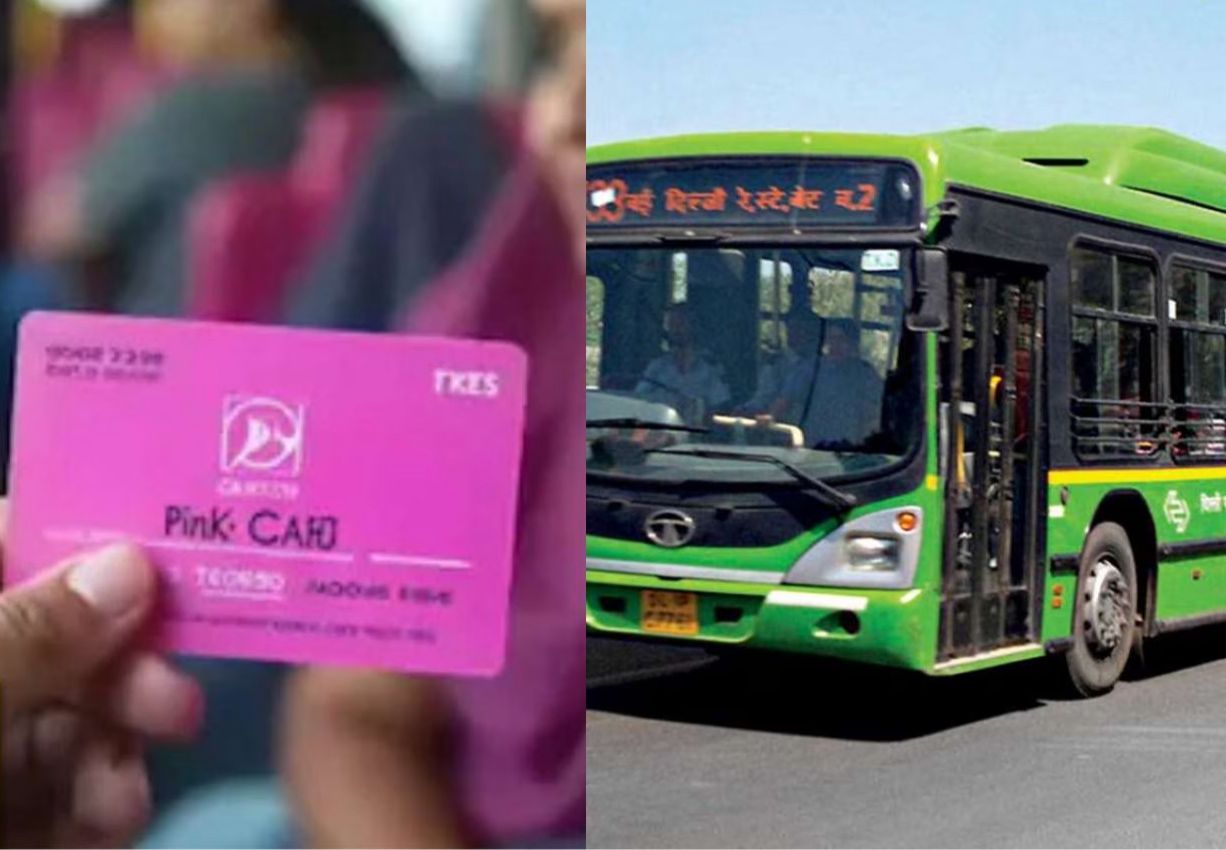
The Delhi Transport Corporation has launched an on-board campaign to boost usage of the "Pink Saheli Smart Card" for free bus travel. Aiming to streamline passenger logging, the NCMC-backed digital initiative replaces legacy paper tickets, creating a unified tap-and-go travel framework across Delhi's interconnected bus, metro, and rail corridors.
NEW DELHI — The Delhi Transport Corporation (DTC) officially launched a coordinated enforcement and promotion drive across the National Capital Region (NCR) to sharply accelerate passenger adoption of the "Pink Saheli Smart Card." The state-backed initiative is designed to systematically transition the capital's massive volume of female and transgender commuters away from legacy paper-based single-use tokens onto contact-free smart transit technology.
According to transport department metrics, though state networks have aggressively distributed the digital cards across residential neighborhoods and regional transport nodes since their formal launch, an unexpected behavioral bottleneck remains. Audit records show that a striking majority of eligible daily commuters continue to request traditional pink paper vouchers from on-board conductors. The new targeted drive seeks to flip these operational metrics ahead of upcoming policy adjustments that may make the digital smart cards mandatory for free fare privileges.
The Digital Shift: Targeting Full Rider Integration
The specialized Delhi Transport Corporation drive requires all active bus conductors to systematically check for the digital cards during daily fare collection rounds. Commuters who do not currently hold the updated card are being directed toward local processing hubs or provided with immediate instructions on how to file online applications through the unified city transport portal.
The administration has established a firm target to rapidly scale up distributed card networks to bring the entire eligible daily ridership under the digital umbrella.
Transportation analysts indicate that the current daily average bus ridership in the national capital remains extensive. Out of this moving demographic, roughly 40 to 46 percent of daily passengers leverage the state's zero-fare social mobility initiative. Resolving the logistical gap between physical card ownership and active daily tapping is essential to creating reliable revenue accounting frameworks and tracking peak travel demands.
National Common Mobility Integration
The structural foundation of the Pink Saheli Smart Card centers squarely on the Union Government's overarching "One Nation, One Card" mandate. Launched initially by President Droupadi Murmu in March, the card utilizes advanced National Common Mobility Card (NCMC) "Tap-and-Go" wireless protocols.
Cross-Network Functionality
While travel aboard standard DTC and multi-tiered cluster buses remains entirely free for registered local beneficiaries, the underlying hardware is fully functional across other urban transport channels. Commuters can load independent cash balances onto the exact same card to seamlessly pay for connecting journeys on the Delhi Metro network, Namo Bharat trains, and the developing Regional Rapid Transit System (RRTS).
To prevent system leakages and ensure safety metrics, each unique card is rigidly tied to the traveler's verified Aadhaar card data and active mobile number. This verification loop validates age, gender, and formal Delhi residency qualifications, helping the city transition from unverified paper distribution toward localized digital governance.
Authoritative Outlook from Transit Regulators
State transport administrators emphasize that updating the data infrastructure is a vital prerequisite to modernizing the city's under-pressure public transit accounts.
"According to officials from the transport department, conductors have been directed to proactively check for the Pink Saheli Smart Cards on all operational routes. Passengers are being counseled on-board regarding the long-term phase-out of the paper-slip system to ensure the transition does not cause unexpected delays during heavy travel hours."
Transition guidelines published by regional transit planners note that moving over to digitized logging gives urban planners highly accurate, anonymized data on daily peak travel times. This localized tracking helps optimize route distribution and bus allocation without disrupting daily schedules.
Why It Matters
For regular citizens and daily commuters, moving completely to the Pink Saheli Smart Card eliminates the hassle of waiting for conductors to manually print and tear paper vouchers on overcrowded buses. It also provides women and transgender individuals with a single, highly reliable digital tool to navigate multiple public transit systems effortlessly.
From an economic perspective, replacing millions of monthly paper tickets reduces state printing expenses, provides robust accounting safeguards against fare evasion, and gives the city accurate data to better adjust bus frequency on high-density commercial routes.
Key Facts at a Glance
The Campaign Launch: The DTC kicked off an active on-board awareness and compliance campaign to phase out legacy paper tickets.
The Policy Blueprint: State transport officials intend to fully integrate the Pink Saheli Smart Card to streamline free bus travel validation.
Interoperable Tech: Built on the NCMC framework, the card enables free local bus rides while doubling as a digital payment wallet for the Delhi Metro and RRTS lines.
Financial Shield: Regular commuters utilizing the free bus travel architecture can save between ₹1,200 and ₹2,400 monthly on routine transportation overheads.
Frequently Asked Questions
Who is eligible to apply for the Pink Saheli Smart Card?
Any female or transgender citizen residing in Delhi who is 12 years of age or older is fully eligible to apply for the free-travel smart card.
What documents are required to secure the transit card?
Applicants must provide a valid Aadhaar card displaying a registered Delhi residential address, an active mobile phone number linked to that Aadhaar profile, and two recent passport-sized photographs.
Can the card be used for transport systems outside of standard buses?
Yes. While the free-travel subsidy applies exclusively to DTC and cluster buses, users can top up the card with cash to pay for commercial travel on the Delhi Metro and Namo Bharat rail lines.
Source Documentation:
Official administrative advisories and media briefs from the Delhi Transport Corporation (DTC), Government of NCT of Delhi (Issued June 11, 2026).
Public transport technology deployment guidelines from the Ministry of Housing and Urban Affairs.
Urban transit infrastructure reports published via the ET Infra News Network.
Scheme structural profiles and financial tracking evaluations from Angel One Government Scheme Analytics.