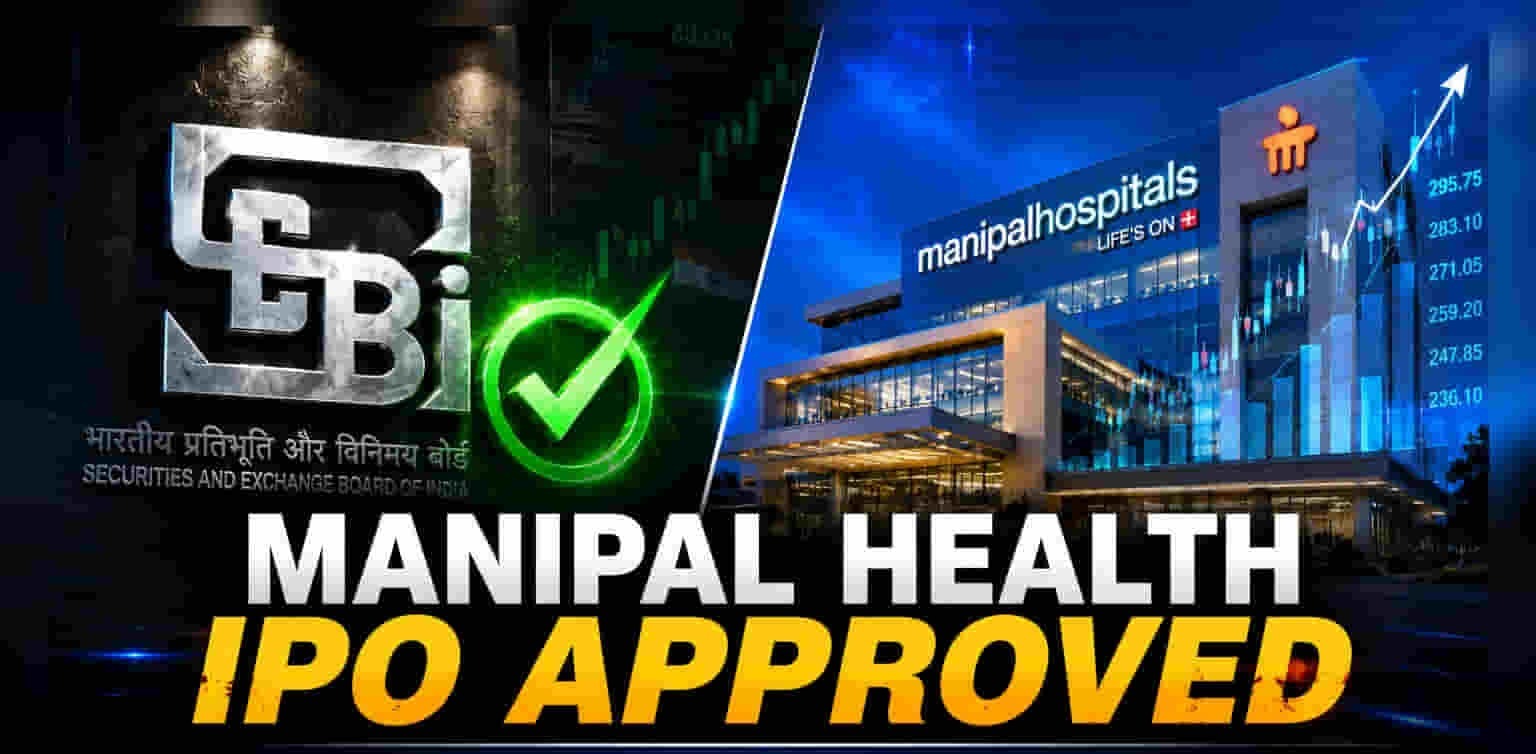
Temasek-backed Manipal Health Enterprises has secured SEBI approval for its up to $1.2 billion initial public offering, targeting a late July listing. Earmarked to clear ₹5,378 crore in debt, the record healthcare offering serves as a key benchmark for institutional appetite amid volatile global markets.
MUMBAI — Manipal Health Enterprises Limited, India's prominent multi-specialty hospital operator backed by Singapore’s sovereign wealth fund Temasek, has officially received regulatory approval from the Securities and Exchange Board of India (SEBI) to proceed with its initial public offering (IPO). According to sources familiar with the matter, the hospital chain is targeting a primary stock market debut in late July or early August 2026. The highly anticipated public offering is structured to raise up to $1.2 billion (approximately ₹9,500 crore to ₹10,000 crore), effectively positioning the company for the largest public listing in the history of the Indian healthcare sector.
Strategic Fundraising Amid Complex Market Environments
The final regulatory clearance from SEBI represents a critical corporate milestone for Manipal Health. The group originally filed its draft red herring prospectus (DRHP) in March 2026, betting heavily on the expanding national demand for advanced specialty care, localized tertiary infrastructure, and integrated diagnostics networks.
The decision to advance the multi-billion-dollar transaction signals strong long-term institutional confidence, particularly given current capital market volatility. The benchmark Nifty 50 index has faced downward pressure, dipping roughly 7 percent earlier in the year as regional geopolitical uncertainties driven by conflict risks in West Asia triggered massive capital realignments. Foreign institutional investors (FIIs) offloaded a historic $29.2 billion worth of local equities over the first half of 2026. Despite these global macro headwinds, investment banks managing the book-building process report robust preliminary domestic interest, with the company aiming for a total enterprise valuation between $10 billion and $13 billion.
Detailed Structure and Capital Allocation Framework
According to the preliminary regulatory filings submitted to the exchanges, the mega-offering is systematically organized as a hybrid capital transaction consisting of both fresh capital creation and secondary divestments:
Fresh Capital Component: The core capital raise includes a fresh issue of shares worth ₹8,000 crore.
Offer for Sale (OFS): The secondary block involves the divestment of 43,227,668 existing equity shares managed by the corporate promoters and key financial backers.
The distribution desk has outlined strict allocation priorities for the net proceeds generated from the fresh share issuance. The company will deploy ₹5,378 crore to systematically repay outstanding high-interest debt liabilities carried by its primary operational arm, Manipal Hospitals. This aggressive deleveraging strategy is projected to immediately lower debt servicing outlays, expand profit margins, and boost free cash flow. Furthermore, approximately ₹574 crore will be directly utilized to finance the strategic acquisition of a remaining minority equity stake in its fast-growing subsidiary, Sahyadri Hospitals, with the balance set aside for general corporate development, physical technology additions, and emergency working capital.
Pan-India Footprint and Consolidated Market Impact
The public listing of Manipal Health carries deep practical implications for the broader Indian healthcare delivery ecosystem, retail patients, and global financial investors. Operating as one of the country's most expansive clinical networks, the group maintains multi-specialty institutions covering critical disciplines including oncology, cardiology, advanced neurology, organ transplantation, and complex gastroenterology.
The successful deployment of up to $1.2 billion in fresh capital will allow the network to accelerate its consolidation strategy. Over the past three years, the healthcare segment has witnessed intensive private equity consolidation, driven by rising health insurance penetration across tier-2 and tier-3 urban blocks. By listing on public exchanges, Manipal Health establishes a clear baseline valuation for corporate hospital groups, providing secondary liquidity indicators for peer institutions and proving to global funds that India’s domestic medical economy maintains deep institutional backing.
Official Sources Section
The financial parameters, transaction structures, allocation breakdowns, and regulatory timelines tracking this initial public offering are sourced directly from the preliminary Draft Red Herring Prospectus (DRHP) filed with the Securities and Exchange Board of India (SEBI) and official corporate announcements issued by the equity capital markets desks of the joint book-running lead managers.
Quote Section
Merchant banking consortiums handling the transaction emphasize that the size and timing of the listing make it a primary bellwether for structural investment inflows.
According to statements released by the market operations team at the Secretariat:
"The regulatory approval granted by SEBI for the Manipal Health initial public offering marks a watershed moment for the healthcare industry. Launching a billion-dollar issue in a cautious market shows the fundamental durability of specialized medical infrastructure assets in South Asia."
A formal briefing distributed by the lead book managers highlighted the long-term corporate optimization goals:
"The primary target of the fresh issuance is the total optimization of our balance sheet. Allocating over five thousand crore to clear underlying institutional debt removes operational bottlenecks, ensuring our multi-specialty expansion remains highly profitable through the coming decade."
Why It Matters
The public launch of Manipal Health has critical practical implications for long-term equity investors, healthcare consumers, and corporate hospital networks. For retail and institutional investors, the mega-IPO delivers a highly liquid, corporate-governed vehicle to capture macro demographic trends, such as an aging population and rising middle-class healthcare spending. For everyday healthcare consumers, the aggressive debt reduction and subsequent capital expenditure infusions mean that regional hospitals will receive accelerated investments in advanced diagnostic machinery, robotic surgical suites, and specialized clinical talent, raising the baseline standard of healthcare delivery nationwide.
Key Facts at a Glance
The Total Size: An initial public offering targeting a capital raise of up to $1.2 billion (approx ₹9,500+ crore).
Valuation Brackets: The network is aiming for a post-listing target valuation between $10 billion and $13 billion.
Debt Optimization: Over ₹5,378 crore of the fresh issue proceeds is legally earmarked for the complete clearance of existing institutional bank loans.
The Consortium: Book-running lead managers include Kotak Mahindra Capital, Axis Capital, Goldman Sachs, Jefferies, JPMorgan, UBS, and DBS Bank.
Target Timeline: The company is positioning its primary market debut for late July or early August 2026.
FAQ Section
Q: What is the specific financial breakdown of the fresh issuance and the offer for sale?
A: The public issue is anchored by a fresh equity creation block worth ₹8,000 crore, coupled with an Offer for Sale (OFS) comprising 43,227,668 shares offloaded by existing promoters.
Q: Who are the major financial backers supporting Manipal Health prior to the IPO?
A: The enterprise is primary-backed by Singapore’s sovereign wealth fund, Temasek, which holds a controlling stake in the hospital group following significant recent capital injections.
Q: How will the capital generated from this listing be utilized by management?
A: The corporate funds will be systematically directed toward paying down outstanding hospital debts (₹5,378 crore), increasing the stake in Sahyadri Hospitals (₹574 crore), and funding future clinical facilities.
Source: Official regulatory portals managed by the Securities and Exchange Board of India (SEBI), public filing indexes hosted on the National Stock Exchange of India (NSE), and preliminary offer documentation preserved by Goldman Sachs India Equity Capital Markets.