The Delhi Government has announced a seven-year, ₹8,300 crore air pollution mitigation plan titled "Clean Air, Healthy Delhi". Financed 65% by the World Bank, the initiative deploys advanced AI tracking grids, targets solid waste emissions, and integrates strict electric vehicle mandates to secure a sustainable urban environment.
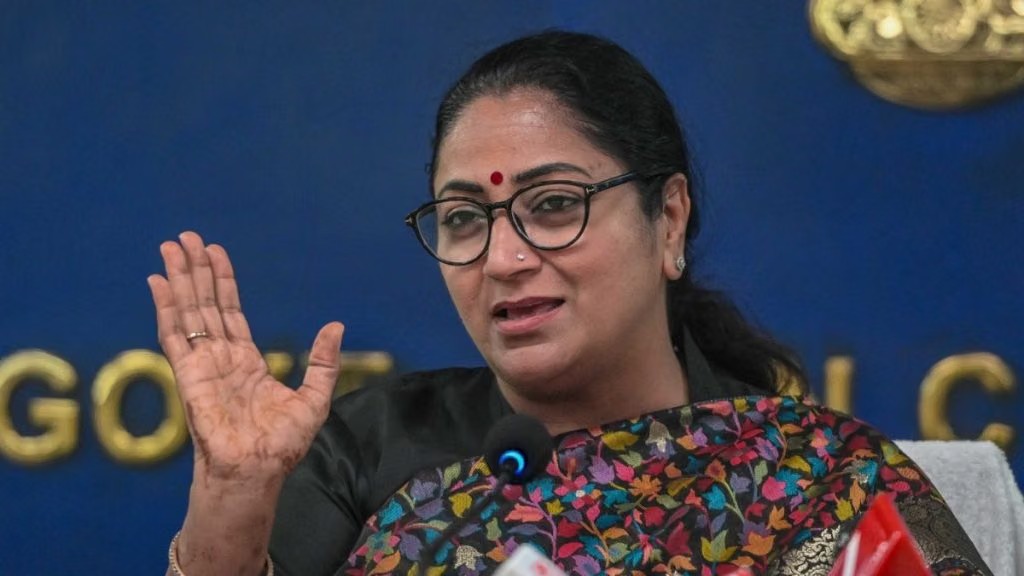
NEW DELHI — The Delhi Government has officially cleared an ambitious, seven-year environmental project titled "Clean Air, Healthy Delhi" with a total financial outlay of ₹8,300 crore. Announced by Chief Minister Rekha Gupta on Friday, July 3, 2026, the sweeping multi-sectoral program is designed to systematically mitigate the capital’s persistent winter smog, upgrade public health matrices, and drastically reduce primary particulate matter emissions. Slated for comprehensive implementation from September 2026 through August 2033, the project marks a significant transition toward long-term, data-driven climate resilience, aligning closely with India's National Clean Air Programme (NCAP) and the broader federal Viksit Bharat 2047 sustainable development vision.
Multilateral Capital Mix and Inter-State Alignment
The realization of the ₹8,300 crore project relies on a structured, multilateral funding partnership. The World Bank alongside the Union Department of Economic Affairs will secure 65 percent of the absolute program costs via long-term financial assistance. The remaining 35 percent will be directly financed out of the Delhi government’s internal capital budget.
To operationalize the extensive strategy across the entire National Capital Region (NCR), the Delhi Environment Department is hosting a foundational, high-level orientation workshop on July 10, 2026. The collaborative session will bring together senior municipal executives, World Bank economic delegates, and technical planners to finalize departmental roadmaps, assign institutional accountability, and establish strict quarterly timelines. Crucially, the blueprint expands outside territorial borders to incorporate active, data-sharing airshed collaborations with neighboring Indo-Gangetic Plain states, establishing a unified defensive network against cross-border stubble burning and regional industrial drift.
Technical Pillars of Advanced Air Quality Management
According to the official project charter published by the Chief Minister's Office, the long-term initiative is structured around two core operational pillars:
1. Institutional and Governance Upgrades
The state will establish a centralized Project Management Unit (PMU) to coordinate everyday monitoring parameters. Capital will be directed toward building dense grids of next-generation air quality monitoring sensors, deploying automated machine learning data analytics, and establishing a unified, Integrated Command and Control Centre (ICCC)-based oversight matrix.
2. Targeted Source-Emission Reductions
The second pillar accelerates aggressive physical interventions across the capital's highest-intensity pollution sources. Specialized urban teams will be deployed across all 13 districts to monitor construction and demolition (C&D) operations, implement advanced chemical dust suppression along major roads, expand green public spaces, and completely modernize municipal solid waste collection to prevent open waste burning and toxic landfill fires.
Synchronization with Phased Transport Electrification
The deployment of the clean air plan runs in tandem with the capital's newly notified ₹7,000 crore Delhi Electric Vehicle Policy 2026. Transport Secretary Niharika Rai reported that commercial goods carriers generate approximately 33 percent of regional vehicular pollution, while two- and three-wheelers combine for 46 percent.
To aggressively curb this vehicular load, the dual strategies enforce binding, phased regulatory registration cutoffs across the city. Starting January 1, 2027, only zero-emission electric three-wheelers and light N1-category goods carriers will be granted new registrations within Delhi. This will be followed by a complete closure of registration lines for internal combustion engine (ICE) petrol two-wheelers on April 1, 2028.
To support the massive transition, the state will utilize the integrated clean air budget to deploy an advanced, automated Pollution Under Control (PUC) tracking system and build out a public charging grid exceeding 32,000 active points by 2030.
Official Sources Section
The financial matrices, engineering parameters, and timeline targets detailed across this report are sourced directly from policy announcements released by the Chief Minister's Office, operational manuals from the Delhi Transport Department, environmental frameworks from the Delhi Pollution Control Committee (DPCC), and public project briefs archived on the Press Information Bureau (PIB) India platform.
Quote Section
State leadership has made it clear that long-term funding structures are vital to break out of temporary, reactive winter emergency planning.
Delivering the program keynote at the Secretariat, Chief Minister Rekha Gupta stated:
"Clean air is the right of every citizen. The 'Clean Air, Healthy Delhi' project reflects the Delhi government's commitment to ensuring clean air for every citizen. This is not merely a pollution control programme but a long-term investment aimed at providing Delhi residents with cleaner air, better public health and a more sustainable urban environment. With the support of all concerned departments, national institutions and the World Bank, we will develop scientific, coordinated and sustainable solutions to tackle air pollution."
Why It Matters
The unveiling of the ₹8,300 crore clean air blueprint has profound practical implications for urban residents, auto manufacturers, real estate developers, and green technology investors. Moving away from ad-hoc emergency adjustments toward a fully funded, seven-year capital plan provides long-term predictability for the automotive supply chain and green infrastructure developers. For the local public, strict compliance across municipal landfills and construction zones lowers respiratory healthcare costs, elevates real estate value near protected green spaces, and ensures that upcoming generations inherit a stable, highly livable metropolitan ecosystem.
Key Facts at a Glance
The Financial Outlay: A ₹8,300 crore comprehensive environmental project running for a seven-year operational duration.
Capital Sourcing: The World Bank will provide 65 percent of the project capital via financial assistance, with the Delhi government bearing the remaining 35 percent.
Core Timeline: Formal field implementation will kick off in September 2026 and run continuously through August 2033 across all 13 districts.
Technical Grid: Establishes a Project Management Unit, advanced data analytics blocks, and an Integrated Command and Control Centre.
Transport Milestones: Integrates with binding EV registration deadlines, banning fresh registrations of ICE petrol two-wheelers by April 2028.
FAQ Section
Q: Does the clean air plan provide immediate relief for the upcoming winter season?
A: While initial technological command units and dust suppression grids roll out this year following the July 10 workshop, the project is structured as a long-term investment to permanently dismantle structural pollution sources over a seven-year horizon.
Q: Will existing petrol and diesel cars be banned under the new transport guidelines?
A: No. The upcoming registration deadlines apply strictly to new vehicle sales and registrations. Existing fossil-fuel vehicles currently registered in the capital are permitted to complete their full legal lifecycle.
Q: How will the project handle trash fires and landfill pollution?
A: The second pillar allocates extensive municipal capital to expand automated solid waste collections, upgrade regional processing plants, and implement real-time thermal tracking to prevent landfill fires.
Source: Policy manuscripts from the Delhi Environment Department, corporate frameworks from the World Bank India, and project data releases distributed via the Press Information Bureau (PIB).