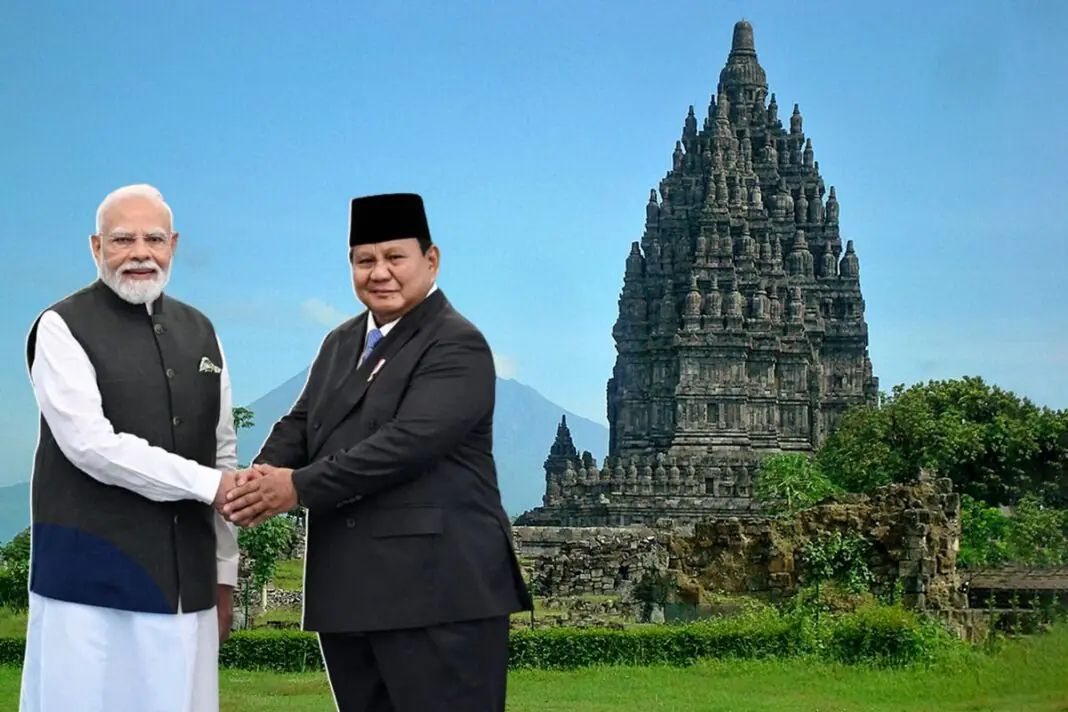
Prime Minister Modi’s visit to the UNESCO-listed Prambanan Temple in Indonesia inaugurated a landmark restoration project led by the Archaeological Survey of India. This initiative highlights the deep-rooted civilizational ties between the two nations, reinforcing India’s commitment to preserving shared heritage and strengthening diplomatic relations through cultural cooperation.
Prime Minister Narendra Modi’s visit to Indonesia’s historic Prambanan Temple marks the start of a landmark India-led conservation initiative.
YOGYAKARTA — Prime Minister Narendra Modi, accompanied by Indonesian President Prabowo Subianto, visited the iconic 9th-century Prambanan Temple complex on Wednesday, July 8, 2026. The visit served as the formal inauguration of a new joint heritage conservation project, underscoring the deep civilizational bonds and shared cultural history between India and Indonesia.
The collaboration, spearheaded by the Archaeological Survey of India (ASI), aims to restore and preserve the temple complex, which is recognized by UNESCO as a World Heritage Site. This initiative follows high-level agreements reached between the two leaders during President Prabowo’s state visit to India in 2025, cementing a commitment to safeguard the majestic monument for future generations.
A Legacy of Shared Heritage
Built during the Hindu Mataram Kingdom, Prambanan stands as the largest Hindu temple complex in Indonesia and the second-largest in Southeast Asia. Dedicated to the Trimurti—Lord Brahma (the Creator), Lord Vishnu (the Preserver), and Lord Shiva (the Destroyer)—the site is a masterpiece of classical Javanese architecture.
Beyond its physical grandeur, the temple is renowned for its intricate bas-relief panels depicting the Hindu epic Ramayana. For over a millennium, these carvings have mirrored the cultural narratives shared by India and Indonesia, serving as a testament to the peaceful exchange of art, philosophy, and religion through maritime trade routes in the ancient world.
The India-Indonesia Conservation Initiative
The conservation project marks a new chapter in India’s ongoing "civilizational diplomacy." Over the past decade, New Delhi has actively invested in the restoration of sacred landmarks across Asia, including sites in Vietnam, Myanmar, Cambodia, and Laos. By positioning the Archaeological Survey of India as the lead technical agency for the Prambanan project, India is leveraging its world-class expertise in archaeology to reinforce its soft power and regional cooperation.
According to official briefings, the project will utilize advanced documentation and structural stabilization techniques. "The Prambanan Temple stands as a timeless symbol of our shared cultural heritage," Prime Minister Modi remarked during the visit, emphasizing that the restoration is a tribute to the enduring spirit of the Sanatan civilization that transcends modern borders.
Impact on Cultural Diplomacy
For both nations, the restoration represents more than just structural repair. It is a strategic effort to boost cultural tourism and foster people-to-people ties. The Prambanan region is already a major tourism hub, and the involvement of Indian experts is expected to enhance the site's profile as a global landmark of religious harmony and historical preservation.
Key Facts at a Glance
Historic Milestone: Prambanan is a 9th-century complex and the largest Hindu temple site in Indonesia.
UNESCO Status: Inscribed as a World Heritage Site in 1991 for its unique architectural and classical artistic value.
Joint Mission: The Archaeological Survey of India (ASI) will lead the conservation efforts under a bilateral agreement finalized in 2026.
Symbolism: The site is dedicated to the Hindu Trimurti and features extensive reliefs from the Ramayana epic.
FAQ
Why is Prambanan Temple significant to India?
It is a profound symbol of ancient civilizational links, reflecting the historical spread of Indian philosophy, art, and the Hindu religion across Southeast Asia over a thousand years ago.
What is the goal of the new India-Indonesia conservation project?
The goal is to scientifically document, stabilize, and restore the temple structures, ensuring the preservation of its intricate stone reliefs and architectural integrity for future generations.
Is this part of a broader diplomatic effort?
Yes, it aligns with India’s broader "civilizational diplomacy," where New Delhi provides technical and financial assistance to restore heritage sites in partner nations to deepen bilateral goodwill.
Source: Ministry of External Affairs, Prime Minister’s Office, Press Information Bureau