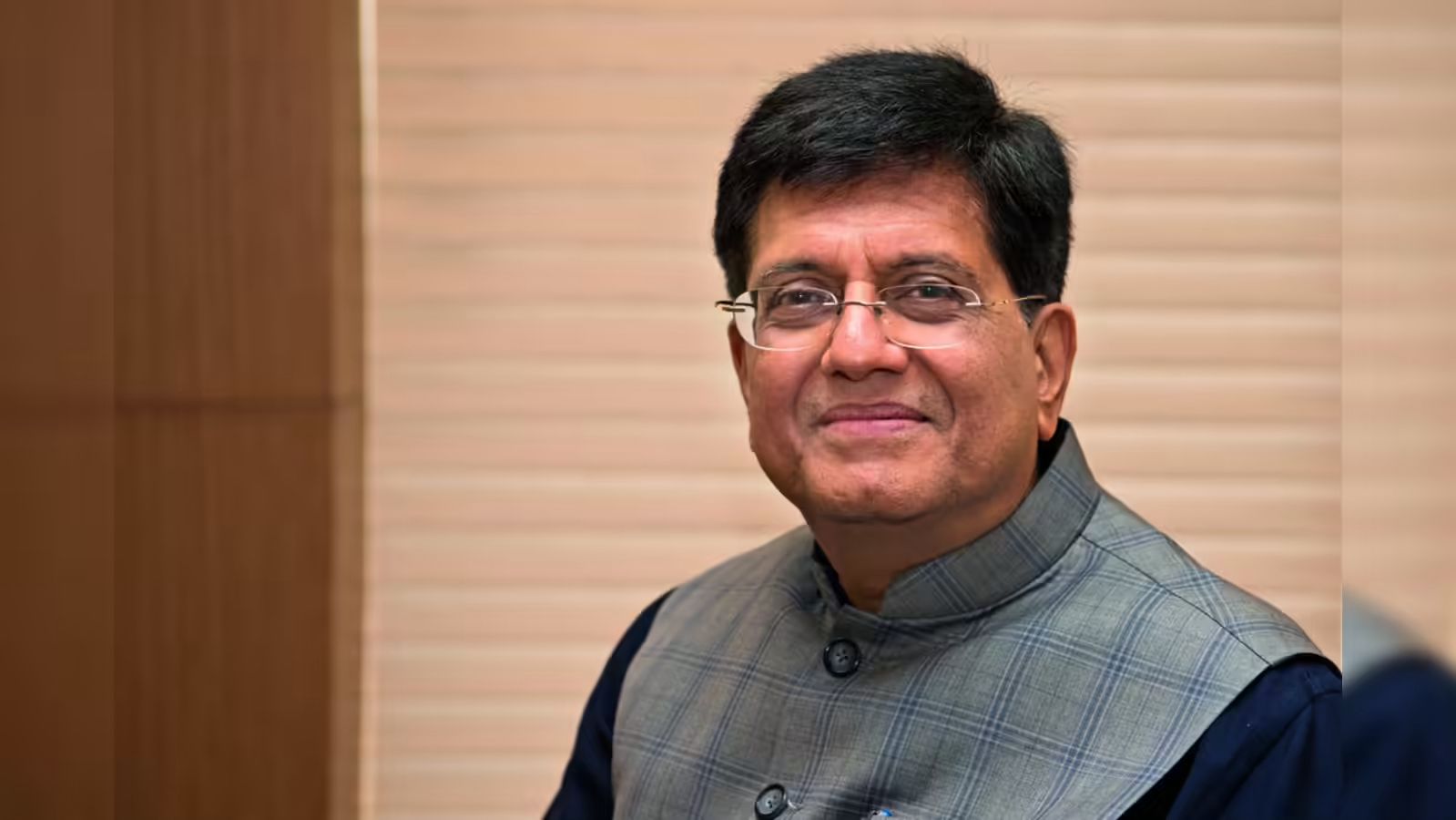
Union Minister Piyush Goyal announced that India's merchandise exports grew by roughly 15 percent from April 1 to June 14, defying global trade turbulence and high external tariffs. Backed by solid manufacturing demand, the steady momentum keeps the country aligned with its structural $1 trillion annual export target.
MUMBAI — India's outbound merchandise trade has demonstrated notable systemic strength at the start of the 2026–27 fiscal year (FY27), shrugging off heightened international economic stress and structural tariff pressures. Speaking during an official interactive symposium with industry professionals in Mumbai on Sunday, June 21, 2026, Union Minister for Commerce and Industry Piyush Goyal announced that India's merchandise exports expanded by approximately 15 percent year-on-year during the initial block of the current quarter, spanning April 1 to June 14. This development carries critical economic significance today as it validates domestic manufacturing durability at a time when global trade channels are actively wrestling with volatile energy costs, depreciating Asian currencies, and intense container shipping disruptions.
Merchandise Shipments Defy Red Sea and Transpacific Strains
The 15 percent upward trajectory recorded in early FY27 highlights an unexpected operational resilience across core domestic product groups. According to initial figures shared by the minister, the structural expansion built upon robust performances logged in preceding weeks.
In May alone, merchandise shipments surged by 18 percent year-on-year to hit a six-month high of $45.2 billion. While the simultaneous uptick in capital goods acquisition widened the trade deficit for that month to $28.21 billion, macro planners focus heavily on the cumulative two-month performance.
Data maintained by the Ministry of Commerce and Industry reveals that during the combined April–May period, collective exports grew by 16.09 percent to hit $88.91 billion, while national imports ticked up by 15.14 percent to finish at $145.35 billion.
Overcoming Western Tariffs and Strategic Disruption
What makes this early 15 percent expansion distinct is that it occurred while navigating complex international policy boundaries. Addressing the corporate gathering in Mumbai, Minister Goyal emphasized that domestic exporters maintained strong trade volumes despite the implementation of targeted 50 percent tariffs on selected product lines by the United States.
The underlying momentum suggests that Indian manufacturing blocks—spanning engineering goods, specialty chemical formulations, consumer electronics, and high-value textiles—have successfully diversified their corporate destination profiles. This ongoing shift lowers regional dependency on single Western consumer markets and broadens access to growing markets across alternative trade corridors.
Diplomatic Mobilization to Secure Long-Term Comparative Advantage
To preserve this upward trade trajectory, the central government is accelerating its structural negotiations for deep bilateral free trade agreements. High-level ministerial talks are launching in New Delhi with United States Trade Representative Jamieson Greer to finalize the initial phase of a comprehensive bilateral trade framework.
The primary structural goal for the commerce ministry is ensuring a distinct comparative advantage over direct regional exporting competitors like Vietnam, Bangladesh, and alternative ASEAN economies in the North American arena.
Concurrently, external trade councils are emphasizing compliance protocols. Exporters are being urged to upgrade product processing baselines to maximize benefits from newly operational frameworks like the India-UK trade pact, shielding local shipments from evolving non-tariff barriers abroad.
Official Sources Section
The trade transaction tracking curves, import totals, tariff updates, and ministerial policy timelines reviewed in this economic bulletin are based on preliminary data boards published via the Ministry of Commerce and Industry, industrial statistical releases distributed by the Press Trust of India, and official international tariff tracking indexes verified by the Directorate General of Foreign Trade (DGFT).
Quote Section
"Even now, if we see April, May, and 14 days of June—I have data until June 14—export growth is around 15 percent," stated Union Minister Piyush Goyal during his address to professional guilds in Mumbai. "According to officials, our merchandise shipments have registered healthy development pathways despite intense global headwinds. Organizers stated that by continuing to enhance domestic competitiveness and addressing local infrastructure and business efficiency, we are keeping India firmly on track toward achieving our baseline target of $1 trillion in exports for the fiscal year."
Why It Matters
The steady 15 percent expansion in outbound shipments is vital because it acts as a primary stabilizer for India's balance of payments. Strong foreign exchange earnings from merchandise exports help offset a high national import bill, which is routinely driven by mandatory purchases of crude oil, industrial electronics, and gold. For domestic citizens, a resilient export ecosystem safeguards millions of factory floor jobs across small and medium-sized enterprises, boosting consumption demand and sustaining steady industrial investment cycles in local manufacturing belts.
Key Facts at a Glance
Early Quarter Metric: India's merchandise exports logged an approximate 15 percent growth rate from April 1 to June 14, defying severe global logistics turbulence.
Monthly High-Water Mark: Outbound shipments jumped 18 percent year-on-year in May, touching a six-month high of $45.2 billion.
Two-Month Base Accumulation: Total exports during the April–May bracket reached $88.91 billion, outpacing the matching import expansion curve.
Tariff Resilience: The volume increases were maintained despite complex external headwinds, including legacy 50 percent tariff challenges in specific Western corridors.
Official Data Roadmap: The complete, audited trade ledger for the entire month of June is scheduled for formal release by the commerce ministry on July 15.
FAQ Section
What primary factors are driving India’s 15% export growth despite global headwinds?
The expansion is primarily driven by improving global demand for specialized Indian industrial goods, successful market diversification into alternative geographies, and targeted state policies focused on lowering logistics costs through the ease of doing business.
How is the ongoing West Asia crisis affecting Indian trade infrastructure?
The West Asia conflict has triggered higher maritime freight rates and extended shipping turnaround times around the Cape of Good Hope. However, Indian exporters have absorbed these pressures by shifting schedules and securing reliable long-term shipping contracts.
When will the official, finalized trade numbers for the full month of June be published?
According to operational protocols issued by the government, the finalized merchandise trade numbers, detailing individual sector performances and the net trade balance for June, will be published by the Commerce Ministry on July 15.
Source: Historical economic archives managed by the Ministry of Commerce and Industry and industrial trade monitoring dashboards updated by the Directorate General of Foreign Trade (DGFT).