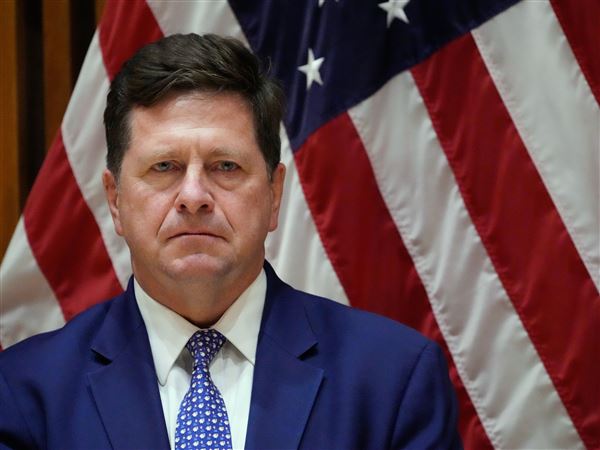
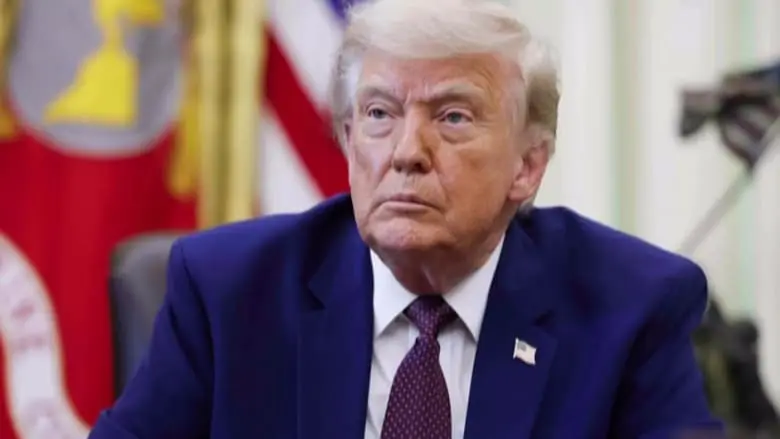
President Donald Trump has nominated current U.S. Attorney Jay Clayton to serve as Director of National Intelligence. The selection aims to break a high-stakes congressional deadlock over the agency's interim leadership, paving the way for a rapid Senate confirmation process and the renewal of expiring federal counter-terrorism surveillance laws.
WASHINGTON — President Donald Trump officially announced on June 11, 2026, that he is nominating Jay Clayton to serve as the next Director of National Intelligence (DNI). Clayton, a veteran corporate attorney who chaired the U.S. Securities and Exchange Commission (SEC) during Trump's first term, currently serves as the U.S. Attorney for the Southern District of New York (SDNY). If confirmed by the Senate, he will assume permanent control of the office responsible for coordinating the nation's 18 separate spy and intelligence agencies, including the CIA, FBI, and NSA.
The nomination represents an abrupt tactical pivot by the White House to resolve a severe legislative standoff in Congress. Earlier this month, the administration installed controversial ally Bill Pulte as acting DNI following the sudden resignation of Tulsi Gabbard, who stepped down to care for her ailing husband. Pulte’s lack of traditional intelligence experience triggered an immediate bipartisan revolt, stalling the renewal of a critical national security surveillance law.
Bipartisan Congressional Pressure Triggers White House Pivot
The selection of Clayton came hours after a major legislative fracture in the House of Representatives. Lawmakers rejected a short-term extension of Section 702 of the Foreign Intelligence Surveillance Act (FISA)—a powerful post-9/11 counter-terrorism tool allowing warrant-free interception of foreign communications—which is scheduled to expire at midnight on Friday.
According to congressional updates tracked by the Associated Press Washington Bureau, opposition Democrats and select Republicans refused to extend the surveillance parameters while Pulte remained in the interim leadership role.
The standoff forced the administration to seek a highly respected legal figure to stabilize the confirmation pipeline. Reports originating from senior intelligence corridors indicate that CIA Director John Ratcliffe personally recommended Clayton to the president as a consensus candidate capable of restoring legislative momentum.
From Wall Street Regulatory Enforcement to Global Espionage Oversight
Clayton's professional trajectory deviates sharply from the standard operational profile of a national intelligence chief. He spent the majority of his career as a prominent Wall Street corporate partner at Sullivan & Cromwell, famously negotiating high-stakes financial bailouts during the 2008 global financial crisis.
During his tenure leading the SEC from 2017 to 2020, Clayton focused on cryptocurrency enforcement frameworks and corporate compliance. In April 2025, he transitioned to criminal law enforcement after being sworn in to lead the prestigious SDNY.
Legal oversight records published by the U.S. Department of Justice show that during his tenure in Manhattan, Clayton managed complex international portfolios. These responsibilities included the prosecution of high-profile foreign narcotics networks, financial fraud syndicates, and the ongoing unsealing of sensitive federal records related to international sex offender registries.
Impact on National Security Operations and Surveillance Laws
The immediate practical impact of Clayton’s nomination is centered squarely on Capitol Hill. Senate leadership has signaled a desire to advance the vetting process rapidly to prevent a prolonged gap in intelligence oversight.
According to statements compiled by the Financial Times Political Desk, the Senate Intelligence Committee is already arranging a formal confirmation hearing for Wednesday. However, lawmakers emphasize that a permanent resolution to the expiring FISA surveillance laws hinges on explicit guarantees from the White House regarding the immediate wind-down of interim appointments.
Official Sources Section
The operational timeline, nomination mechanics, and legislative details presented in this report are based on official social media announcements from the White House via Truth Social, public legislative rolls from the U.S. House of Representatives, and formal press briefings from members of the Senate Intelligence Committee.
Quote Section
"Few people anywhere in the legal community are respected at the level of Jay," President Donald Trump stated in his official nomination announcement. "I encourage the United States Senate to confirm Jay as soon as possible to lead this vital office."
Why It Matters
The position of DNI is foundational to U.S. global defense posture, serving as the president's principal advisor on national security intelligence. Resolving this leadership crisis is essential for continuous international tracking operations, domestic security protocols, and seamless intelligence sharing with foreign allies. For businesses, international travelers, and citizens, a stable intelligence apparatus ensures the continuity of global trade protections, cyber-defense systems, and critical counter-terrorism networks.
Key Facts at a Glance
Strategic Nomination: Former SEC Chairman and current Manhattan federal prosecutor Jay Clayton has been tapped as the permanent nominee for Director of National Intelligence.
Congressional Impasse: The pick directly follows a major legislative deadlock where Congress blocked a key surveillance law to force the replacement of acting chief Bill Pulte.
Rapid Senate Schedule: The Senate Intelligence Committee plans to hold a fast-tracked confirmation hearing next Wednesday to stabilize the office.
Diverse Portfolio: While lacking a traditional espionage background, Clayton holds extensive experience handling sensitive international fraud, asset enforcement, and transnational legal prosecutions.
FAQ Section
Q: What are the primary responsibilities of the Director of National Intelligence?
A: The DNI oversees and directs the implementation of the National Intelligence Program, synthesizes global raw data for the President's Daily Briefing, and coordinates the 18 agencies comprising the intelligence community.
Q: Why did Tulsi Gabbard leave the position of DNI?
A: Former DNI Tulsi Gabbard announced her resignation in May 2026, citing a need to step away from public service to support her husband during a serious medical battle with bone cancer.
Q: What is Section 702 of the Foreign Intelligence Surveillance Act (FISA)?
A: It is a critical legal framework enabling U.S. intelligence agencies to conduct targeted, electronic surveillance on foreign targets located outside the United States without individual domestic warrants.
Q: Does Jay Clayton require full Senate confirmation before taking office?
A: Yes. Under federal law, the position of DNI requires a formal review by the Senate Intelligence Committee followed by a majority confirmation vote on the executive floor.
Source: Associated Press Bureau Reports, U.S. Department of Justice Press Office, Financial Times National Security Index, Office of the Director of National Intelligence Transparency Portal.