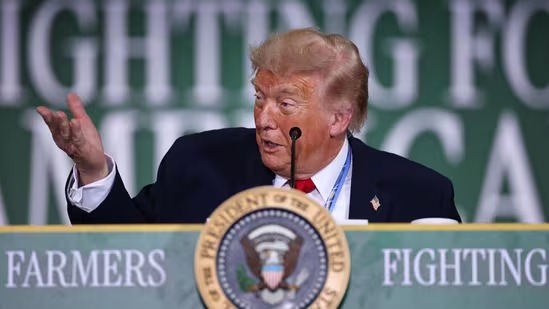
US President Donald Trump announced on Sunday, June 7, 2026, that the United States is "very close to a final deal" with Iran, revealing that a comprehensive agreement could be signed as early as this week. The diplomatic declaration came directly alongside an urgent executive intervention, with President Trump forcefully urging Israeli Prime Minister Benjamin Netanyahu to refrain from launching a military counter-offensive against Tehran. The high-stakes intervention followed a targeted barrage of approximately 10 Iranian ballistic missiles directed at northern Israel earlier in the day—the first direct strike executed since a fragile regional ceasefire took hold on April 8.
WASHINGTON — US President Donald Trump announced on Sunday, June 7, 2026, that the United States is "very close to a final deal" with Iran, revealing that a comprehensive agreement could be signed as early as this week. The diplomatic declaration came directly alongside an urgent executive intervention, with President Trump forcefully urging Israeli Prime Minister Benjamin Netanyahu to refrain from launching a military counter-offensive against Tehran. The high-stakes intervention followed a targeted barrage of approximately 10 Iranian ballistic missiles directed at northern Israel earlier in the day—the first direct strike executed since a fragile regional ceasefire took hold on April 8.
White House Intervenes to Protect Delicate Diplomatic Progress
The unexpected military flare-up between Jerusalem and Tehran has thrown Washington’s confidential peace framework into an immediate trial. In a series of telephonic press interviews, President Trump voiced deep concern that a heavy-handed Israeli response would instantly shatter months of behind-the-scenes negotiations overseen by the White House.
"We are very close to a final deal with Iran. It is going to be a good deal," Trump stated. "I don't want it to blow up because of what is happening now."
According to diplomatic officials, the White House initiated an immediate, direct call to Prime Minister Netanyahu's office shortly after the missile telemetry was confirmed. Senior administration sources reported that Trump took an uncompromising tone during the exchange, layout out a clear directive that Israel must allow space for the pending diplomatic settlement rather than initiating an asynchronous escalatory loop.
Trump Demands Ceasefire Compliance From Both Sides
The Sunday night missile flurry was launched by Iran’s Islamic Revolutionary Guard Corps (IRGC), which characterized the strikes as a necessary "warning" following a heavy Israeli precision strike on a Hezbollah stronghold in southern Beirut earlier that afternoon. While the Israel Defense Forces (IDF) reported that all incoming Iranian ballistic units were successfully intercepted or fell harmlessly into uninhabited open terrain, top military leaders in Tel Aviv initially threatened immediate, forceful retaliation.
President Trump explicitly dismissed the structural necessity of an Israeli counter-strike, publicly minimizing the tactical impact of Iran's response. He argued that the current cycle of cross-border skirmishes had effectively neutralized itself.
"The Iranian strikes didn't hurt anybody. Hopefully Israel is not going to retaliate," Trump told reporters. "Each of them had their fun. Israel had its strike and Iran had its strike. We don't need another one. If Bibi strikes them back, it's just gonna keep going like the last 47 years, or the last 3,000 years."
In parallel statements directed at Tehran via a Fox News broadcast, the US President simultaneously reprimanded Iranian leadership for risking the entire text of the agreement. He noted that while Israel's preceding maneuvers in Lebanon were "certainly not going to help negotiations," Iran must immediately cease its seven-day drone and missile threats and cement its commitments. "What I would suggest to Iran: You've shot your missiles, that's enough. Get back to the table and make a deal," Trump added.
Official Sources Section
The current executive actions, diplomatic positions, and security assessments are grounded entirely in official institutional responses:
The White House: Transcripts of executive phone interviews confirming the impending signing timeline and active containment strategy.
Israel Defense Forces (IDF): Air defense logs and public alerts documenting the total interception of the 10 ballistic targets launched from Iranian territory.
Islamic Revolutionary Guard Corps (IRGC): Official warning manifest circulated via Iranian state networks linking the missile strike to the Beirut airspace breach.
Quote Section
"I am going to call Bibi right now and tell him not to retaliate. Each of them had their fun... We are very close. I would say an agreement would be signed on Monday, Tuesday or Wednesday of this coming week. And now this takes place."
— Donald Trump, President of the United States
Why It Matters
The explicit diplomatic friction between Washington and Jerusalem introduces immediate structural changes to global politics and economics:
For Global Alliances: The directive indicates that the United States is prioritizing a comprehensive regional deal with Iran over supporting traditional, unrestricted counter-strikes by Israel, establishing that Washington "calls the shots" on regional strategy.
For Financial Markets: While global oil benchmarks jumped more than 2% initially on conflict fears, the active intervention of the White House to freeze retaliation may calm volatile commodities trading.
For Civil Stability: If the final diplomatic deal is preserved and signed this week, it could formalize a binding, long-term security framework that extends protection across international shipping lanes and regional borders.
Key Facts at a Glance
Deal Proximity: US President Donald Trump stated that a final peace accord with Iran is close and could be executed early this week.
Retaliation Restraint: Trump directly told Prime Minister Benjamin Netanyahu not to strike back following Sunday's Iranian missile launches.
Truce Broken: The 10-missile barrage from Iran marked the first direct breach of the Middle East ceasefire originally brokered on April 8.
Beirut Catalyst: Tehran justified its missile deployment as a response to a deadly Israeli airstrike inside the southern suburbs of Beirut.
No Casualties: Israeli military defense groups confirmed that zero injuries or major localized structural failures occurred from the incoming projectiles.
FAQ Section
Why is President Trump telling Israel not to retaliate after being attacked?
President Trump believes that the Iranian missile strike did not cause physical casualties and was merely a calculated response to Israel's earlier bombardment in Beirut. He argues that an Israeli counter-strike will create an endless war loop and permanently destroy a major US-Iran diplomatic deal that is days away from being signed.
Does Prime Minister Netanyahu have to follow the US directive?
In an interview with the Financial Times, President Trump asserted that the Israeli Prime Minister will have "no choice" but to accept the negotiated parameters because the United States provides the foundational military and economic backing that allows the state to operate securely.
What happens to the peace negotiations if Israel strikes Iran anyway?
If Israel defies the White House and launches a counter-offensive on Iranian soil, Iran's Revolutionary Guards have threatened a massive, unconstrained seven-day drone and missile campaign. This would likely cause the collapse of active negotiations and spark a broader war across West Asia.
Source: Telephonic press logs published by the Financial Times, exclusive diplomatic reports compiled by Axios, official military situational reports updated by the Israel Defense Forces, and state media circulars archived by the Tasnim News Agency.