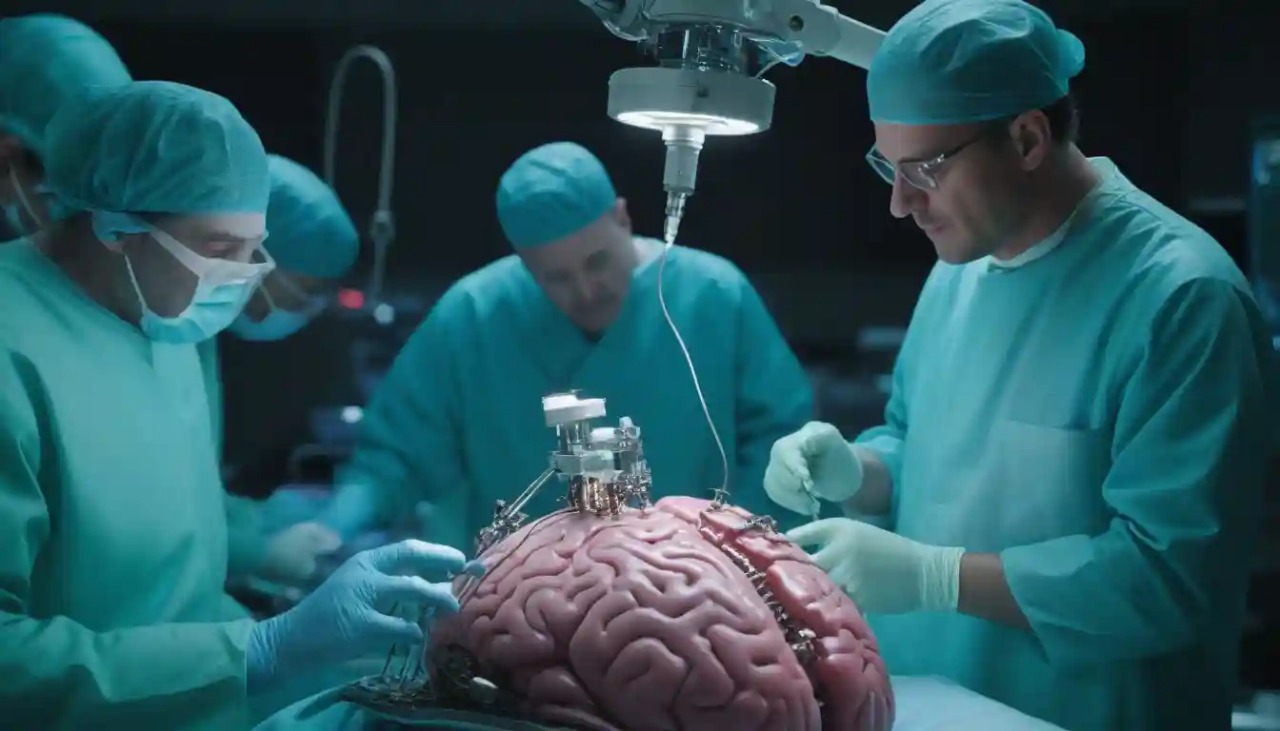
Scientists have unveiled a groundbreaking brain implant technology capable of decoding a person’s inner monologue—the silent voice inside our heads—offering an unprecedented window into human thought processes. This innovation marks a major milestone in neuroscience and neuroeng...
Scientists have unveiled a groundbreaking brain implant technology capable of decoding a person’s inner monologue—the silent voice inside our heads—offering an unprecedented window into human thought processes. This innovation marks a major milestone in neuroscience and neuroengineering, with vast potential applications ranging from assisting individuals with speech impairments to transforming human-computer interaction. While the technology is still in experimental stages, its ability to interpret neural signals associated with internal speech unveils exciting possibilities for future communication and cognitive enhancement.
Here is a detailed overview of how the implant works, the research behind it, potential uses, and ethical considerations.
Key Highlights Of The Brain Implant Breakthrough
The new brain implant detects and decodes neural activity patterns linked specifically to internal speech or “inner voice” without spoken words.
Researchers used advanced machine learning algorithms to translate these brain signals into textual or verbal output.
The technology builds on previous brain-computer interfaces (BCIs) but is distinct in capturing silent, self-directed thinking rather than external speech.
Initial trials with volunteers have successfully reconstructed sentences and phrases from their internal dialogue in real time.
The implant measures brain regions associated with language production and processing, including Broca’s and Wernicke’s areas.
Understanding The Science Behind The Implant
Inner speech is a cognitive phenomenon where we “talk” to ourselves silently, playing a role in thinking, problem-solving, and planning. Capturing neural correlates of this silent dialogue has long been a challenge due to its subtle and complex brain activity.
The new implant, equipped with high-density electrocorticography sensors, records electrical signals directly from the brain surface. Combined with powerful neural decoding models, the system interprets these signals by recognizing complex patterns that correspond to specific words or phrases thought internally.
This approach differs substantially from traditional speech synthesis BCIs that rely on muscle movement or vocal tract activity.
Applications That Could Transform Lives
Speech Restoration For Disabled Individuals: People with paralysis or conditions like ALS who have lost the ability to speak could use this implant to communicate more naturally by thinking their words.
Enhanced Communication Interfaces: Brain-to-text or brain-to-voice technologies could evolve, enabling faster, hands-free interaction with devices.
Cognitive Research: Scientists gain a better understanding of human thought processes, language formation, and inner mental dialogue dynamics.
Psychological Insights: The technology might assist in studying conditions such as schizophrenia or depression where internal speech plays a significant role.
Challenges And Ethical Considerations
While the implant is promising, several issues loom:
Privacy: Decoding internal thoughts raises profound ethical questions about consent, mental privacy, and misuse potential.
Accuracy: Current decoding is limited and requires extensive individual calibration to interpret inner speech accurately.
Invasiveness: The implant procedure involves brain surgery, limiting initial applications to clinical populations.
Societal Impact: Widespread use could disrupt norms about mental autonomy and raise psychological implications.
Future Directions And Research
Scientists plan to improve the implant’s decoding precision, miniaturize hardware, and explore non-invasive alternatives. Interdisciplinary collaboration between neuroscientists, ethicists, and technologists will be essential to navigate challenges.
Long-term visions include integrating implants with augmented reality, virtual assistants, and even mind-controlled robotics, potentially revolutionizing how humans interact with technology.
Conclusion: Bridging Mind And Technology
The development of a brain implant that decodes a person’s inner monologue represents a paradigm shift in understanding and harnessing human cognition. Although still nascent, this technology promises to empower those with communication difficulties and unlock new frontiers in brain-machine interfacing, heralding an era where thought itself could become a direct mode of expression.
Sources: Nature Neuroscience, Scientific American, MIT Technology Review, BBC News