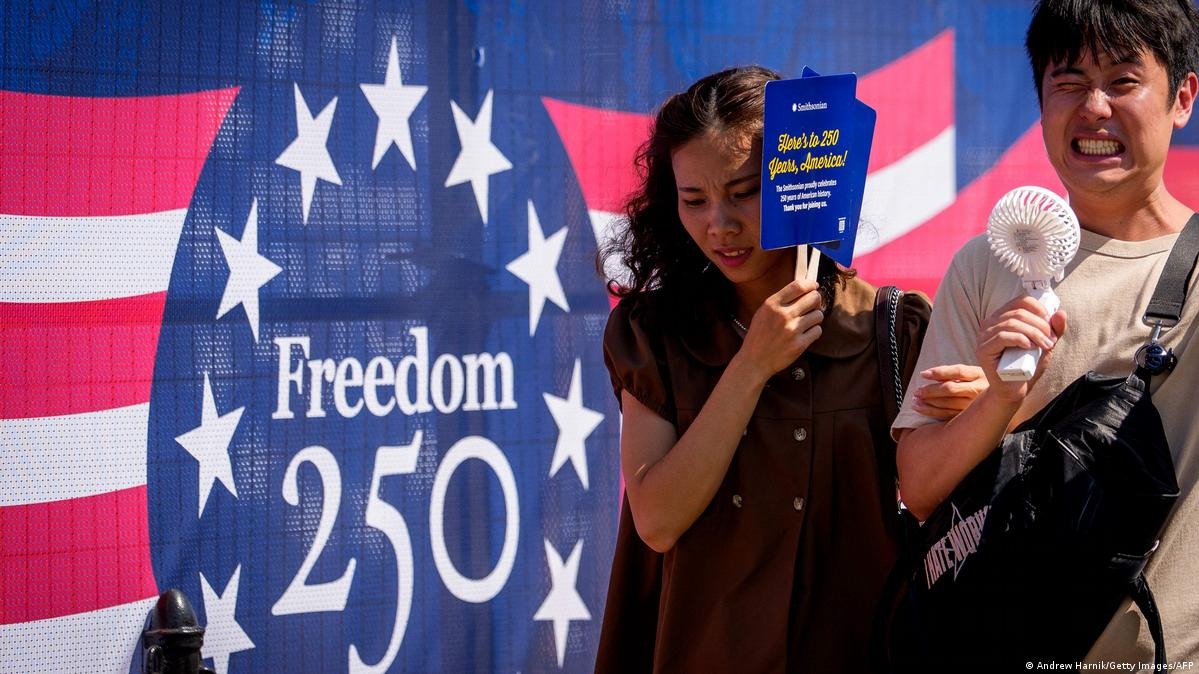
Washington’s flagship 250th Independence Day Parade has been cancelled due to a record-breaking heat wave. With a severe heat dome driving heat index forecasts up to 115°F, city officials and organizers called off the historic event late Friday night to protect public health and ease pressure on emergency services
WASHINGTON — The National Independence Day Parade in Washington, D.C., scheduled for Saturday, July 4, 2026, has been officially cancelled due to an unprecedented extreme heat wave gripping the region. The highly anticipated parade, meant to serve as a flagship event for the United States’ 250th anniversary of independence, was called off late Friday night after meteorologists warned that heat index values could reach dangerous levels between 110°F and 115°F (43.3°C to 46.1°C). Local authorities and event organizers determined that proceeding with the mile-long outdoor procession posed severe, life-threatening health risks to participants, volunteers, and the hundreds of thousands of spectators expected to line the National Mall.
Severe Heat Dome Prompts Public Safety Emergency
The cancellation of the prestigious "America 250" parade highlights the severity of a powerful heat dome currently hovering over the eastern United States. According to reports from the US Weather Prediction Center, more than 197 million Americans from Kansas to Maine are under active extreme heat warnings or heat advisories.
In Washington, D.C., temperatures soared well into the triple digits on Friday, triggering an official Extreme Heat Warning from the National Weather Service (NWS) that remains in effect through Saturday night. The District of Columbia Emergency Operations Center coordinated closely with federal and regional event planners before executing the historic decision to halt the parade.
The parade was originally scheduled to kick off at 10:30 a.m. local time, traveling along its traditional route past national monuments down Independence Avenue Southwest. The event typically draws marching bands from all 50 states, military units, elaborate floats, and celebrity guests. Organizers confirmed that due to the logistical complexity and persistent hazardous weather, the parade will not be rescheduled for a later date.
Regional Logistics and Medical Strain
The severe weather has pushed municipal resources and healthcare infrastructure to their limits across the District, Maryland, and Virginia (DMV) area. On Friday afternoon, D.C. Fire and EMS personnel responded to a surge of heat-related emergencies at the Great American State Fair on the National Mall. First responders treated at least 44 individuals on-site, transporting 11 patients to local hospitals due to heat exhaustion and related illnesses before organizers temporarily shut down the fairgrounds.
As a result of the ongoing crisis, several neighboring communities have followed the capital's lead:
Virginia: The Town of Leesburg officially cancelled its annual July 4th parade.
Maryland: Suburban municipal parades in Laurel and Takoma Park were called off entirely.
National Mall Adjustments: The Freedom 250 organization delayed the Saturday opening of the Great American State Fair from 10:00 a.m. to noon to mitigate mid-day exposure.
Official Statements
The decision to cancel the signature semiquincentennial parade was met with widespread disappointment but uniform agreement on public safety priorities.
In a joint email notification released late Friday night, parade organizers stated:
"This decision was made after extensive and careful consideration of the safety of our participants, spectators, and staff as the top priority."
Tara Egan, president of the Takoma Park Independence Day Committee, echoed these concerns in a statement regarding regional cancellations:
"In this heat, parading is particularly risky. We feel that it would not be safe, or responsible, to ask our community to march or to gather in this heat."
Economic and Travel Impact
The last-minute cancellation deals a significant blow to the local tourism economy and thousands of travelers. Millions of domestic and international visitors had converged on Washington, D.C., specifically for the milestone 250th anniversary celebrations, filling hotels and booking local transit.
Airlines, restaurants, and hospitality businesses remain heavily booked, but outdoor vendors, concession operators, and local transport networks are facing immediate losses due to diminished daytime foot traffic. Conversely, energy infrastructure is under immense strain; regional utility companies report a massive surge in electricity consumption as residential and commercial air conditioning systems run continuously to combat the triple-digit thermal load.
Why It Matters
The cancellation of a major milestone national event underscores the escalating threat that extreme meteorological events pose to public infrastructure, tourism, and national traditions. For security, safety, and health agencies, managing vast crowds during an active heat emergency represents an unsustainable risk to emergency medical services (EMS), requiring immediate adaptations to urban event planning.
Key Facts at a Glance
The Event: America's flagship 250th Independence Day Parade in Washington, D.C., has been fully cancelled with no plans to reschedule.
The Reason: A record-breaking heat dome pushing local heat index values to a dangerous 110°F to 115°F range.
Medical Impact: Emergency personnel treated dozens of patients for heat illnesses on Friday alone, forcing localized shutdowns of outdoor fairgrounds.
National Scope: Over 197 million Americans are currently under extreme heat warnings or advisories across the United States.
FAQ Section
Q: Will the Washington, D.C. Independence Day parade be rescheduled?
A: No. Organizers and city officials have confirmed that the 2026 parade has been cancelled entirely and will not be rescheduled due to logistics and the ongoing heat wave.
Q: Are the July 4th fireworks on the National Mall also cancelled?
A: As of Saturday morning, official evening programming and the main fireworks display over the National Mall remain scheduled, though officials urge all attendees to monitor real-time updates and prioritize hydration.
Q: What is causing the extreme temperatures in Washington?
A: A massive, intense atmospheric phenomenon known as a heat dome has settled over the eastern United States, trapping high-pressure heat over major metropolitan areas and driving temperatures past 100°F.
Q: Can I get a refund if I bought tickets for parade viewing areas?
A: Spectators holding premium grandstand tickets are advised to contact their point of purchase or the official event website regarding refund policies for the cancelled event.
Source: Official press statements from the District of Columbia Emergency Operations Center, the National Weather Service, D.C. Fire and EMS Department, and notifications issued by the National Independence Day Parade Organizing Committee.