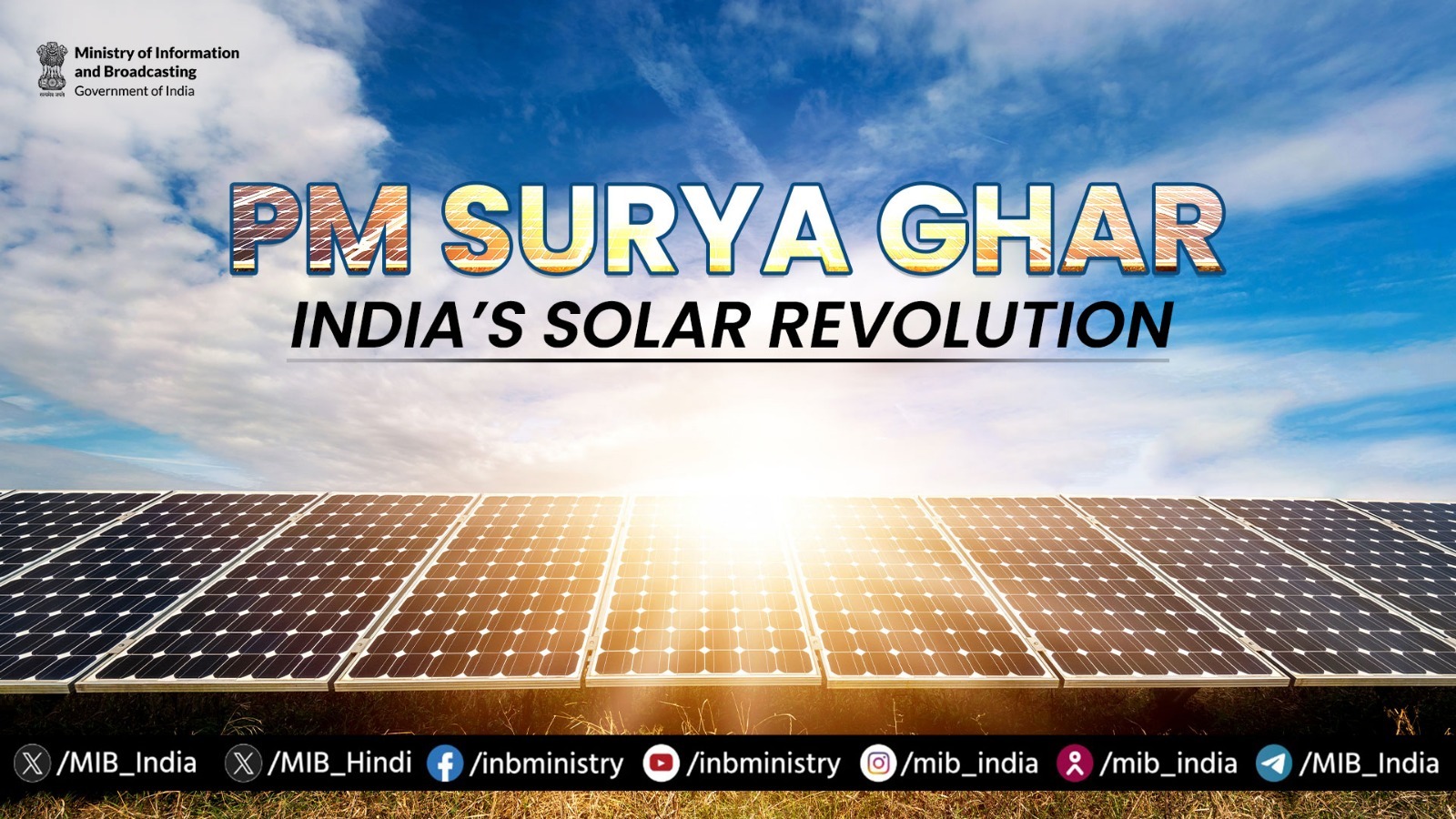
Uttar Pradesh has achieved a national record under the PM Surya Ghar Yojana, deploying 71,888 residential solar systems in June 2026. Directed by Chief Minister Yogi Adityanath, the state-subsidized push has scaled grid capacity by 2,148 MW, created 80,000 jobs, and slashed household utility expenses.
LUCKNOW — The state government of Uttar Pradesh officially announced on Saturday, July 4, 2026, that it has achieved the highest number of monthly residential solar installations in the country. Driven by an aggressive administrative push under Chief Minister Yogi Adityanath, the state successfully deployed 71,888 residential rooftop solar systems during the month of June 2026 alone. This milestone marks the largest single-month volume achieved by any state since the launch of the central government’s PM Surya Ghar Yojana framework. The development represents a significant step forward for India’s domestic green energy targets, shifting the historical focus of renewable expansion away from traditional industrial zones directly into ordinary household networks.
Unprecedented Monthly Surges and Scaling Capacity
Data presented by the Uttar Pradesh New and Renewable Energy Development Agency (UPNEDA) outlines a dramatic acceleration in the state's green transition. Prior to the coordinated state push, local service hubs averaged roughly 500 solar panel installations per day in mid-2025. By May 2026, daily deployment metrics expanded to nearly 2,100 installations. The most recent operational cycle completed 50,000 installations within a 22-day period, recording the fastest localized deployment velocity tracked nationally.
Cumulatively, the state has now registered more than 10.89 lakh individual consumer applications under the PM Surya Ghar Yojana portal, culminating in 6.36 lakh completed residential rooftop installations. Energy tracking metrics indicate that this residential network has successfully introduced more than 2,148 megawatts (MW) of clean power capacity to the provincial grid. Based on current logistics trends, state officials project that Uttar Pradesh will surpass Maharashtra in total cumulative rooftop capacity by the end of July 2026, placing it behind only Gujarat in aggregate national solar tracking.
Economic Footprint and Job Creation Dynamics
Beyond the immediate scope of environmental sustainability, the rapid expansion of the PM Surya Ghar Yojana has acted as a significant economic stimulus for the region. The state’s energy department confirmed that the local rooftop solar economy is currently generating active business transactions valued between ₹40 crore and ₹50 crore per day. Over 7,000 localized businesses, solar component manufacturers, and technical engineering vendors have been integrated into the decentralized supply chain.
This market expansion has resulted in the creation of more than 80,000 direct and indirect jobs, spanning installation technicians, grid engineers, maintenance personnel, and administrative fulfillment staff. Furthermore, infrastructural planners highlighted that the localized generation model substantially mitigates land acquisition friction. Generating an estimated 96 lakh units of solar electricity daily on pre-existing residential rooftops eliminates the need for roughly 9,000 acres of open land that would otherwise be required to build equivalent ground-mounted solar utility fields.
Subsidies, Net Metering, and Policy Integration
A primary driver of the high enrollment rate among consumers is the fiscal architecture implemented by the state cabinet alongside central provisions. Under the standard guidelines of the PM Surya Ghar Yojana, the central government delivers a direct subsidy up to ₹78,000 for standard residential systems. To maximize adoption speeds, the government under Chief Minister Yogi Adityanath integrated a supplementary state subsidy of ₹15,000 per kilowatt (kW) for the initial 3 kW installed.
Financial Breakdown: A benchmark 3 kW residential solar installation in Uttar Pradesh attracts combined fiscal incentives totaling up to ₹1,23,000. This reduces out-of-pocket setup costs for consumers to roughly ₹42,000, bringing down the capital payback period to under five years.
Additionally, the implementation of a streamlined net-metering framework by state distribution companies (discoms) allows participating families to feed surplus generated power directly back into the regional grid. The mechanism automatically applies energy credits to standard monthly electricity accounts, leading to reported utility bill drops ranging from 80% to 90% for typical mid-sized households.
Official Sources Section
Regulatory implementation timelines, fiscal transfer sheets, and consumer capacity logs are systematically documented by the Uttar Pradesh New and Renewable Energy Development Agency and confirmed via structural releases distributed through the Union Ministry of New and Renewable Energy.
Quote Section
"According to officials presenting the June 2026 progress report, the objective going forward is to ensure that every single registration transitions smoothly into a physical grid connection without administrative friction. Discoms have been formally instructed to expedite loan approvals, clear vendor backlogs, and remove unnecessary verification bottlenecks immediately."
Why It Matters
The rapid solarization of Uttar Pradesh offers a highly functional blueprint for large-scale public infrastructure deployment. By reducing peak load stresses on conventional coal-fired thermal generation plants, the solar push addresses persistent summer power deficits across northern India. For domestic consumers, the dual central-state subsidy model transitions low- and middle-income households from passive energy buyers into active clean power producers, fundamentally lowering long-term cost-of-living metrics while supporting national decarbonization targets.
Key Facts at a Glance
Record-Breaking Month: Uttar Pradesh deployed 71,888 residential solar systems in June 2026, setting a new single-month national record.
Massive Power Influx: The decentralized state program has added more than 2,148 MW of renewable capacity to the power grid.
Combined Subsidies: Applicants can stack a central subsidy of up to ₹78,000 with a state incentive of ₹15,000/kW to cover the majority of upfront installation bills.
Employment Influx: The localized green sector has successfully created over 80,000 direct and indirect jobs across the state.
Land Savings: Relying on domestic rooftops saves approximately 9,000 acres of rural land from conversion into commercial solar farms.
FAQ Section
What is the primary objective of the PM Surya Ghar Yojana in Uttar Pradesh?
The initiative is structured to supply subsidized, clean rooftop solar power infrastructure to residential households, enabling consumers to drastically cut down monthly power bills while feeding surplus clean energy into the state grid.
What specific subsidies are available to residential homes in UP?
Residential applications qualify for a central government subsidy up to ₹78,000, which can be combined with an exclusive Uttar Pradesh state grant of ₹15,000 per kW for the first 3 kW of capacity.
How long does it take for a solar rooftop installation to pay for itself?
With the current combined central and state financial incentives reducing the initial purchase price, the typical financial payback period for a residential consumer is estimated between 4 to 5 years.
Source: Uttar Pradesh New and Renewable Energy Development Agency Portal, Ministry of New and Renewable Energy Official Reports, Press Information Bureau (PIB) New Delhi.